Springs · Minto
Extension Spring Replacement in Minto
The opener groans on the way up and the door slams the last foot on the way down, hard enough to rattle the windows.
In plain words
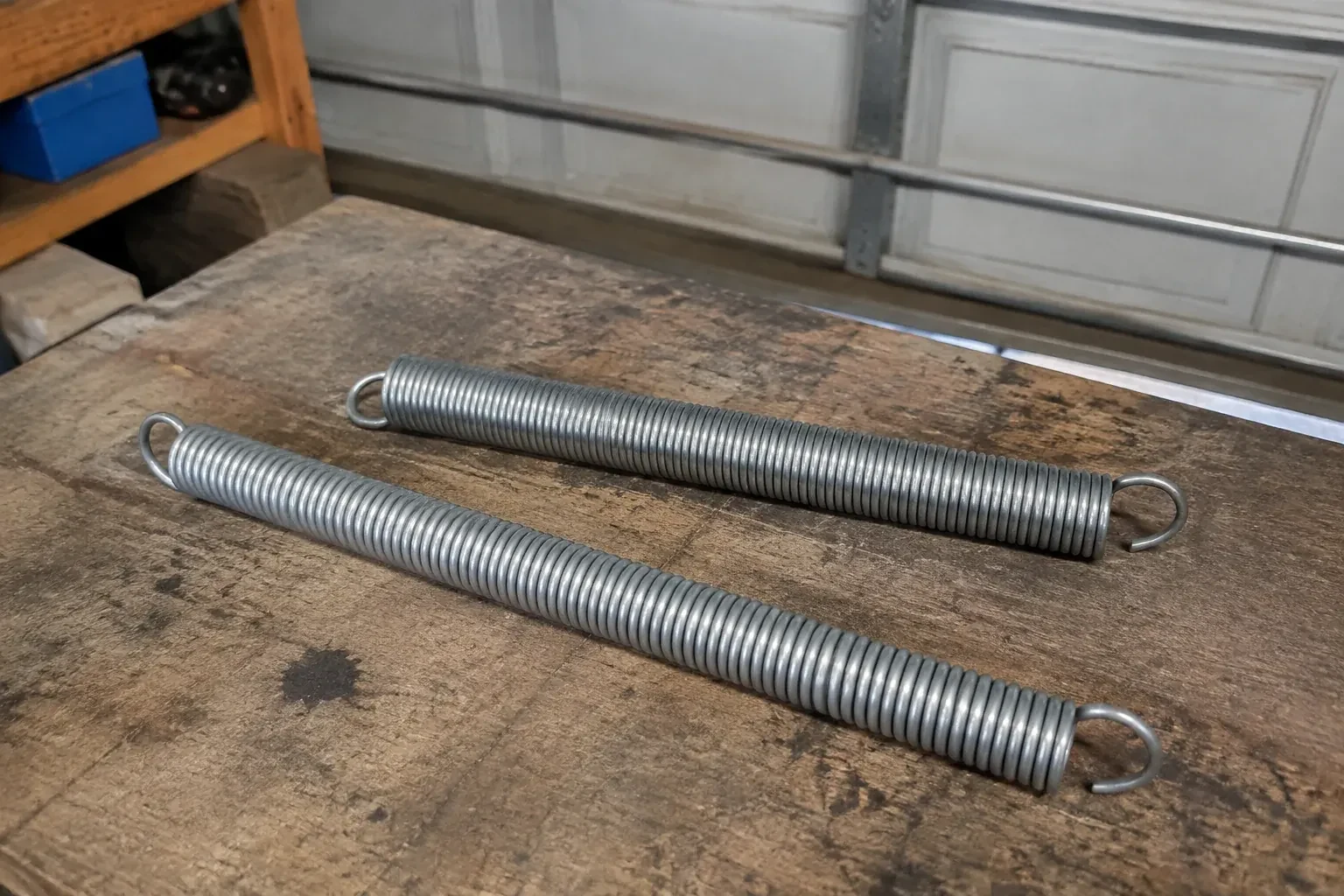
When one extension spring breaks, the other is replaced with it. The two springs were fitted together, have stretched the same number of times and have rusted in the same air, so the survivor is near the end of its life. More importantly, a door balances only when both sides pull equally; a new spring paired with a tired one lifts one corner ahead of the other and twists the door. Fitting a matched pair rated for the door's weight lets the technician set both sides to the same hook position and hand back a door that rises level and holds where it is left.
How the visit goesIt is the first hard frost of the year and the door on the old detached garage has stopped halfway, squealing at one pulley. The springs are the ones that came with the door decades ago, orange with rust where they hang near the back wall.
Extension Spring Replacement
How the visit goes
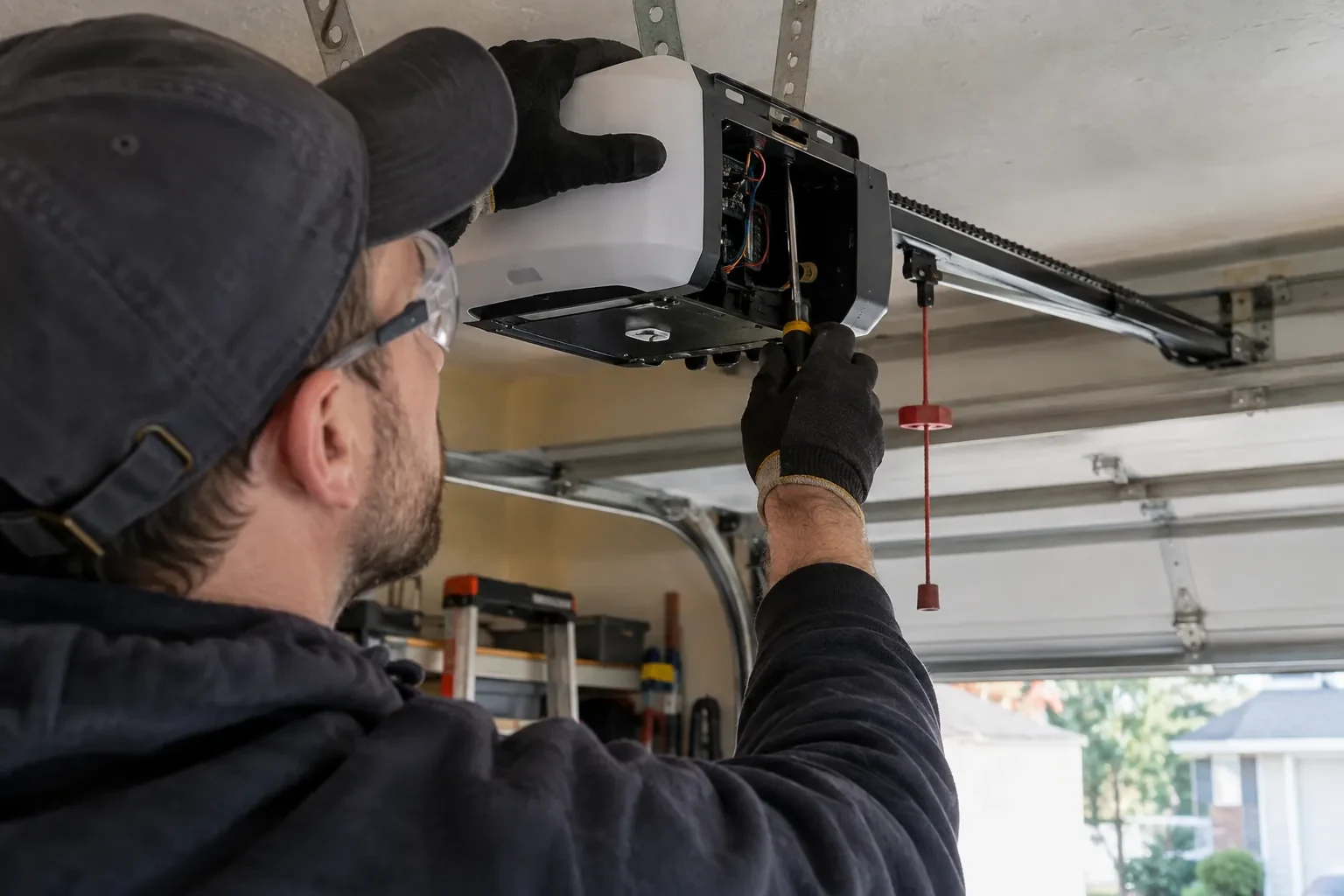
Containment cables, present or missing
The question the industry's own inspection checklist asks of every extension-spring door is whether each spring has a cable running through its centre, anchored at both ends. The technician checks for it on both sides, then checks its condition: a cable that is frayed, kinked, anchored to a loose screw or simply tied off to the hanger is not doing its job. Doors installed decades ago often have none at all, and doors that had a spring changed by a previous owner sometimes have one side fitted and one forgotten. Fresh containment cables go on with the new springs, and their anchor points are set into solid framing so that a spring which breaks stays on its cable.
Running the lift cables
Each lift cable starts at the bottom bracket, where its loop goes over the pin or is secured with a clevis pin. From there it runs up the vertical track, over the fixed pulley at the front of the horizontal track, back along the track to the pulley on the end of the spring, around it, and forward again to the S-hook or adjusting clip at the front hanger. The technician keeps the cable seated in each pulley groove and makes sure it passes on the correct side of the containment cable and the track. Cables are renewed if the old ones showed any fraying or rust, and always as a pair of the same length.
Knowing when the next set is due
A standard extension spring is made for a set number of open-and-close cycles, commonly in the ten-thousand range, which on a door used four times a day works out to several years and on a door used twice a week to much longer. Springs age even when idle, as rust does its slow work in an unheated garage. The signs that the set is nearing the end are gradual: the door feels heavier by hand, the opener sounds as if it is working, the door drifts down from halfway, and gaps appear between coils when the door is open. Acting on those signs turns the next replacement into a planned appointment rather than a bang in the night.
Extension Spring Replacement
In the van
Containment (safety) cables
Lag screws and hanger bolts
Bottom brackets and clevis pins
Track clamps or locking pliers
Lift cables
Extension Spring Replacement
What affects the quote
How the door is sitting
A door resting closed with one spring gone is straightforward. A door stuck partway, twisted in its tracks or with a cable wrapped around a pulley has to be supported and straightened first.
Pulleys that need renewing
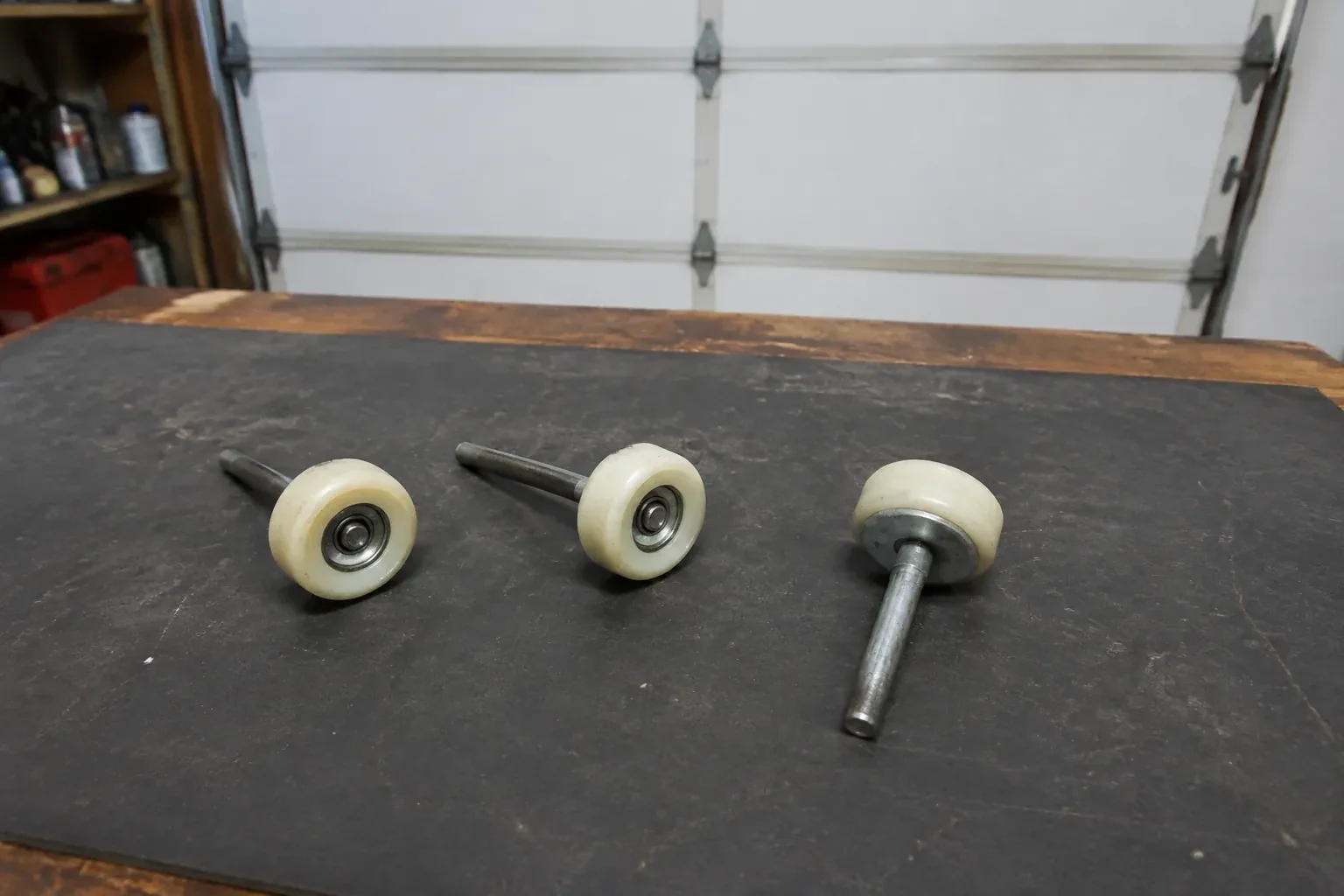
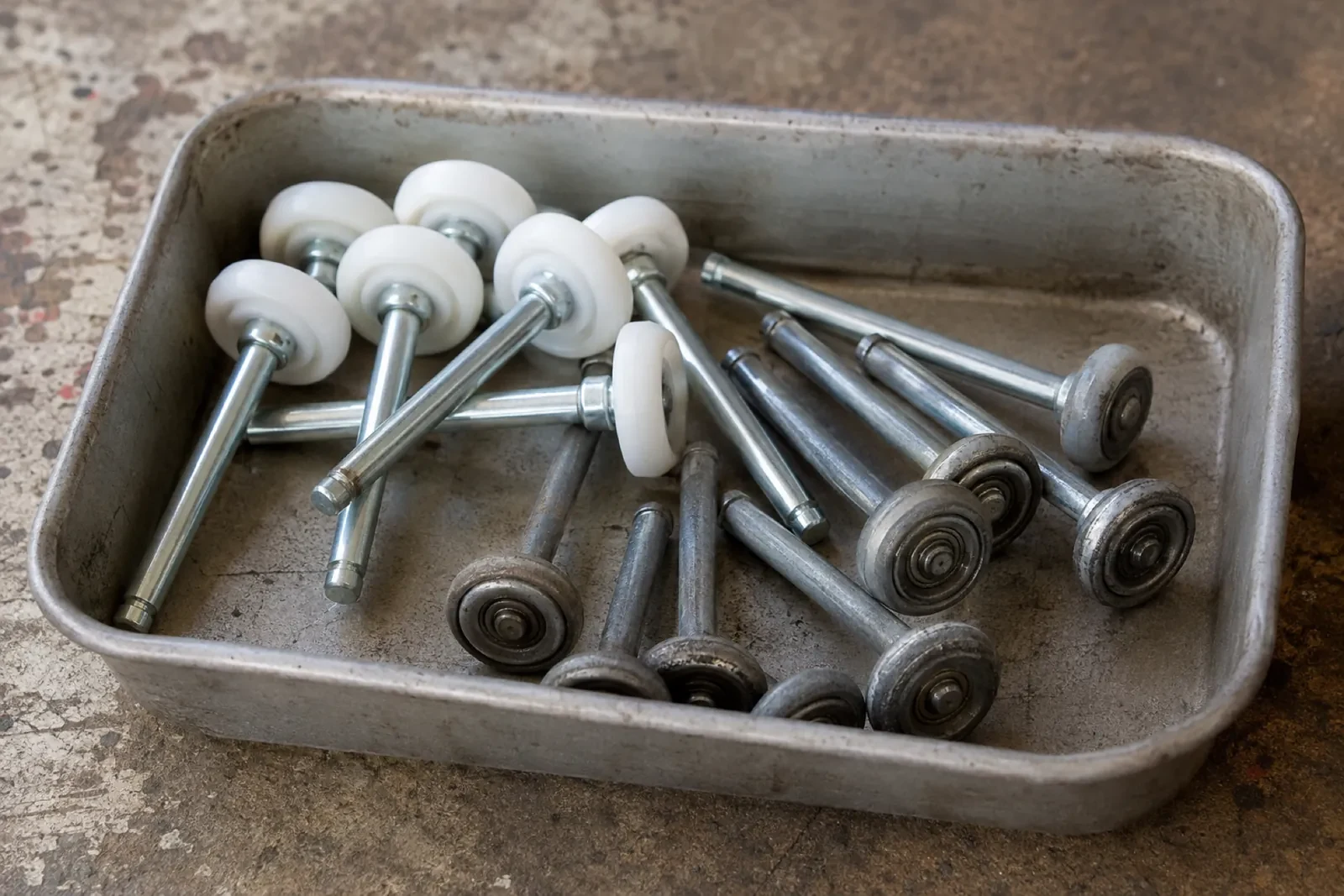
Each side has two pulleys, and a wheel worn to a groove or a bearing that has stiffened is replaced with the springs. The quote names how many and which type.
Door weight and size
Spring rating follows the door's weight, and a wide insulated door or a wood door takes heavier springs than a light single. Weight and height together set the parts on the quote.
What to have ready
- Do you know how old the springs are or when they were last changed?
- Is there anything stored beside the tracks or under the springs?
- Does the door drop the last bit, or drift up on its own?
Extension Spring Replacement: questions
QuestionsWhy does the opener get adjusted after new springs?
Because the door is now much lighter for the opener to move. Over the years, as the old springs weakened, the opener's force setting may have been turned up to keep the door going, and its travel limits were set against a door that sat differently on the floor. Left alone, that extra force would push the newly balanced door too hard. Resetting force and travel, then repeating the reversal tests, matches the opener to the door it now has.
Should I try to open the door by hand before the technician arrives?
No need, and it is easier on the door if you leave it. With a spring broken or slack, the door is unbalanced and heavy, and lifting it can let it drop or twist a section in the track. If the door is stuck partway, leave it there and keep people and the car away from the opening. The technician brings clamps and props, and the door is secured before it is moved at all.
My springs squeak and twang. Is that normal?
Some noise is ordinary. Extension springs stretch and relax on every trip, and a dry coil or a pulley with a dry axle will squeak, especially in cold weather; a light spray of lubricant along the springs and a drop on each pulley usually quiets it. A sharper twang, or a new grinding from a pulley, is worth a look, since a stiff pulley loads the spring and wears the cable.