Repairs · Centre Wellington
Off-Track Garage Door Reset
There was a loud bang from the garage, then silence.
In plain words
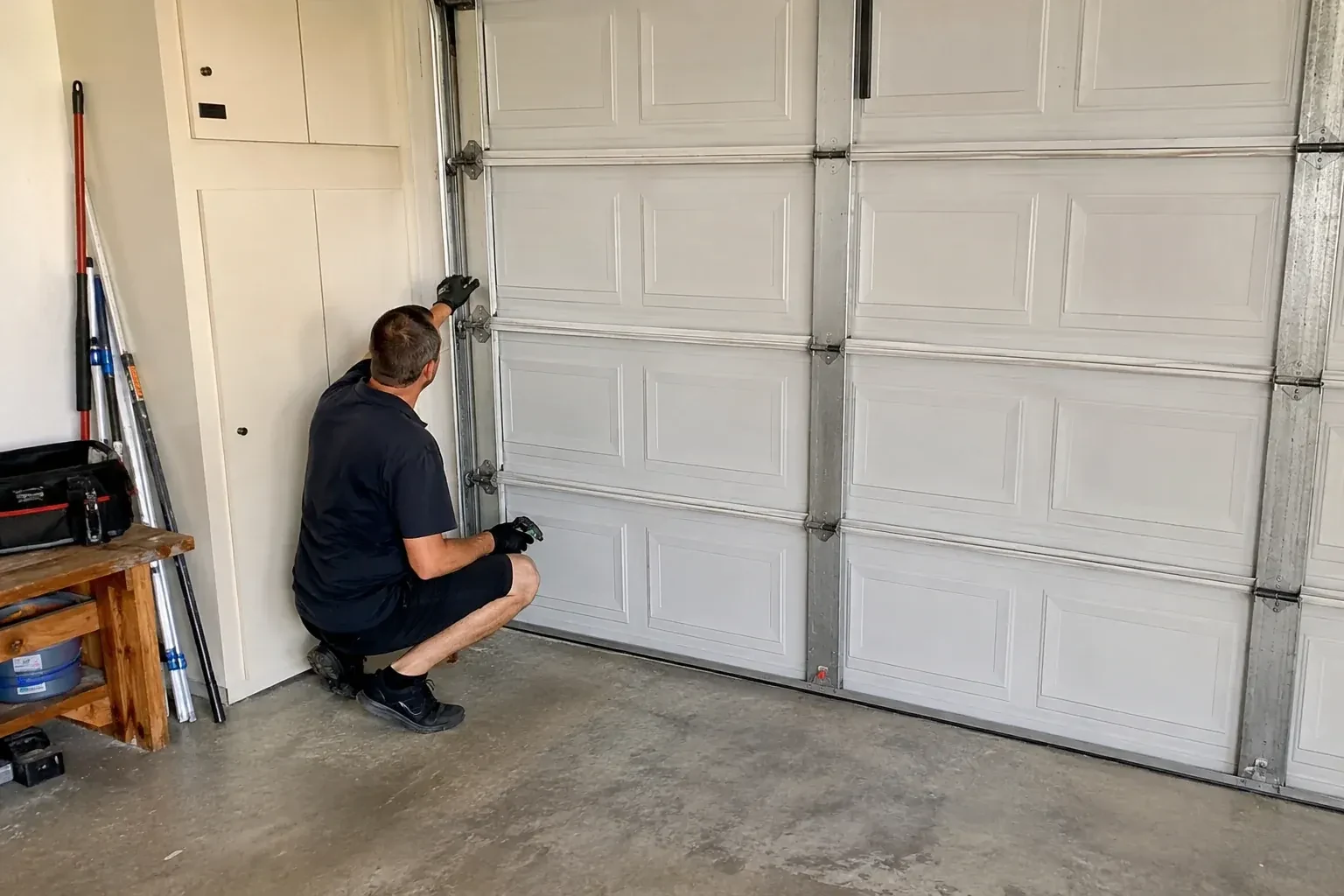
Older doors and workshop doors tend to come off their tracks for reasons of wear rather than impact. Steel rollers lose their bearings and grind down to the stem, wood jambs dry out and let lag screws spin, back hangs loosen and the horizontal track drifts out of level. A reset on a door like this is partly restoration: worn rollers are replaced as a set, fasteners are moved into sound wood or through-bolted, the horizontal tracks are re-hung square to each other, and hinges that have bent from years of misalignment are swapped. The door comes back quieter and straighter than it has run in years.
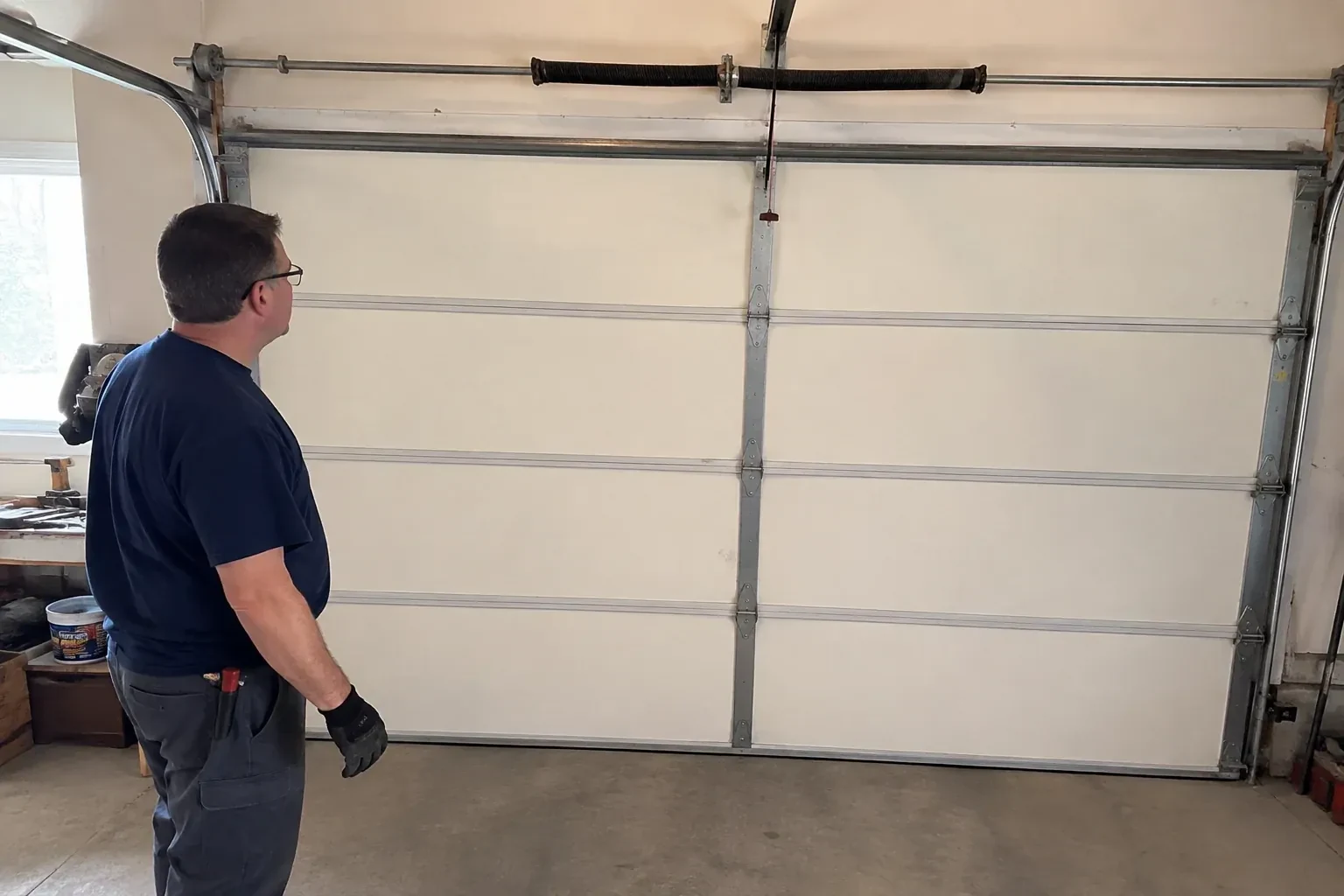
How the visit goesYour car is inside and the door is stuck crooked across the opening. Pushing the wall button just makes the motor hum, and one section is bent where a roller has climbed out of the curve at the top of the track.
Off-Track Garage Door Reset
How the visit goes

What happened in the minutes before
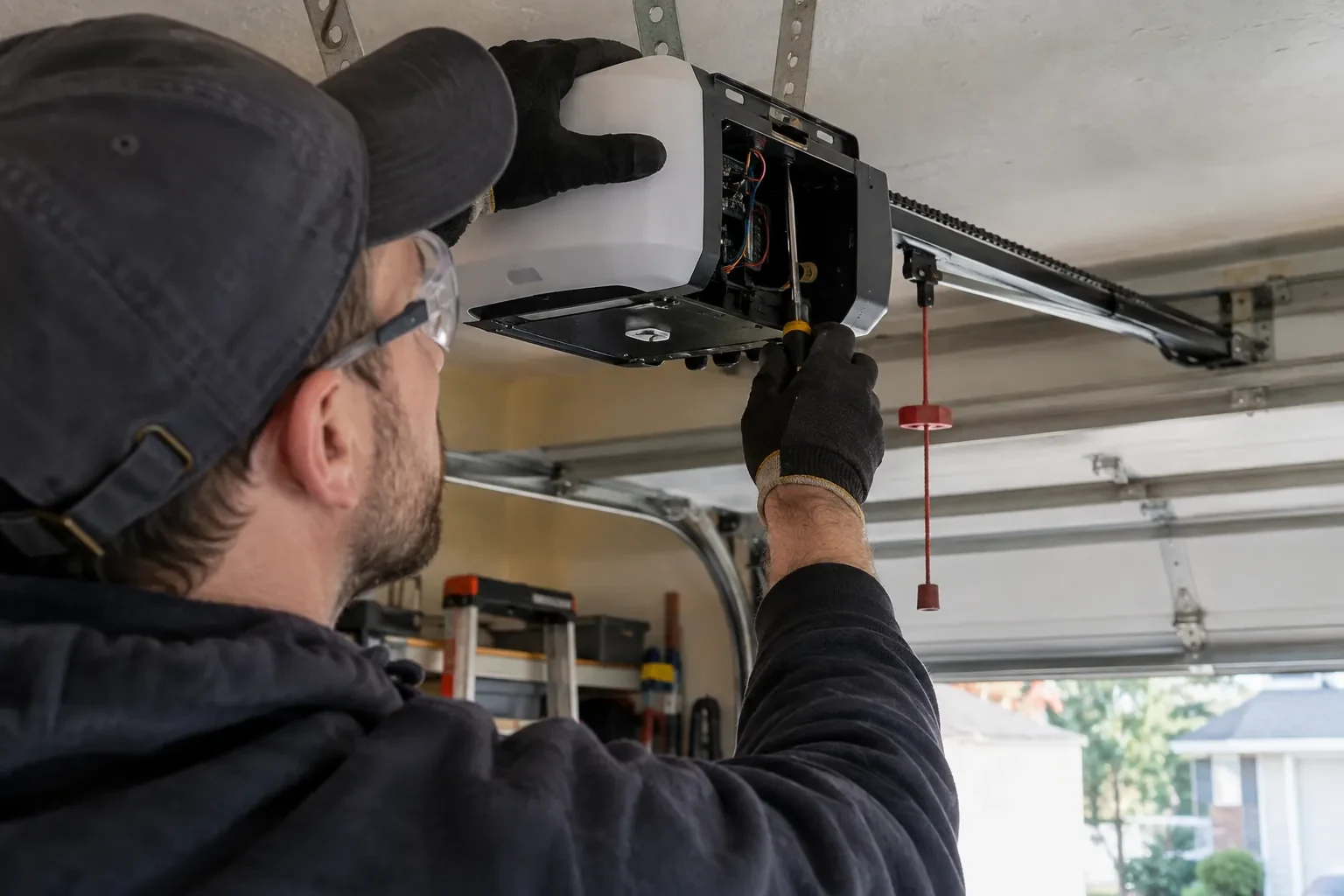
A short conversation fills in the picture. Did a vehicle touch the door? Was there a bang, a squeal or a grinding noise? Had the door been frozen to the floor that morning, or had something been left under it? Was one side already hanging lower for a while? Had the rollers been noisy for months? Each answer points at a different cause: impact, cable failure, ice, obstruction or long wear. Photographs the homeowner took from a safe distance are useful too, because they show the door before anything moved. This history is the difference between resetting the symptom and fixing the reason.
Putting the cables back on their drums
A cable that unwound or crossed on its drum is stripped back and rewound in its groove, beginning at the cable stop and laying each turn beside the last. Both cables are set to equal length so the bottom section hangs level, then the drums are locked to the shaft and the springs are rewound to the door's weight. A cable with kinks, rust or broken strands is replaced along with its partner so the two sides age together. This part of the work is done with the door clamped fully closed and the sections held, because a cable coming under tension is exactly when a door wants to move.
A monthly look at the rollers and cables
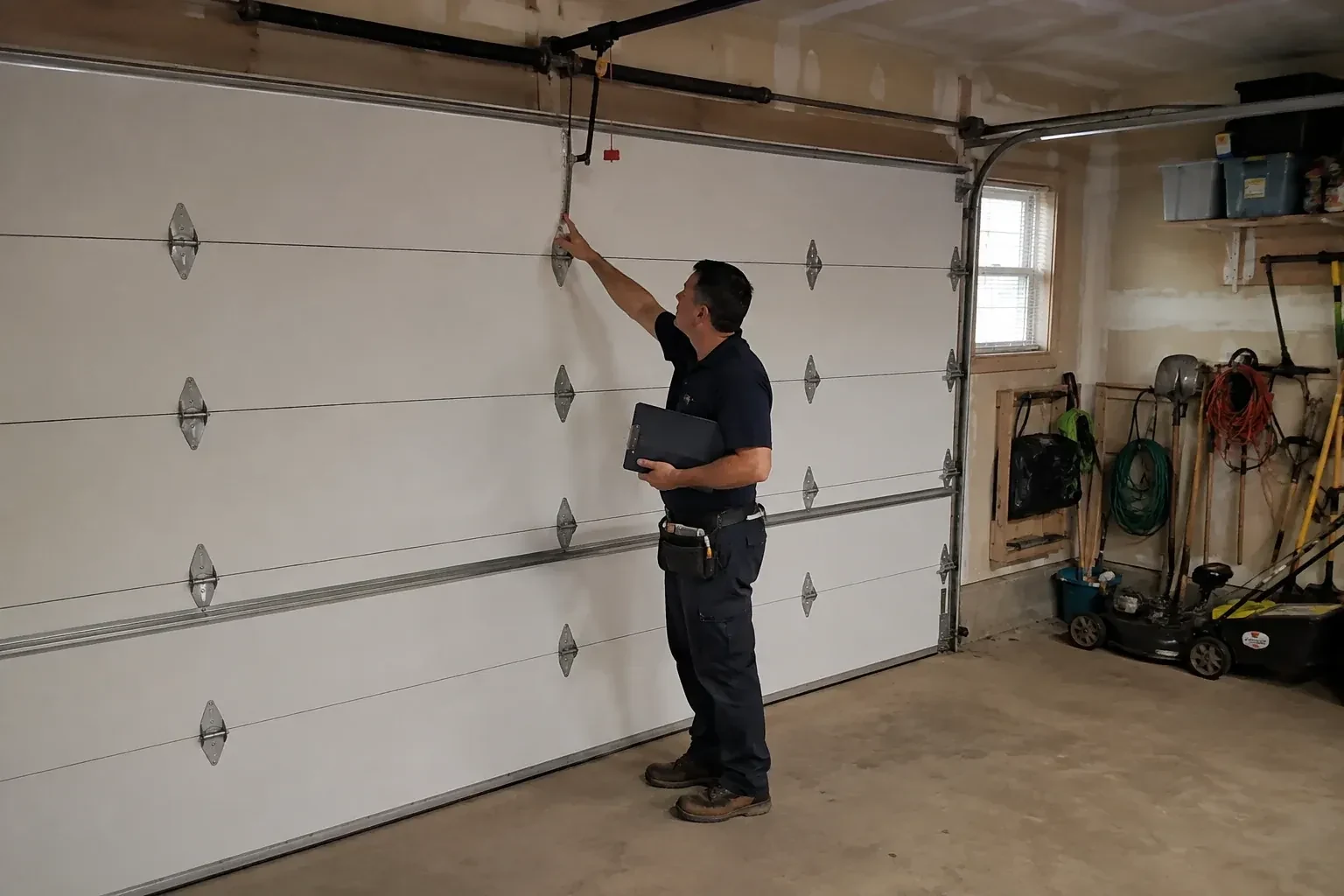
Once a month, with the door closed, stand inside and look along both tracks with a flashlight. Rollers should turn as the door moves and sit fully inside the rail; a wheel that wobbles, squeals or shows a worn flat is asking to be replaced before it drops out. Both cables should run taut from the bottom brackets to the drums with no fraying near the bottom, where salt and water collect. Hinges and jamb brackets should have no loose or missing screws. This two-minute walk catches almost every off-track event while it is still a small hardware job.
Off-Track Garage Door Reset
In the van
Lifting cables, matched pair
Long lag screws or through-bolts
Garage-door silicone lubricant
Bottom brackets
Graduated edge hinges
Off-Track Garage Door Reset
What affects the quote
Condition of the jamb and fasteners
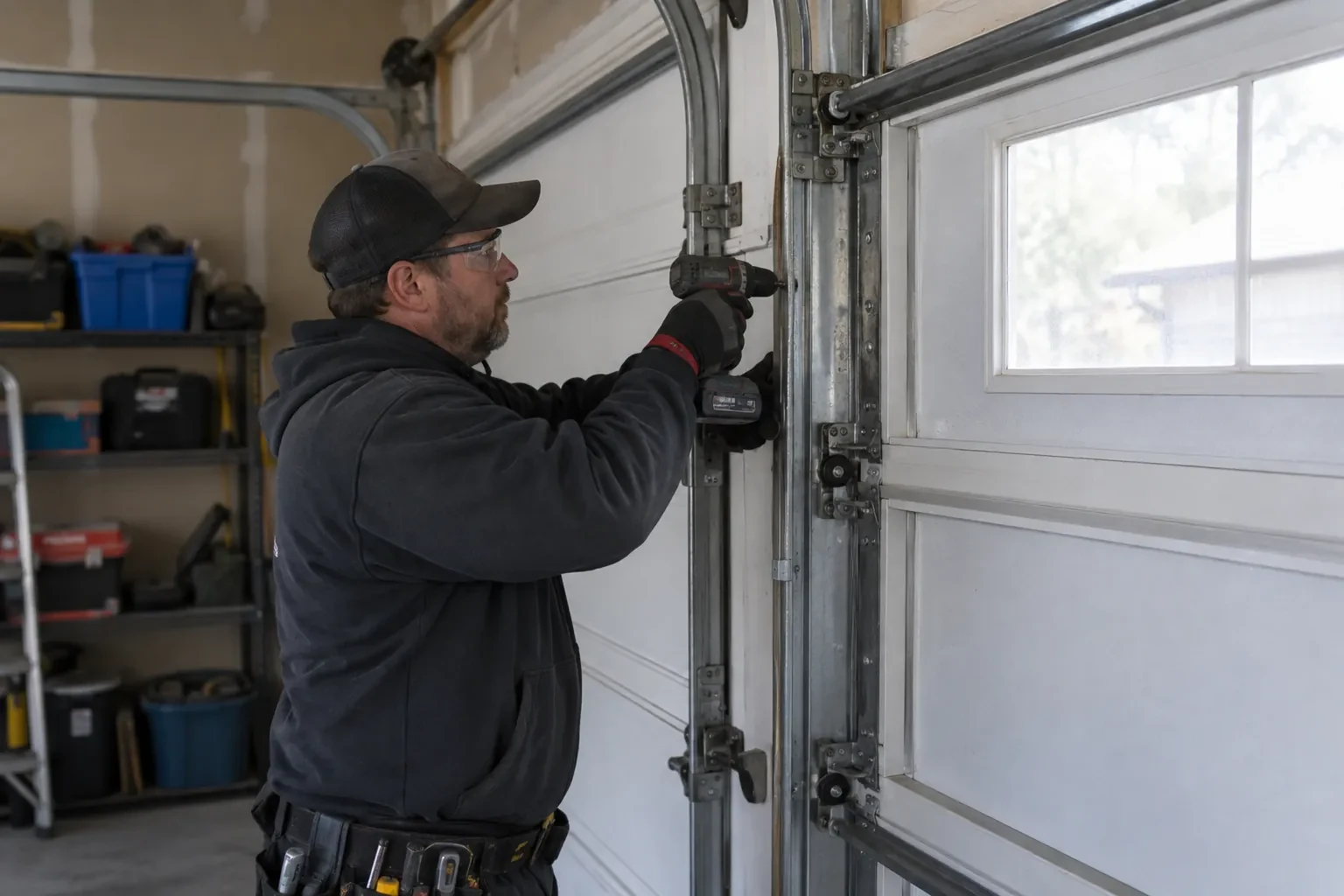
Lag screws that spin in dry or split wood are moved to sound framing or replaced with longer fasteners or through-bolts. If the jamb itself needs a repair or a sister piece, that is named as an extra item.
Hinges, brackets and fixtures bent in the event
A twisted bottom bracket, a bent graduated hinge or a distorted top fixture is replaced rather than straightened. Each one is a small part but is priced and listed on its own so you see what was changed.
Where the door was stuck
A door jammed part way up with the load shared unevenly between springs and cables takes more care to secure and lower than a door that is closed and merely crooked, and that time is part of the estimate.
What to have ready
- Have you unplugged the opener or pulled the red release cord?
- Is one side of the door hanging lower than the other?
- Was the door frozen to the floor or was something under it when the opener ran?
Off-Track Garage Door Reset: questions
QuestionsWill the door be as good as it was before?
In most cases it comes back better, because the reset includes truing the track, replacing worn rollers and correcting the misalignments that had been building unnoticed. The exception is a section creased by an impact: it may work perfectly well after the reset yet keep a visible dent, and the technician will tell you whether it is sound or worth replacing at some point. You are shown the door running before the visit ends.
Are the springs involved in an off-track door?
Frequently, in one of two ways. Springs that are worn, broken or mismatched to the door's weight make the opener carry a load it was never meant to, dragging the sections out of line. And whenever cables must be re-seated or replaced, the spring tension has to be released and rewound to do it. The technician assesses the springs at the start and tells you whether they are part of the fix.
Will the track have to be replaced?
Often not. A track that is simply out of plumb, spread at the lip or loose on its brackets is re-formed and re-fixed. Replacement is for rail that has been crushed, kinked or torn by an impact, because a roller passing a tight spot will pop out again. The technician measures the damaged length against the door's roller size and tells you which case you have before any track is ordered or cut.
Related services
- Garage Door Tune-UpSince the first cold snap the door has been sluggish.
- Garage Door Panel ReplacementFrom outside, the horizontal groove between two sections now steps sideways by a centimetre.
- Garage Door Bottom Seal ReplacementEvery mild afternoon the snow melts off the car, runs to the door, and by morning the rubber strip along the bottom is frozen to the concrete.