Openers · Centre Wellington
Belt-Drive Opener Repair
The belt looks fine from a distance, but up close the rubber has cracked across the back in dozens of places and, in one spot, you can see the steel cords showing through.
In plain words
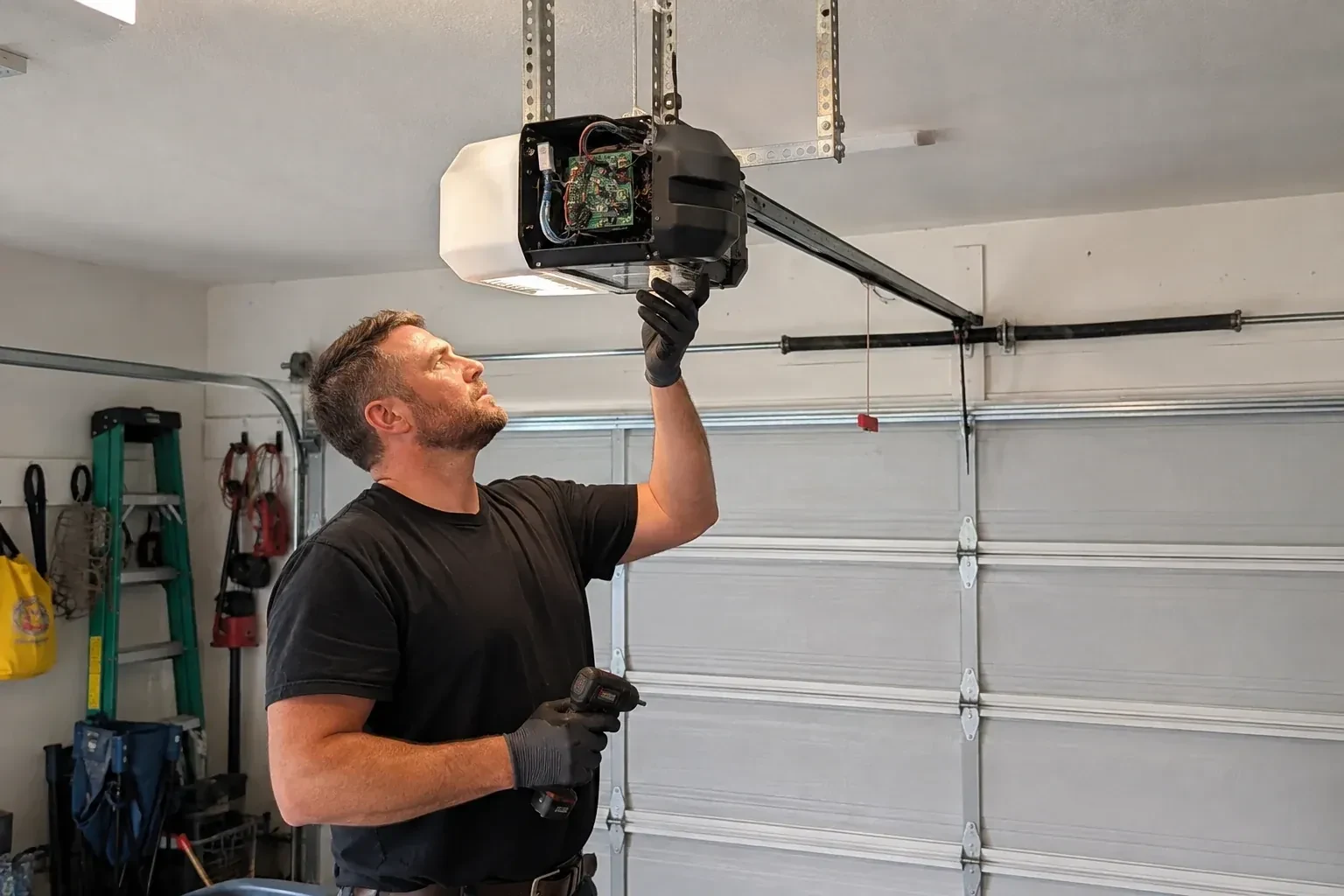
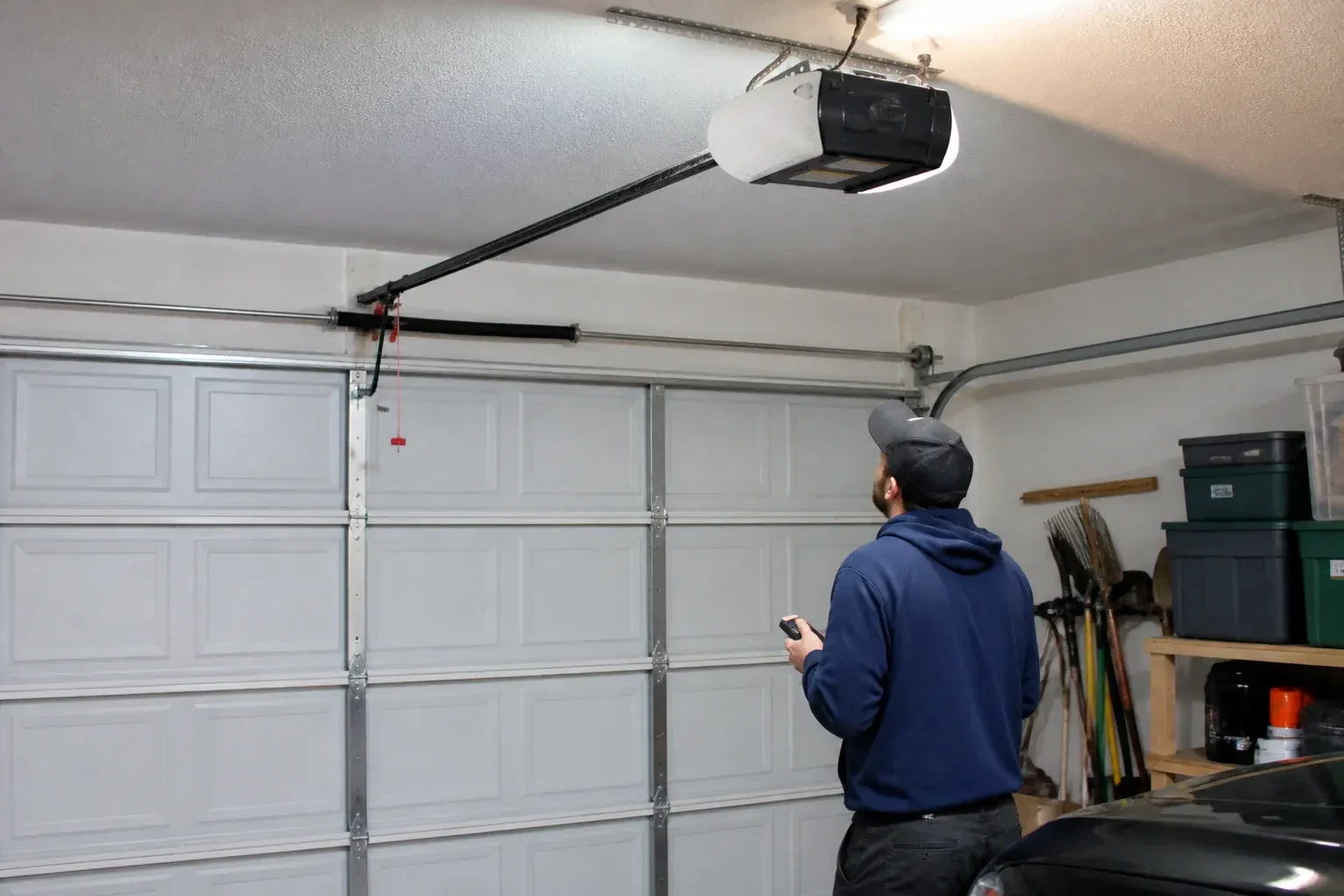
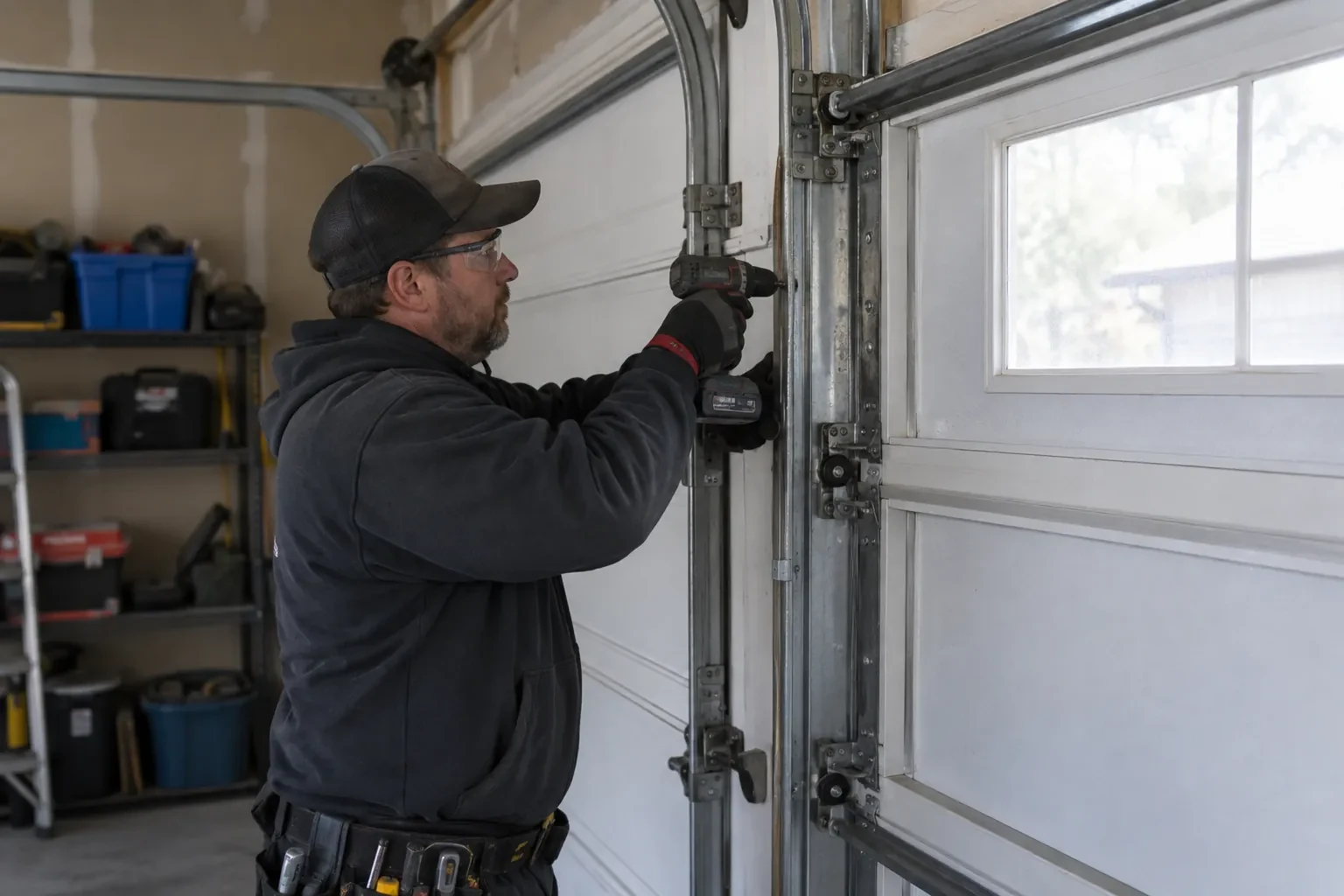
The visit runs in a set order. First the operator is unplugged and the door is released and lifted by hand, because the belt only guides a door the springs already carry; a heavy door is a spring job, not a belt job. Next the belt is examined along both runs, its tension checked at the trolley spring, and the sprocket, idler pulley, trolley and rail looked over. Then the repair itself: adjusting, or replacing the belt, trolley, pulley or gear kit. Finally the motor and trolley are put back in phase, travel and force are relearned, and the two reversal tests are run before the door is handed back.
How the visit goesSomeone tightened the belt last month to stop the sag. Now the opener sounds like a chain drive, the motor labours on the way up, and the whole rail vibrates under the ceiling.
Belt-Drive Opener Repair
How the visit goes
Sprocket, pulley and the shavings that give them away
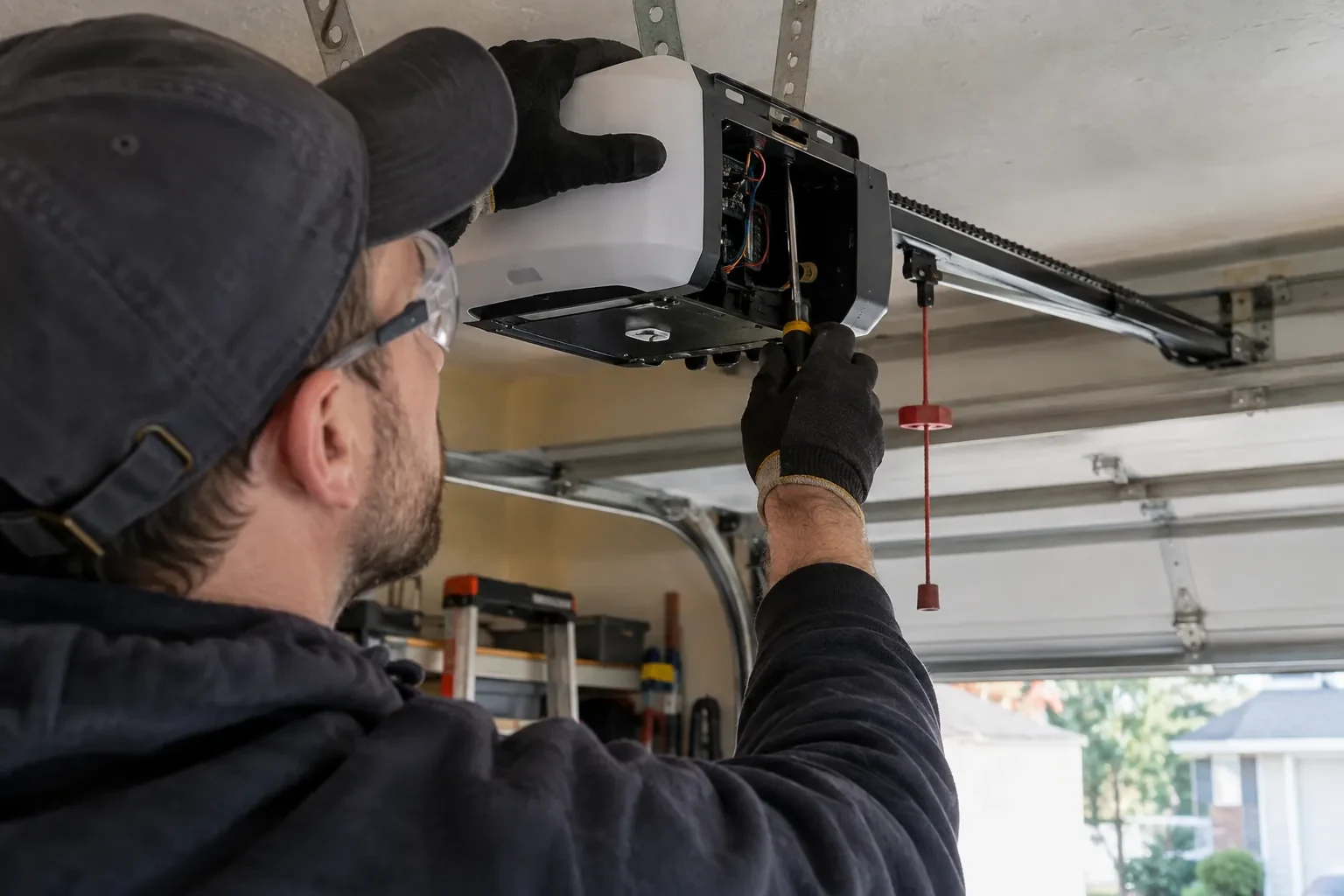
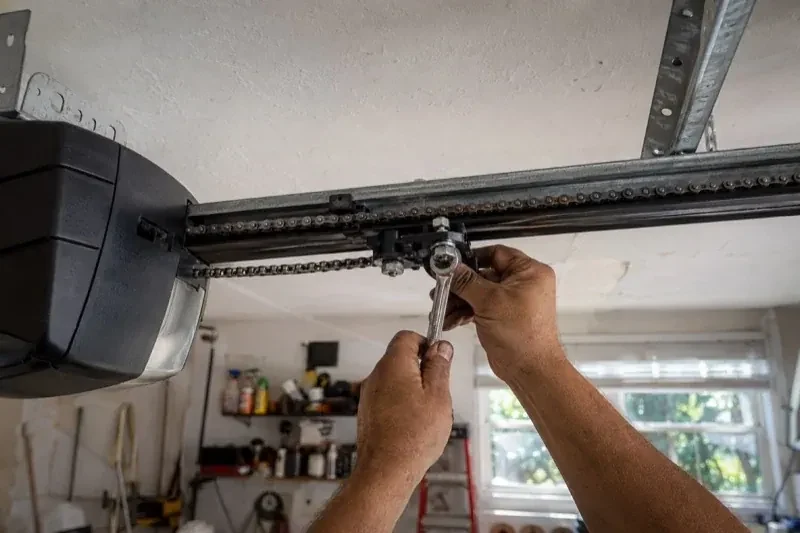
The belt runs over two wheels: a drive sprocket on top of the motor head and an idler pulley at the far end of the rail. The technician looks at the sprocket's teeth for hooking and wear, feels for wobble on its shaft, and checks the housing below it for the plastic shavings that mean the drive gear inside is stripping. At the front, the idler pulley is spun by hand for roughness or a dry bearing and sighted along the rail to see whether it is letting the belt track off to one side. A worn sprocket chews a new belt within months, so this check decides whether the gear-and-sprocket kit belongs in the repair.
Finishing the door around the belt
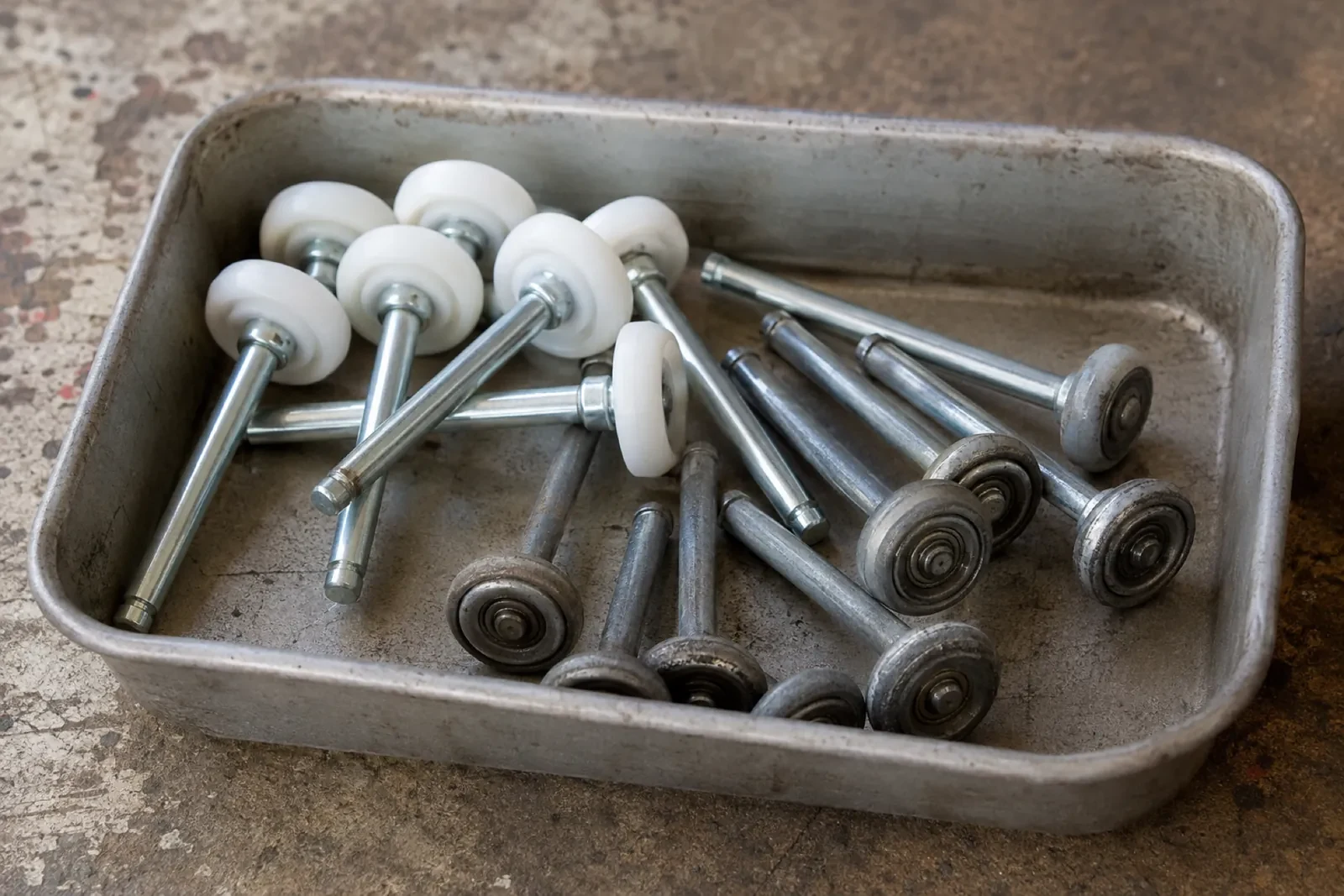
A belt drive is only as quiet as the door it moves, so the visit closes with the door hardware. Hinges, rollers and springs get a garage-door lubricant, cold-rated for a detached garage; the belt itself is wiped clean and left dry, because grease softens the rubber and packs the teeth with grit. Rail hangers are snugged, the manual slide lock is disabled so it can never be thrown against the motor, and the red release handle is confirmed to hang no more than about 1.8 m. The wall control is checked for height and the photo eyes for alignment, and the operator's cover goes back on.
A record of what was done
Before leaving, the technician writes down the operator's model and serial number, which belt or parts went in, the tension setting used and the date, and hangs the note with the manual near the wall control. You are shown what was replaced and why, and the old parts are yours to keep or are taken away. Keep the note; a belt has a service life measured in years and cycles, and knowing when this one went in tells the next technician where to look. Any settings the operator lost during the work, such as remotes or a keypad code, have been re-taught and tested with you.
Belt-Drive Opener Repair
In the van
Door arm and clevis pins
Reinforced drive belt with clip
Belt tension spring and square nut
Photo-eye sensor pair
Rail joint brackets and stop bolts
Belt-Drive Opener Repair
What affects the quote
Sensors and controls needing attention
Photo eyes out of alignment or too high, a wall control below the recommended height or a release handle out of reach are corrected during the visit and listed separately.
A second operator on the same property
Where a double garage has two belt drives, or a workshop has its own, both can be looked at in one trip, and the quote shows the two repairs on a single visit.
Belt length and type
A belt for an 8 ft door rail is longer than one for a 7 ft rail, and belts differ by maker and tooth pitch, so the part named on the quote follows the operator's model.
What to have ready
- Has anyone tightened or adjusted the belt recently?
- What is the belt doing: sagging, slapping, clicking, frayed, or hanging loose?
- Is anything hung from the ceiling or rail, such as a bicycle hook or storage rack?
Belt-Drive Opener Repair: questions
QuestionsHow long should a belt last once repaired?
A belt's life is counted in cycles and years, and on a balanced door with the rail straight and the tension right it runs for many years. What shortens it is a heavy door, an over-tight adjustment, a bent rail rubbing one edge, or grease on the rubber. Keep the door balanced and lubricated, the belt dry, and glance along the rail a few times a year.
What are the plastic shavings under the motor head?
They are from the drive gear inside the head unit, which is stripping its teeth. On a belt drive the gear turns the sprocket that moves the belt, so a stripped gear leaves the motor humming and the belt still. The gear-and-sprocket kit is replaced as a set, the shaft's end play is checked, and the belt is refitted and phased.
Should the belt be lubricated?
No. The belt is meant to run clean and dry; oils and sprays soften the rubber and gather grit in the teeth, which wears the sprocket. Lubricant belongs on the door instead: hinges, rollers and springs get a garage-door lubricant once a year. The gear inside the motor head takes a light grease when it is serviced, and that is the technician's job.
Related services
- Chain-Drive Opener RepairThe door opens about a third of the way and stops.
- Garage Door Opener ReplacementSince the storm the door behaves oddly: it reverses halfway down for no reason, the light flickers, and the travel limits drift so it either slams or stops short.
- Photo-Eye Sensor Alignment or ReplacementSomeone backed the car in a little too far, a bin or a bicycle brushed the track, and since then the door starts to close and comes back up.