Repairs · Minto
Garage Door Manual Lock Repair in Minto
Someone slid the inside lock across before bed, and in the morning someone else pressed the remote.
In plain words
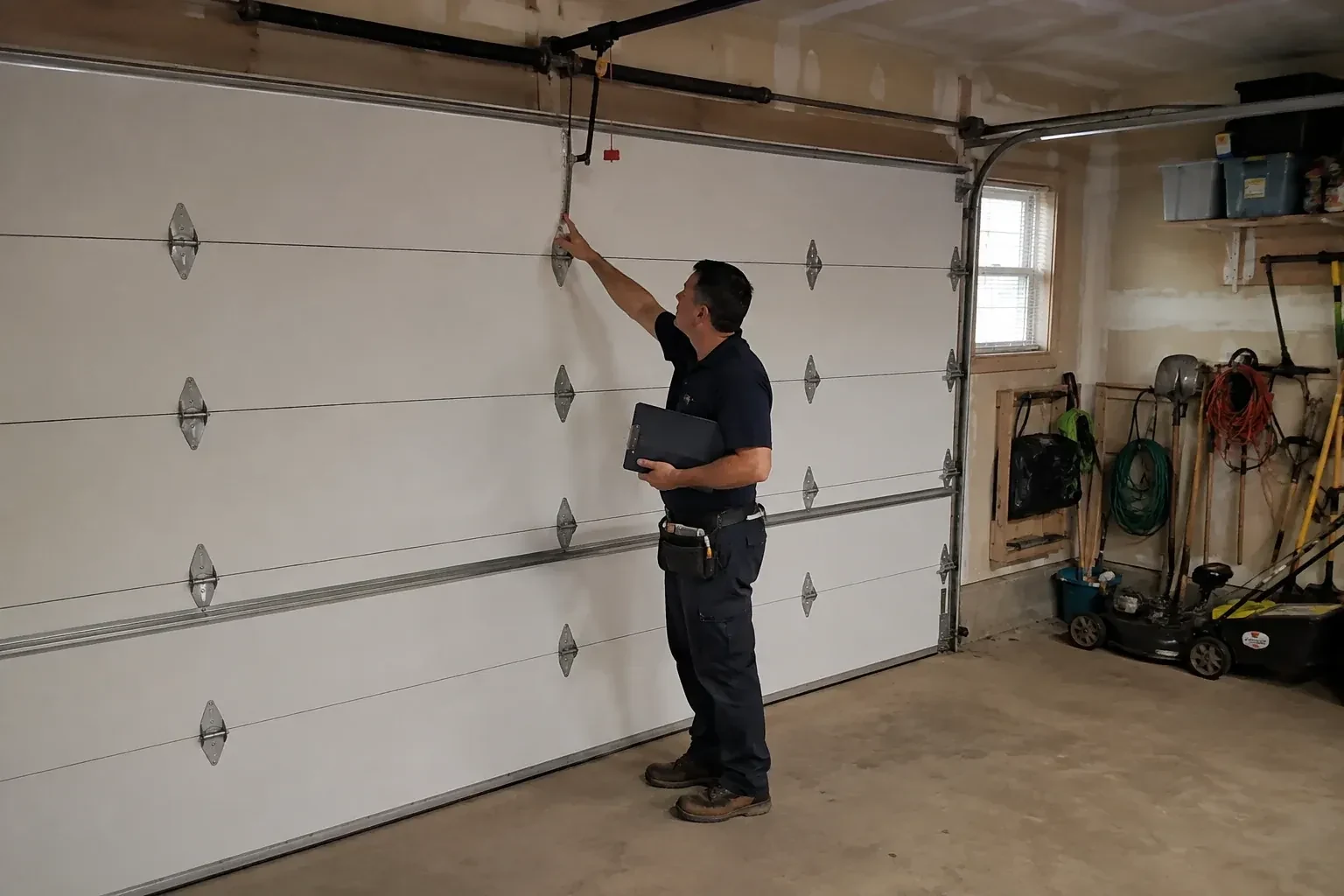
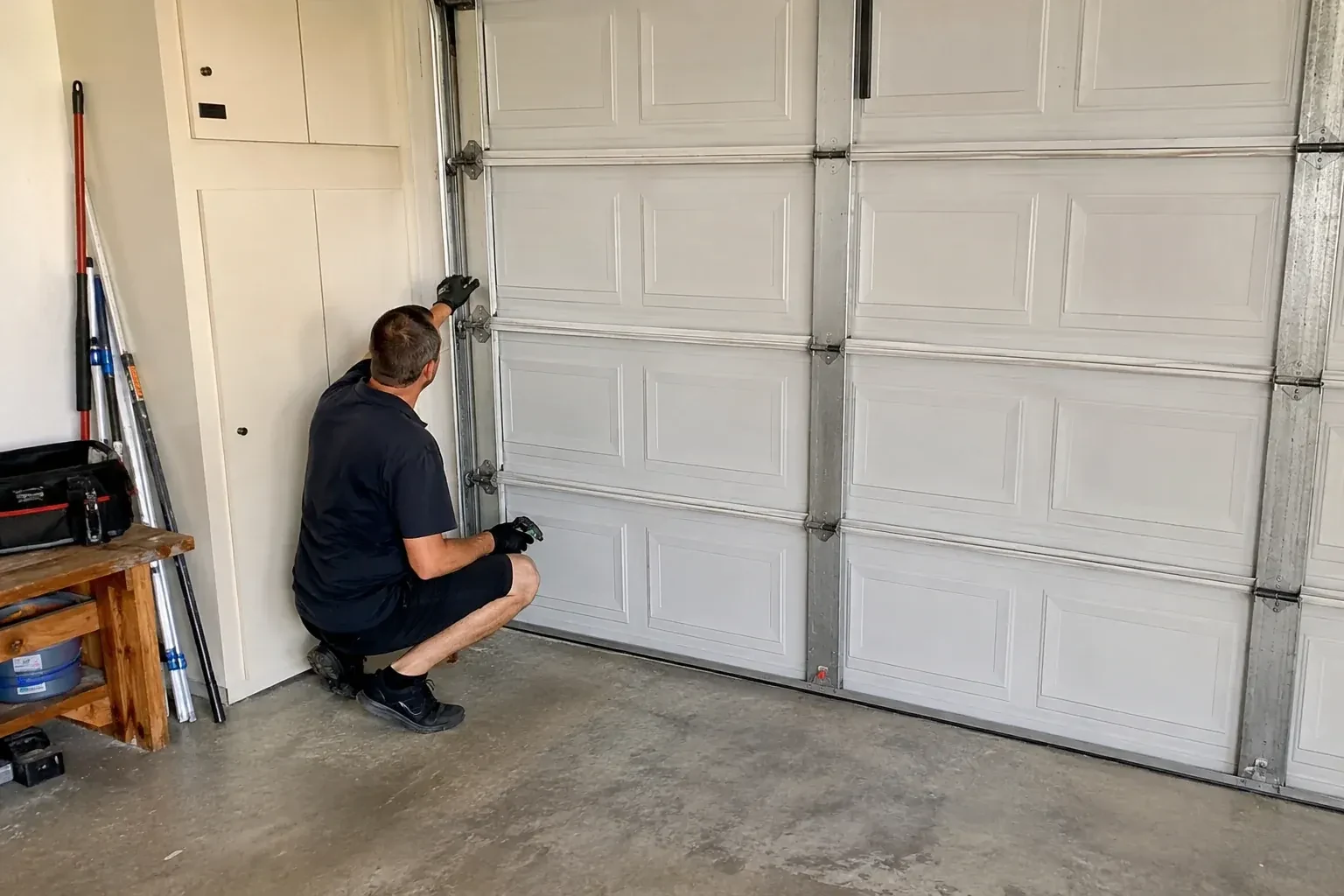
The visit runs in a settled order. On the phone you describe the lock, the door, whether an opener is fitted and whether the lock is currently jammed. On site the opener is disconnected, the door is closed by hand and checked for level. The lock is then examined piece by piece: handle, spindle, centre mechanism, bars, guides, cylinder, fasteners and the track slots. Adjustments are made first, worn parts replaced second, and the lock is cycled from both sides with the door shut. Finally the opener is reconnected, the door runs full cycles, and you are shown how the lock and the opener are meant to be used together.
How the visit goesThe outside handle wobbles in your hand and the inside knob spins round and round with nothing attached. The screws that held the lock through the door skin have pulled loose, leaving oval holes, and the whole thing hangs on by little more than paint.
Garage Door Manual Lock Repair
How the visit goes
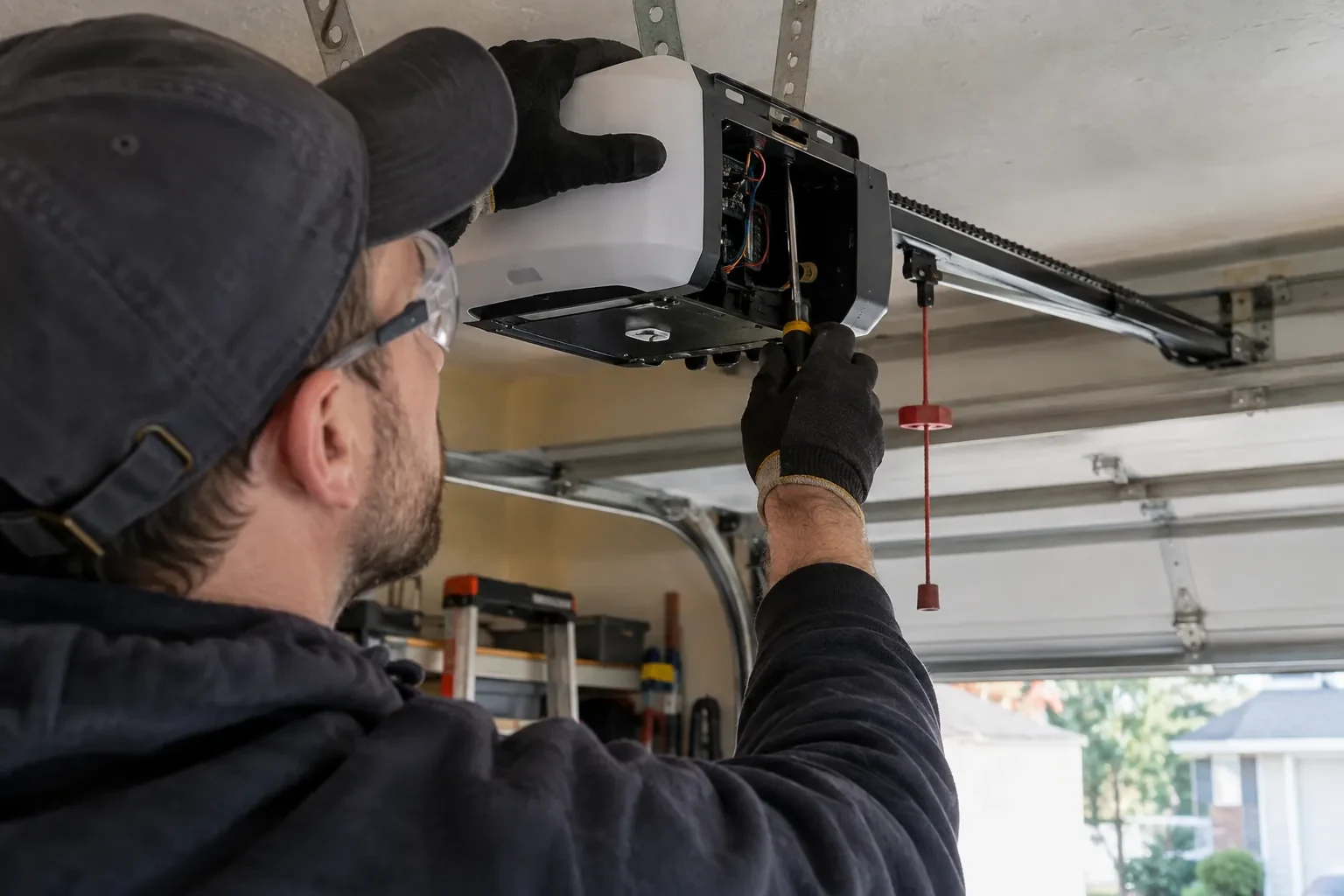
Handle, spindle and the mechanism behind them
The outside handle is turned while the inside of the door is watched. On a healthy lock the spindle rotates the centre body, a cam pushes both bars outward and a spring pulls them back. When the handle turns but nothing follows, the fault is somewhere in that short chain: a spindle that has twisted or sheared, a set screw that has let the inside knob spin free, a cam that has worn round, or a spring that has snapped. The inside cover comes off to see which, and the body is checked for cracks or for pulling away from the door. The exact broken piece decides whether a small part or a complete mechanism is fitted.
Settling how the lock and the opener will live together
With the lock working, the opener is brought back into the picture. As opener makers direct, the bars are removed or fixed back so they can never reach the track, and the opener's own lock-out feature on the wall console is demonstrated as the way to secure a parked door. If the household wants a lock available for outages, that calls for a manufacturer-approved interlock rather than a label alone, and the technician explains what that would involve. Some openers also accept an add-on automatic deadbolt. The opener is reconnected and run through full cycles.
A record of what was fitted
Before the technician leaves you get a plain account of the work: which lock type is on the door, what was adjusted, which parts were renewed, the cylinder and keyway details, how many keys were cut, and how the lock and the opener have been set up to work together. If the bars were disabled at your request, that is written down too, so a future technician or a new owner knows why they are fixed back. Keep the note with the door manual or on a card by the opener. It turns any later service into a short conversation and saves someone measuring the door's thickness and bar length from scratch.
Garage Door Manual Lock Repair
In the van
Lock cylinder with tailpiece
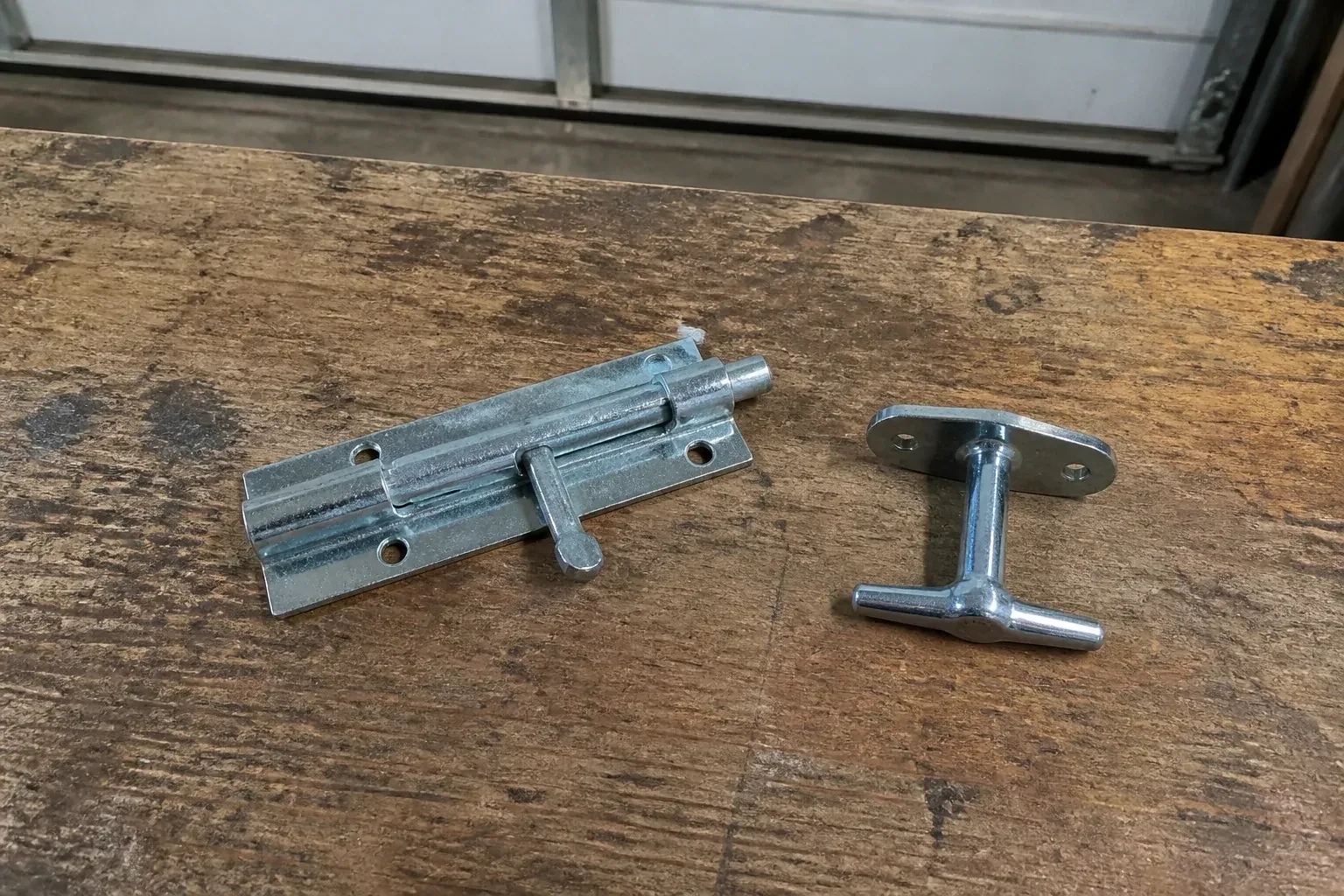
Keyed T-handle lock set
Inside turn handle and spindle
Dry graphite or PTFE lubricant
Carriage bolts and backing plates
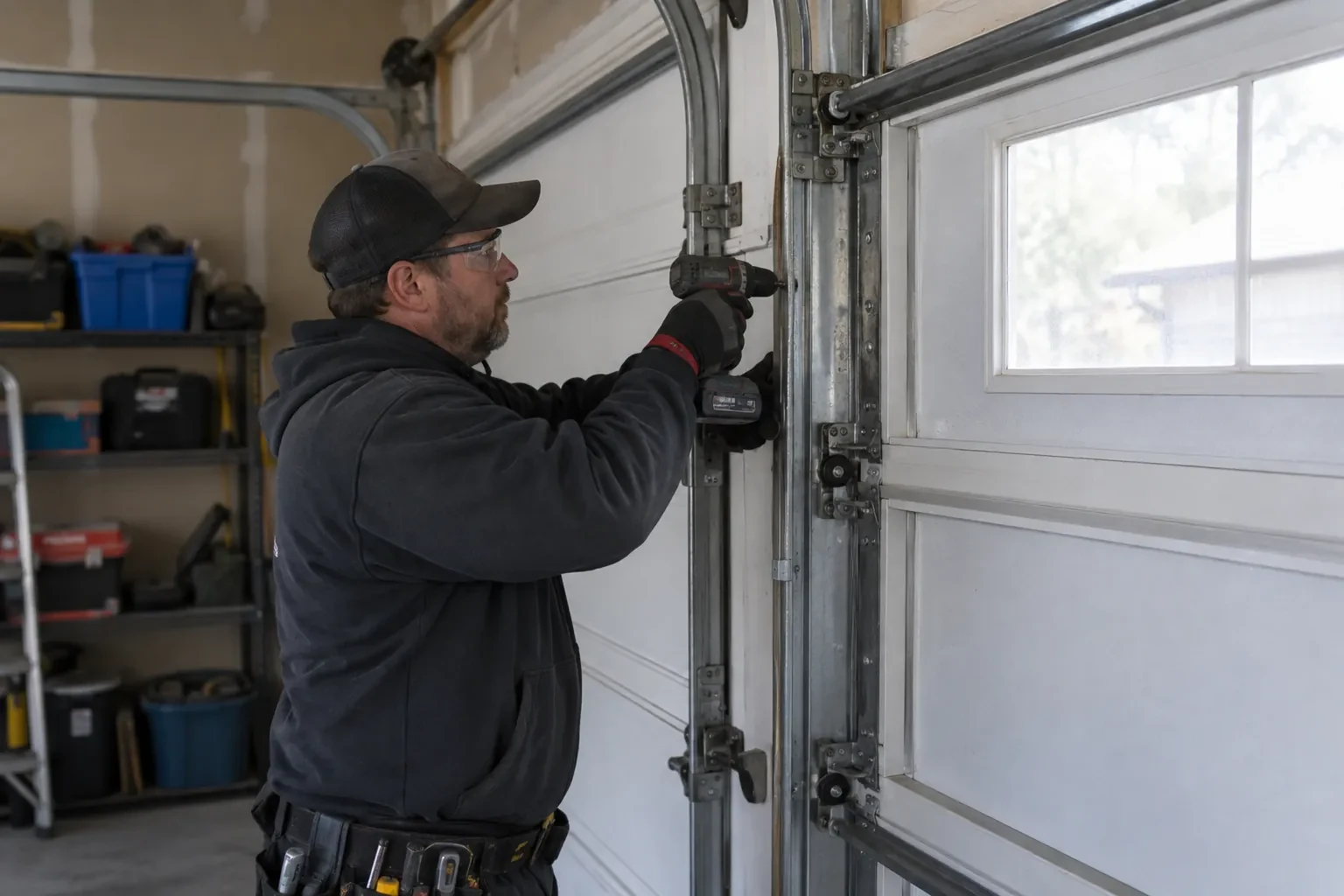
Garage Door Manual Lock Repair
What affects the quote
One door or two
A garage with two single doors, or a house with a second garage, doubles the hardware to check and often the parts to fit. Doing both in one visit is efficient and quoted as such.
Access along the door edges
Shelving, bikes or storage against the vertical tracks and door edges slow the work at the guides and slots. Clearing a metre either side beforehand shortens the visit.
Adjust, repair or replace
A guide reset or a cylinder rekey is a small job; a new mechanism or a complete handle set with bars is a larger one. The inspection settles which is needed before anything is quoted.
What to have ready
- Do you want to be able to lock the door by hand during a power outage?
- Is the lock a sliding bar inside, a T-shaped handle outside with a key, or both?
- Does the handle turn, and does anything move inside the door when it does?
Garage Door Manual Lock Repair: questions
QuestionsDoes lock work involve the springs or cables?
The lock, its bars and its guides all live on the door sections and the tracks, well away from the counterbalance, so the visit involves no winding or unloading of springs. Where a lock misses its slot because the door hangs crooked or sits high, the door's balance or a cable may be part of the story, and the technician points that out so it can be dealt with properly.
My key will not turn in the cold. What is happening?
Meltwater has run down the door face into the keyway during a thaw and frozen overnight, or cold has stiffened old lubricant inside the cylinder. Lock de-icer or gentle warmth frees it; hot water is avoided because it refreezes and can crack cold metal. Afterwards the cylinder is dried and given a dry graphite or PTFE lubricant that sheds moisture instead of trapping it.
The wood around my lock is soft. Can it still be repaired?
Yes. The decayed wood is cut back to sound material and a hardwood block or a steel backing plate is let in behind the handle and along the stile where the bar guides sit. The handle, mechanism and guides are then fixed to that new material with through-bolts rather than screws into soft grain, so the lock turns without rocking and the bars hold their line.