Garage Doors in Centre Wellington, OntarioOne visit,a stocked van.
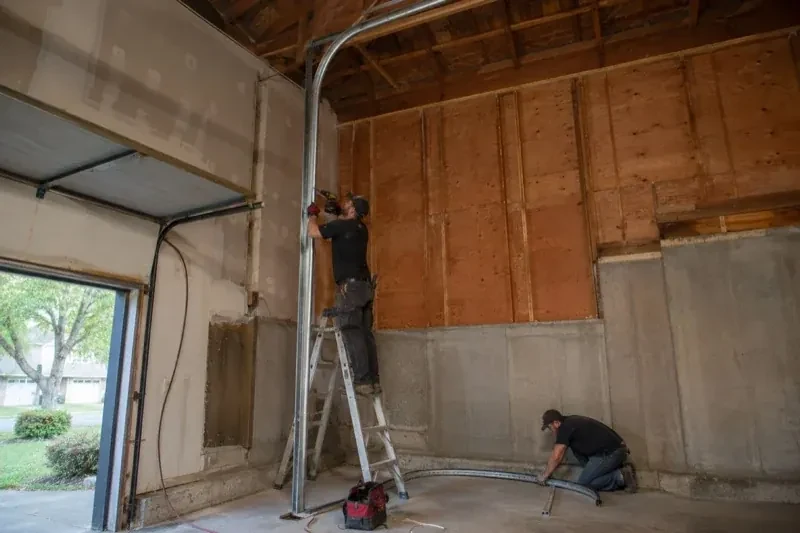
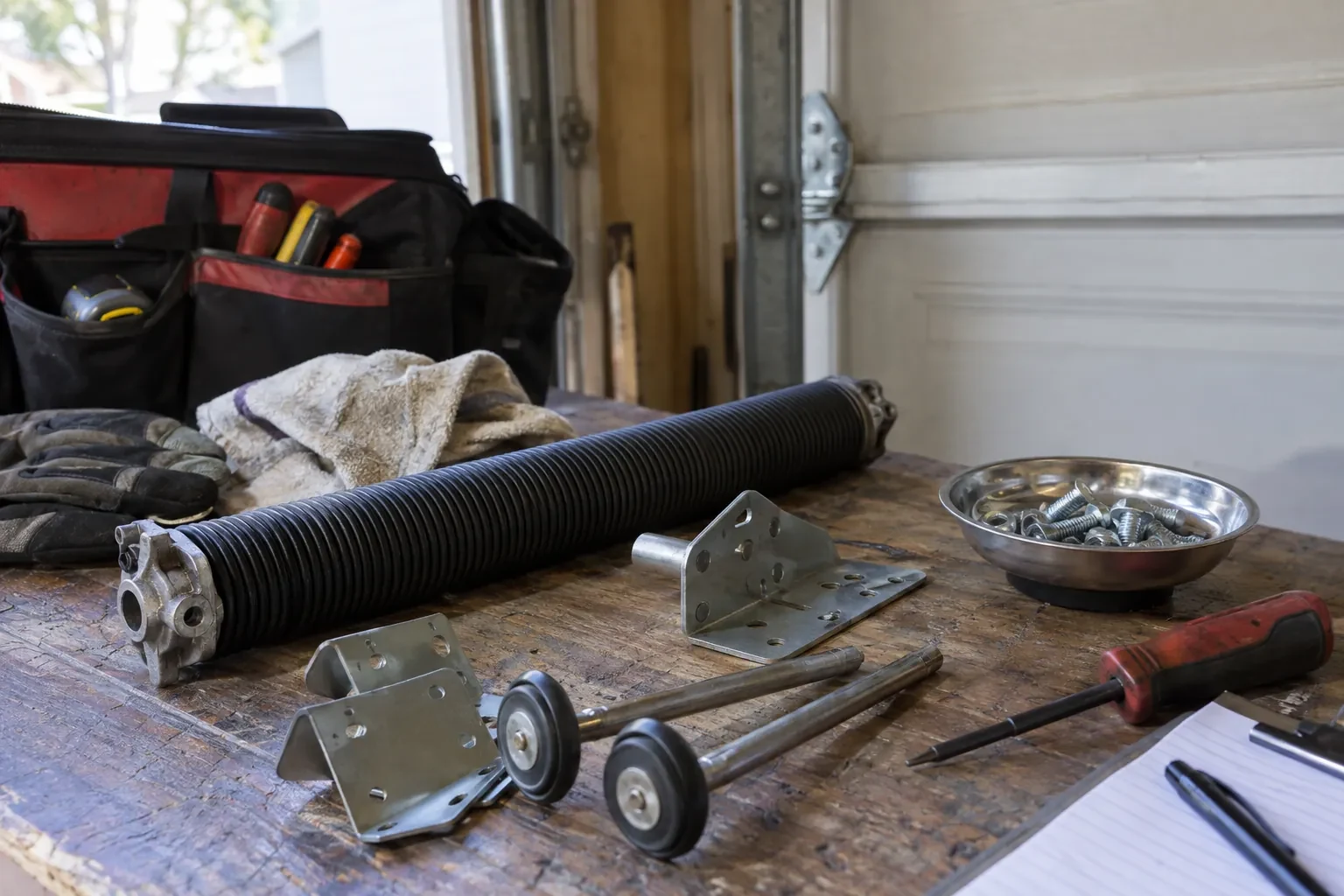
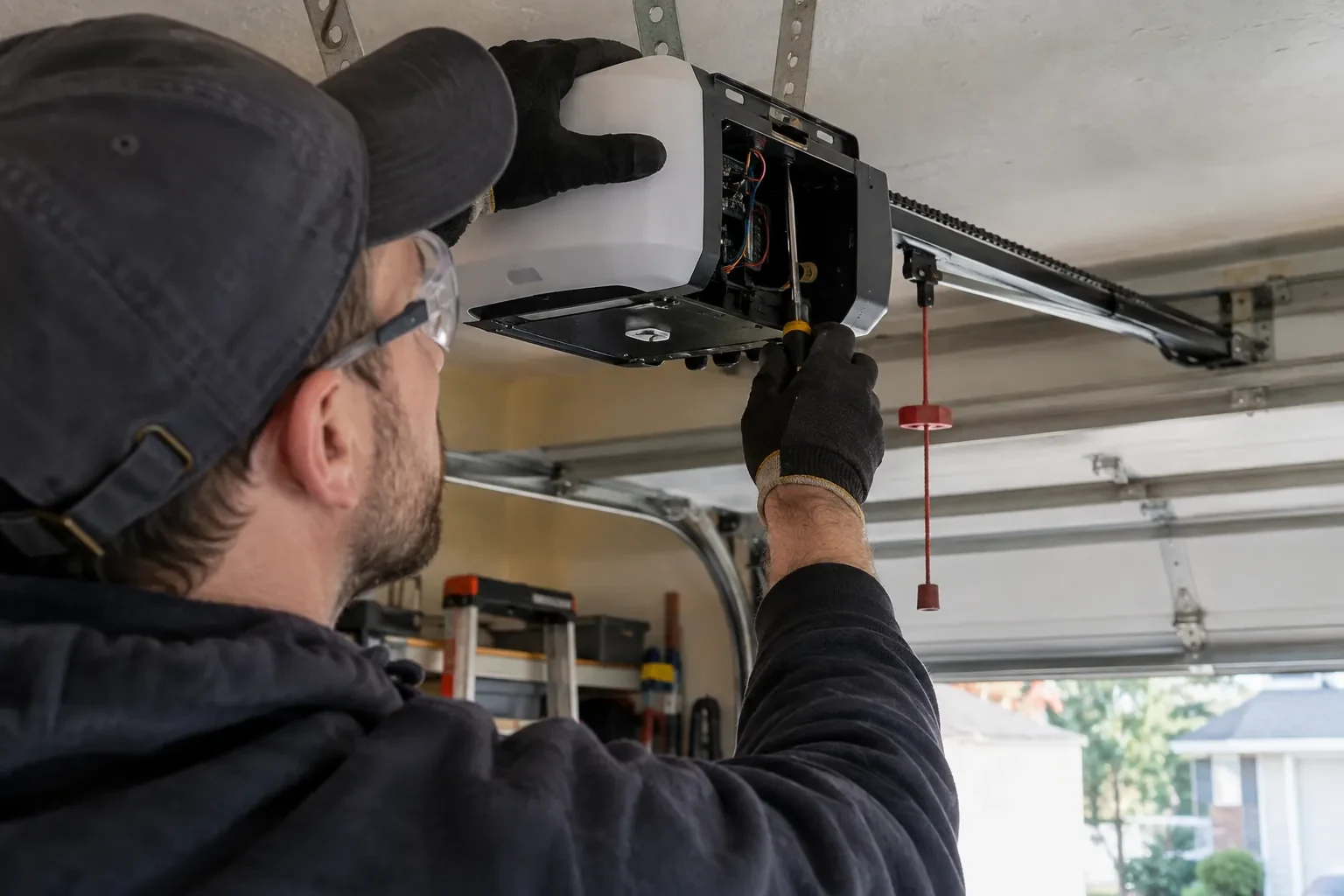
The common springs, cables, rollers, hinges, photo-eyes and opener parts ride along on every trip to Centre Wellington. That means most repairs are finished the day the technician arrives, and when a door needs something unusual, he measures it properly so the right part comes on the second visit. The same crew covers Craigsholme, Hereward, Orton, Belwood, Dracon, Ennotville, Fergus, Living Springs, Oustic, Ponsonby, Shands, Shiloh, Simpson Corners, Mimosa, Birge Mills, Speedside and Metz.
The common springs, cables, rollers, hinges, photo-eyes and opener parts ride along on every trip to Centre Wellington. That means most repairs are finished the day the technician arrives, and when a door needs something unusual, he measures it properly so the right part comes on the second visit. The same crew covers Craigsholme, Hereward, Orton, Belwood, Dracon, Ennotville, Fergus, Living Springs, Oustic, Ponsonby, Shands, Shiloh, Simpson Corners, Mimosa, Birge Mills, Speedside and Metz.
Honest advice, steady hands.
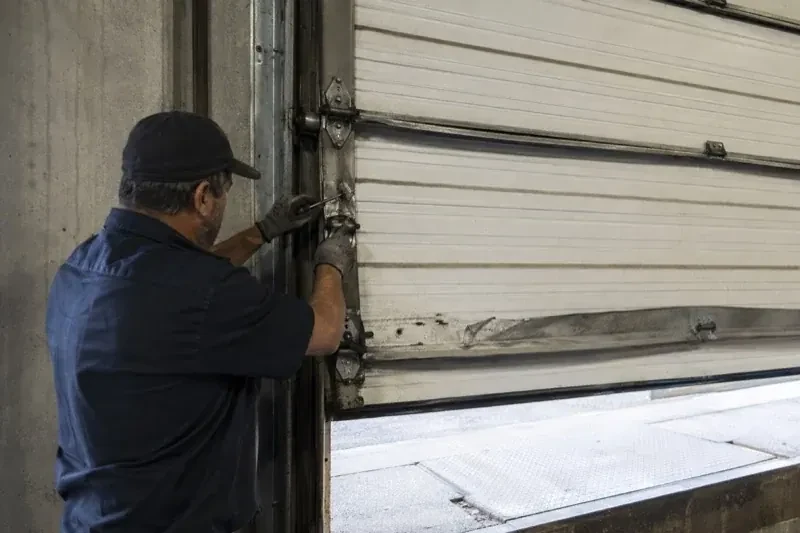
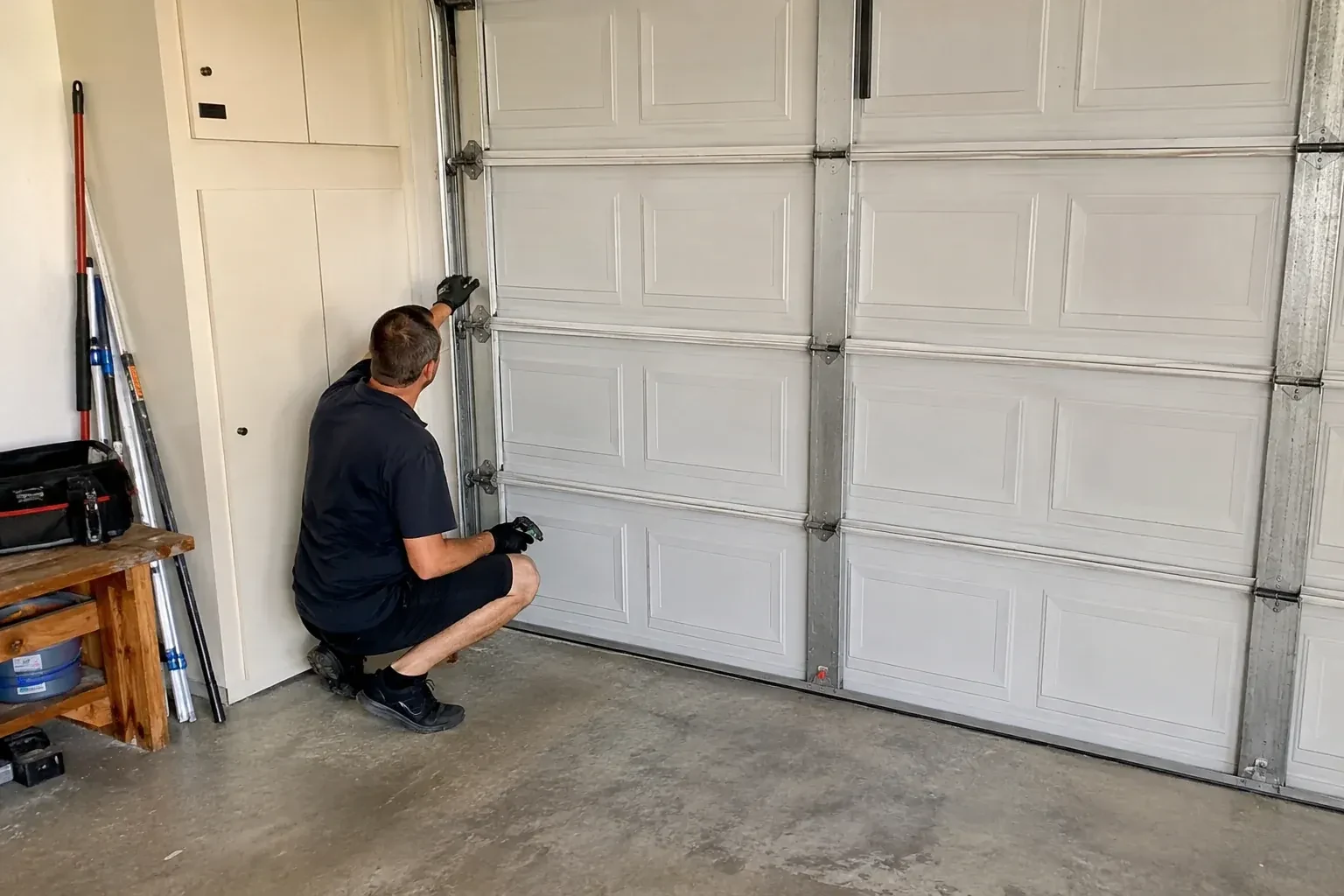
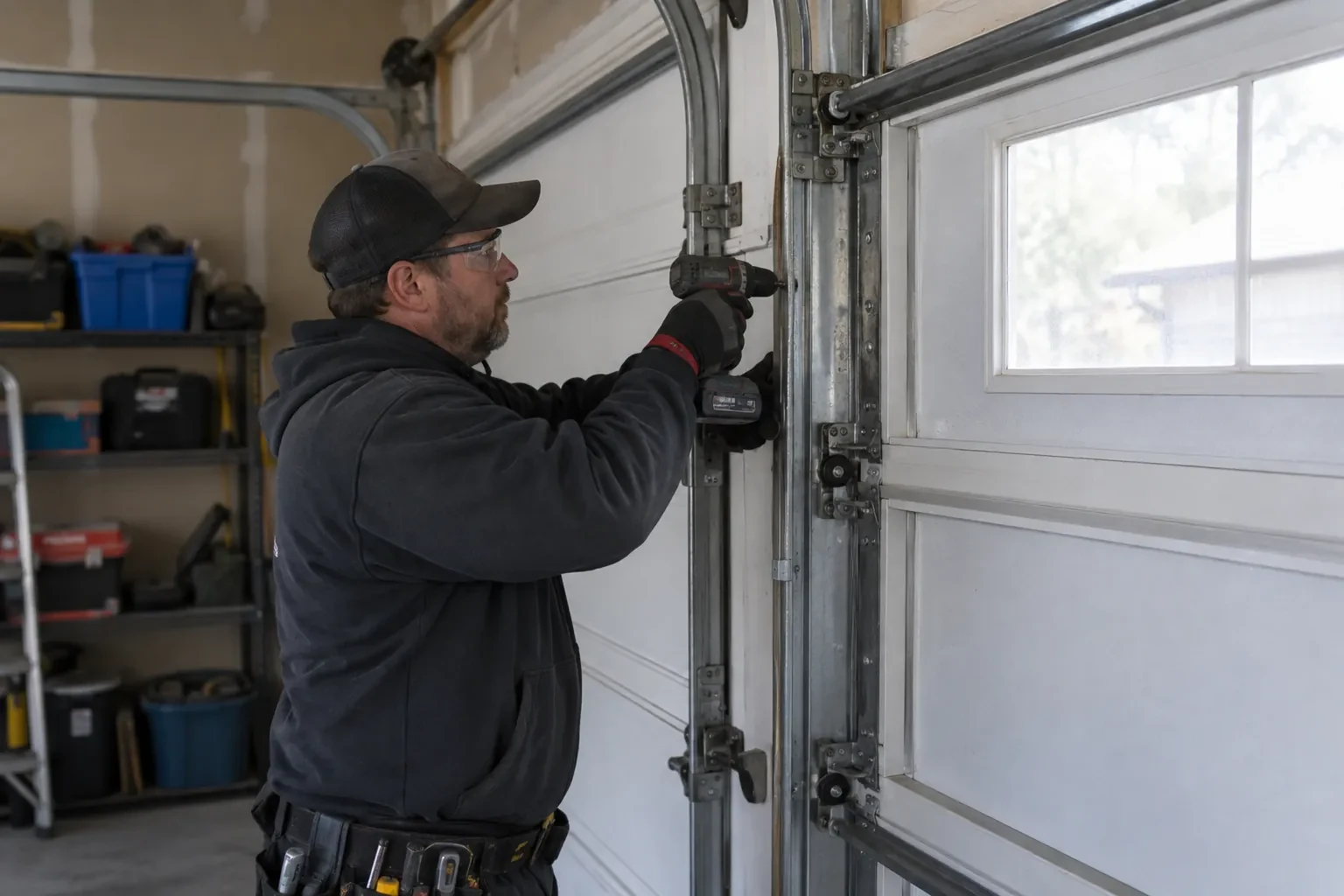
A garage door is heavy and the springs carry real force, so the work in Centre Wellington is done the careful way: door clamped, tension released with proper bars, parts measured before they are matched, and the door run through complete cycles afterwards. Careful is not slow; it is simply how a heavy door should be treated.
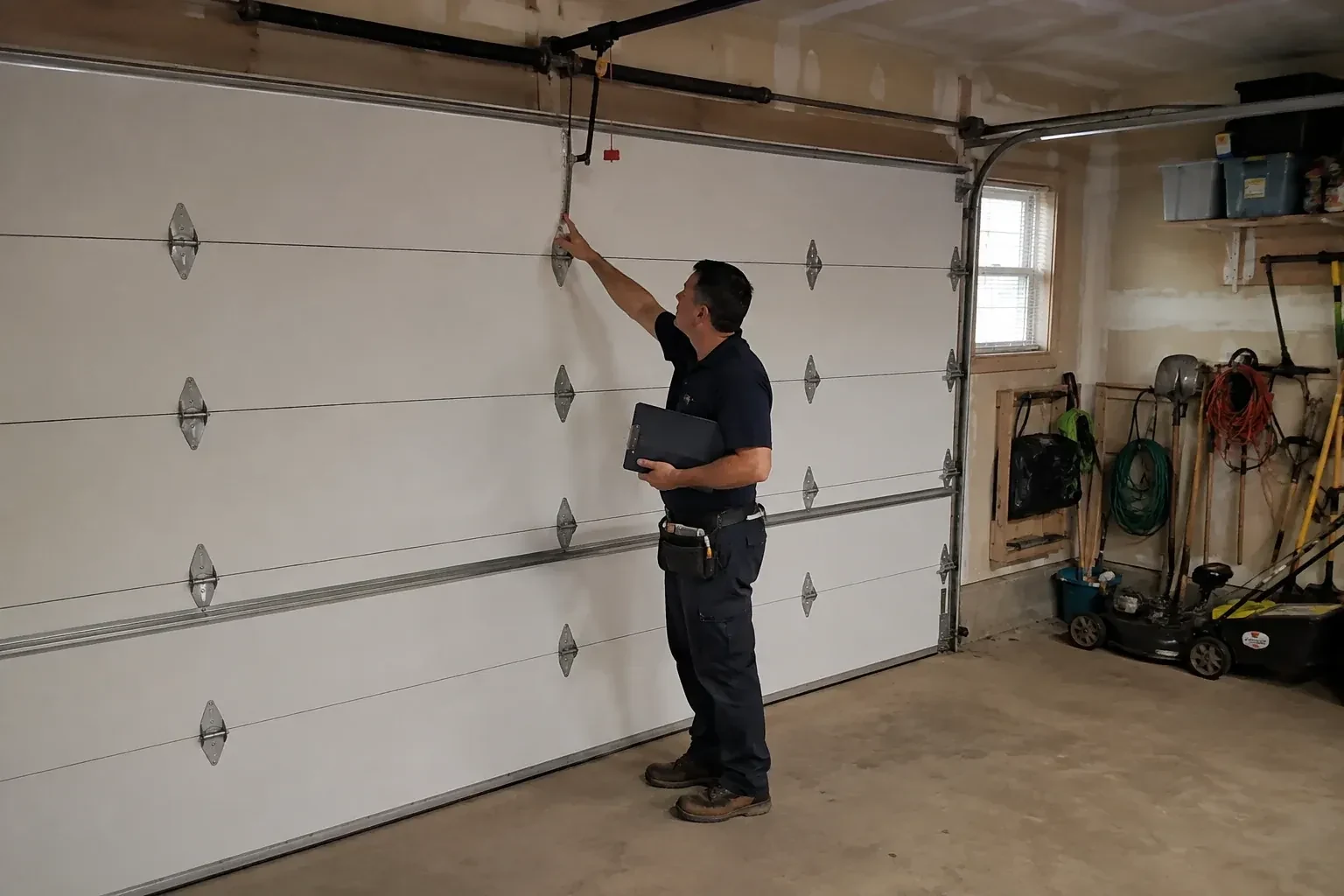
Every garage door repair we do in Centre Wellington ends the same way: the door is cycled several times with you watching, the old parts are shown so you can see what was wrong, and the technician explains what to keep an eye on. It is a small ritual, and it means the fix is seen rather than described. The garage is left as tidy as we found it.
21years in business
24/7open every day
Explanation before action. You will know what is worn, why it failed and what the options are before a single bolt is turned. Questions are welcome at every step.
A tidy garage. Drop cloths where needed, old parts bagged, floor swept. We leave the space as we found it, only with a working door.
Choices, not pressure. If a repair will do, we say so. If a replacement makes more sense, we explain why and let you decide.
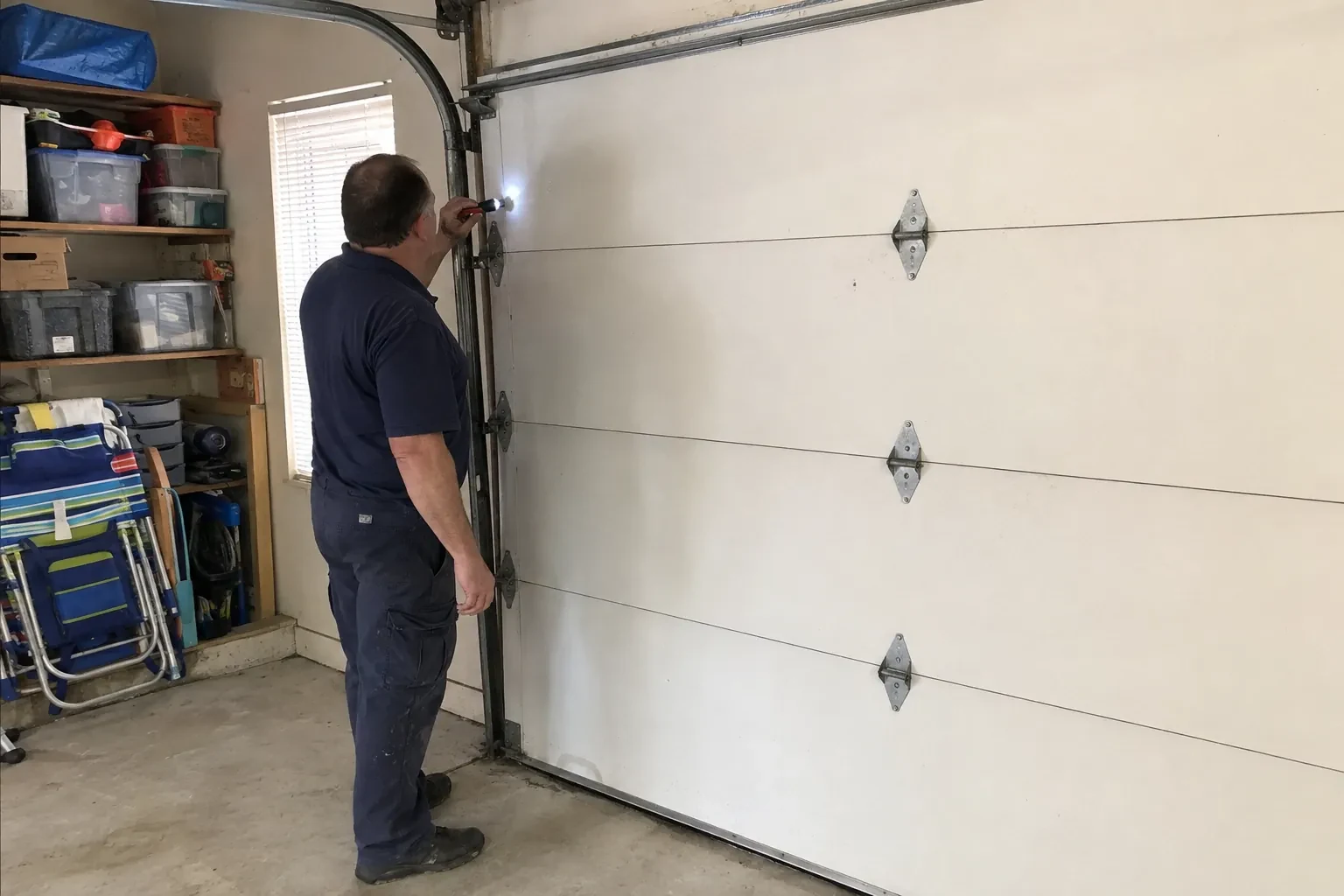
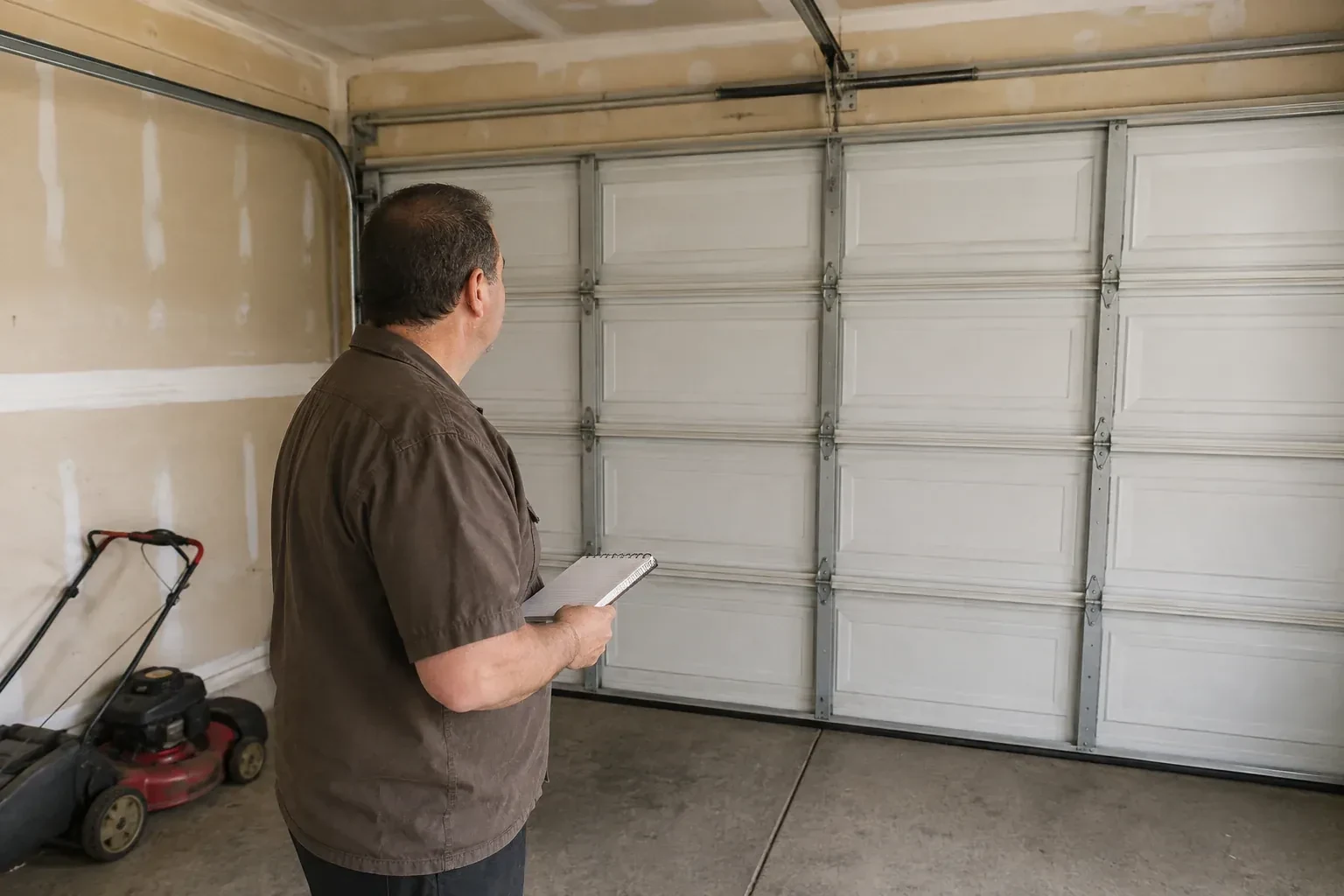
Have your Centre Wellington garage door assessed at the house.
Most calls from Centre Wellington start with a symptom rather than a part name: a bang, a door stuck halfway, a remote that only works from the driveway. Below are the services behind those symptoms, from spring and cable replacement to opener repair, panel work and complete door installation.
About 41% of homes in Centre Wellington were built in 1980 or earlier, according to the 2021 Census.
In areas with a spread of building periods, garage doors fail for different reasons on the same street: worn pulleys and stretched cables on the older doors, cycle-limit springs and tired opener gears on the newer ones. Knowing which pattern applies shortens the diagnosis.
Single-detached houses make up about 73% of homes in Centre Wellington (2021 Census).
Mostly houses
Where homes are detached, the garage is frequently a workshop or storage room as well as parking, and the door may be opened dozens of times on a Saturday. Sealed-bearing rollers, protected sensors and a regular tune-up keep a hard-working door running smoothly.
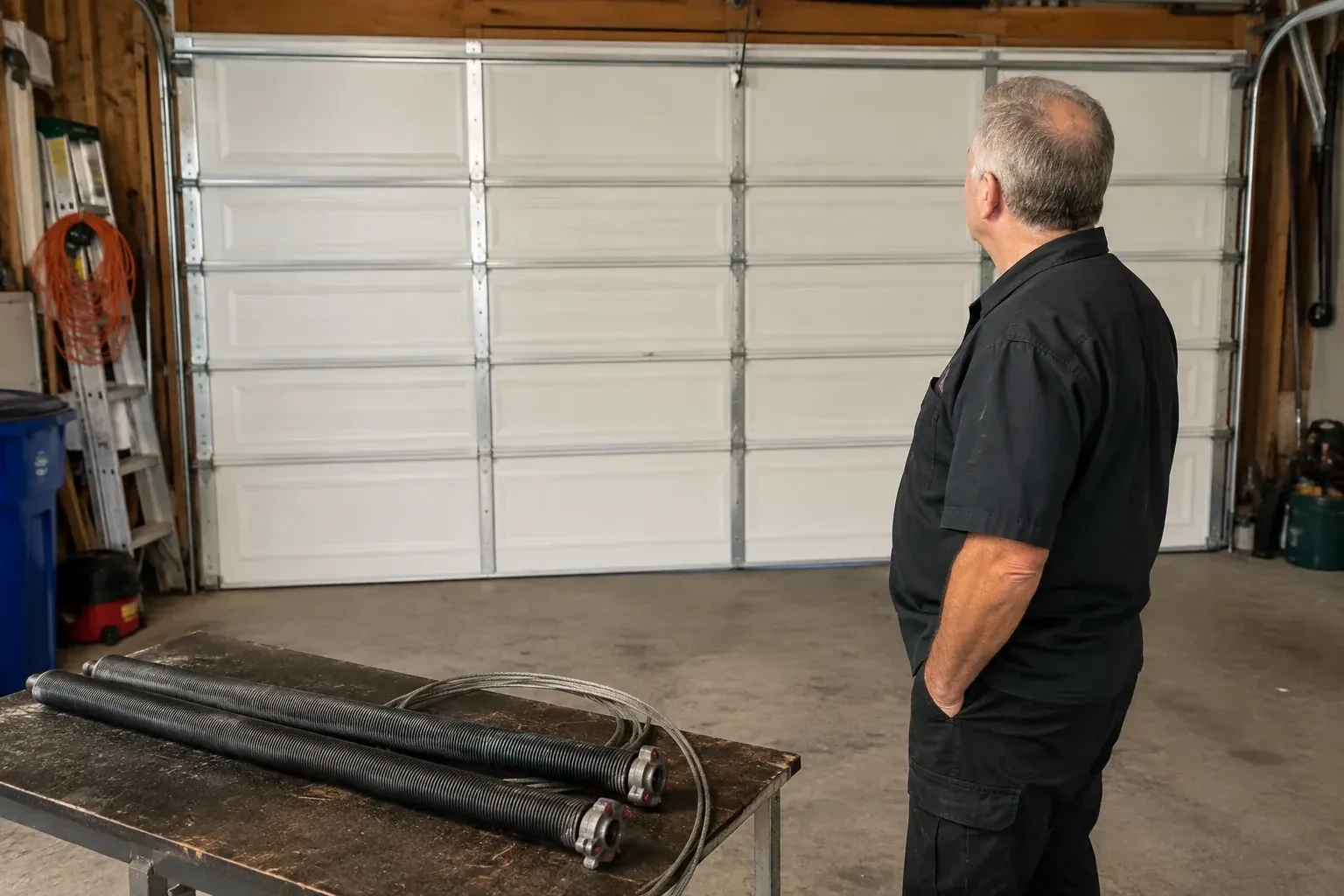
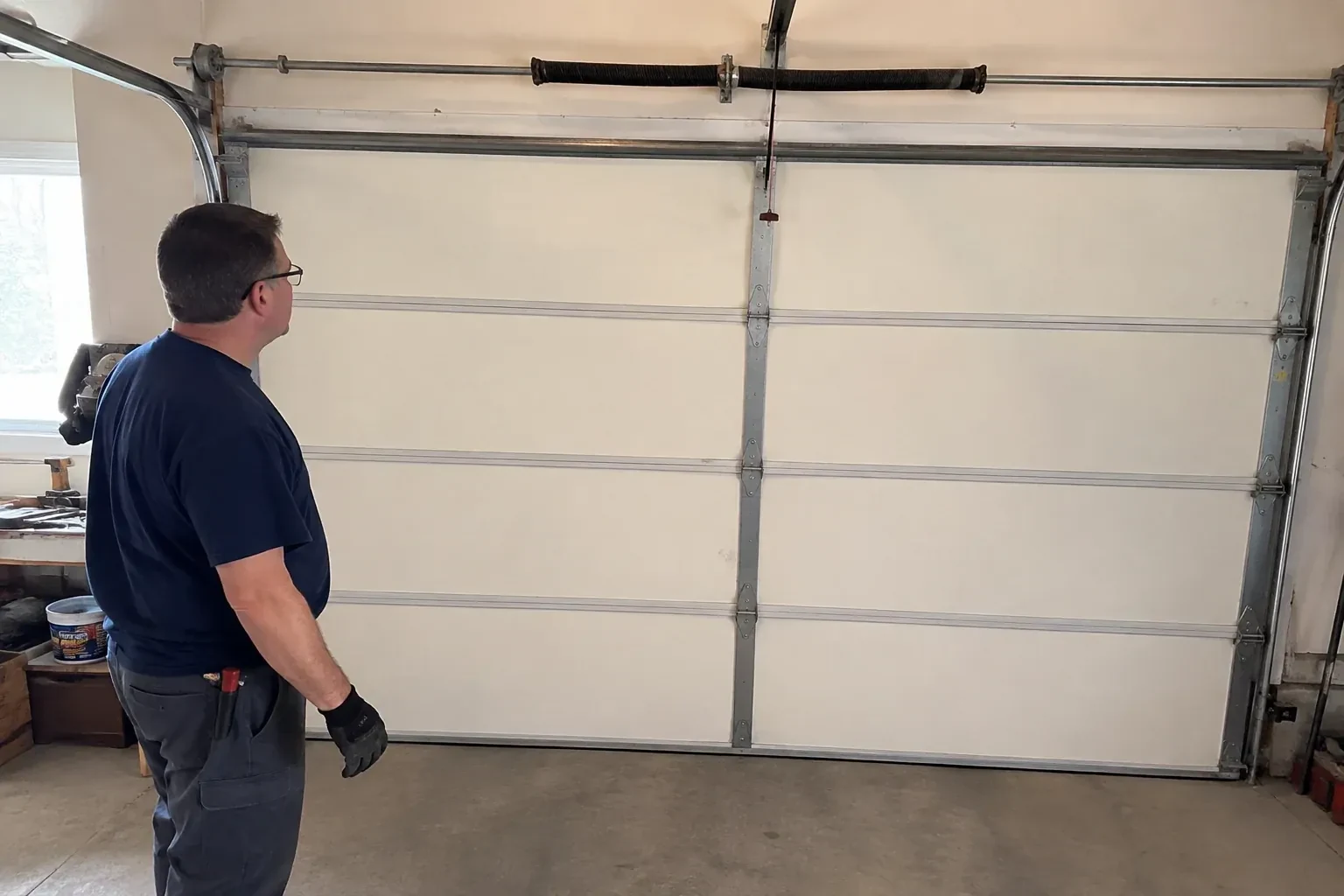
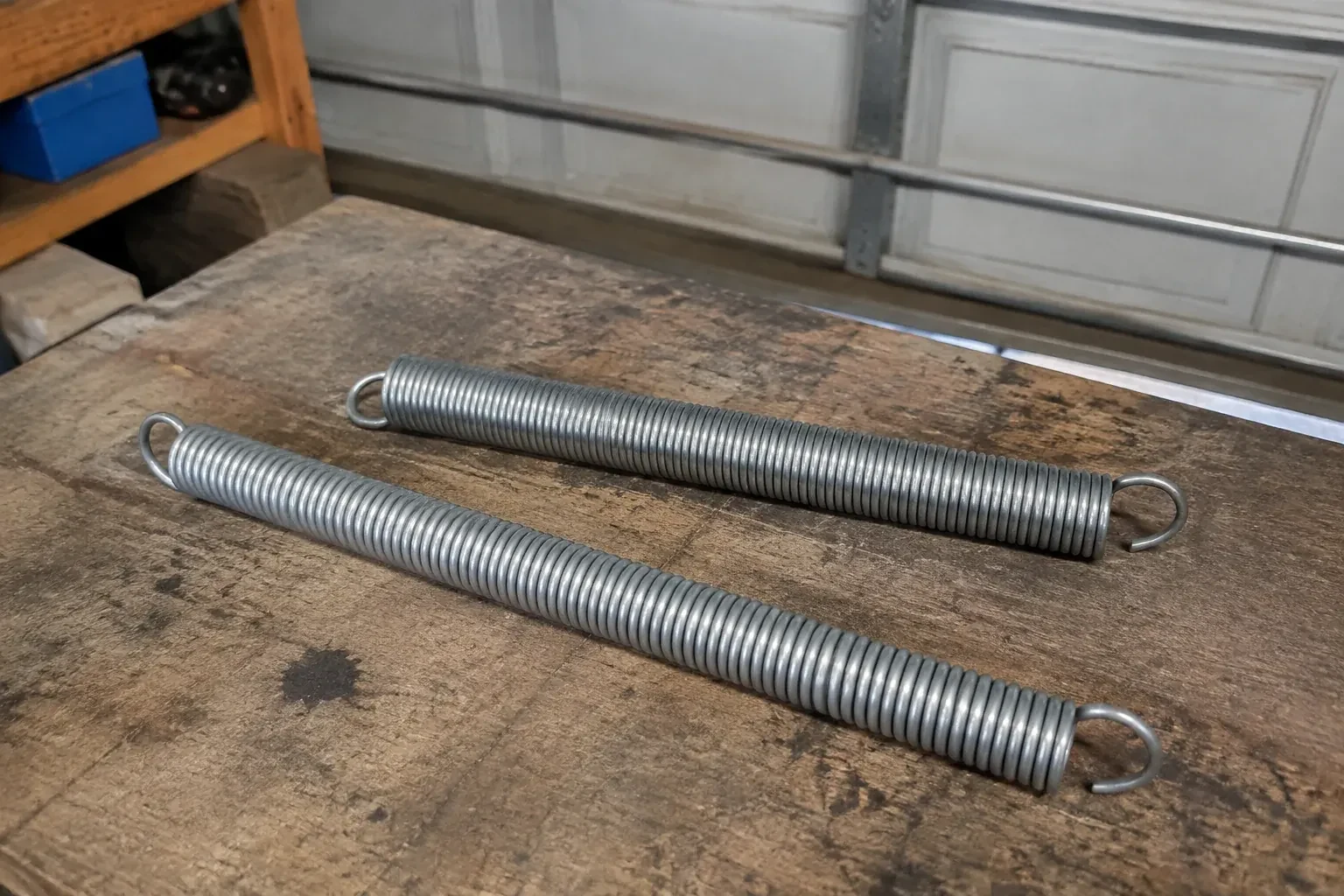
Extension and torsion systems fail differently. A torsion spring breaks with a bang and leaves a visible gap in the coil; an extension spring stretches, sags or snaps at the hook. We work on both and know the signs of each.
An installation ends with a walk-through. We show you the emergency release, the wall console, how to pair the remotes and what a balanced door feels like when you lift it by hand, so you know your door from day one.
It is a January morning and the door lifts about a hand's width, groans, and settles back down. When you pull the release and try by hand the door feels far heavier than it used to, and the bottom seal is stuck hard to the slab.
The door opens about a third of the way and stops. Turning the limit screw on the head has made no difference, and the trolley seems to sit in the wrong place along the rail when the door is fully closed.
The belt looks fine from a distance, but up close the rubber has cracked across the back in dozens of places and, in one spot, you can see the steel cords showing through.
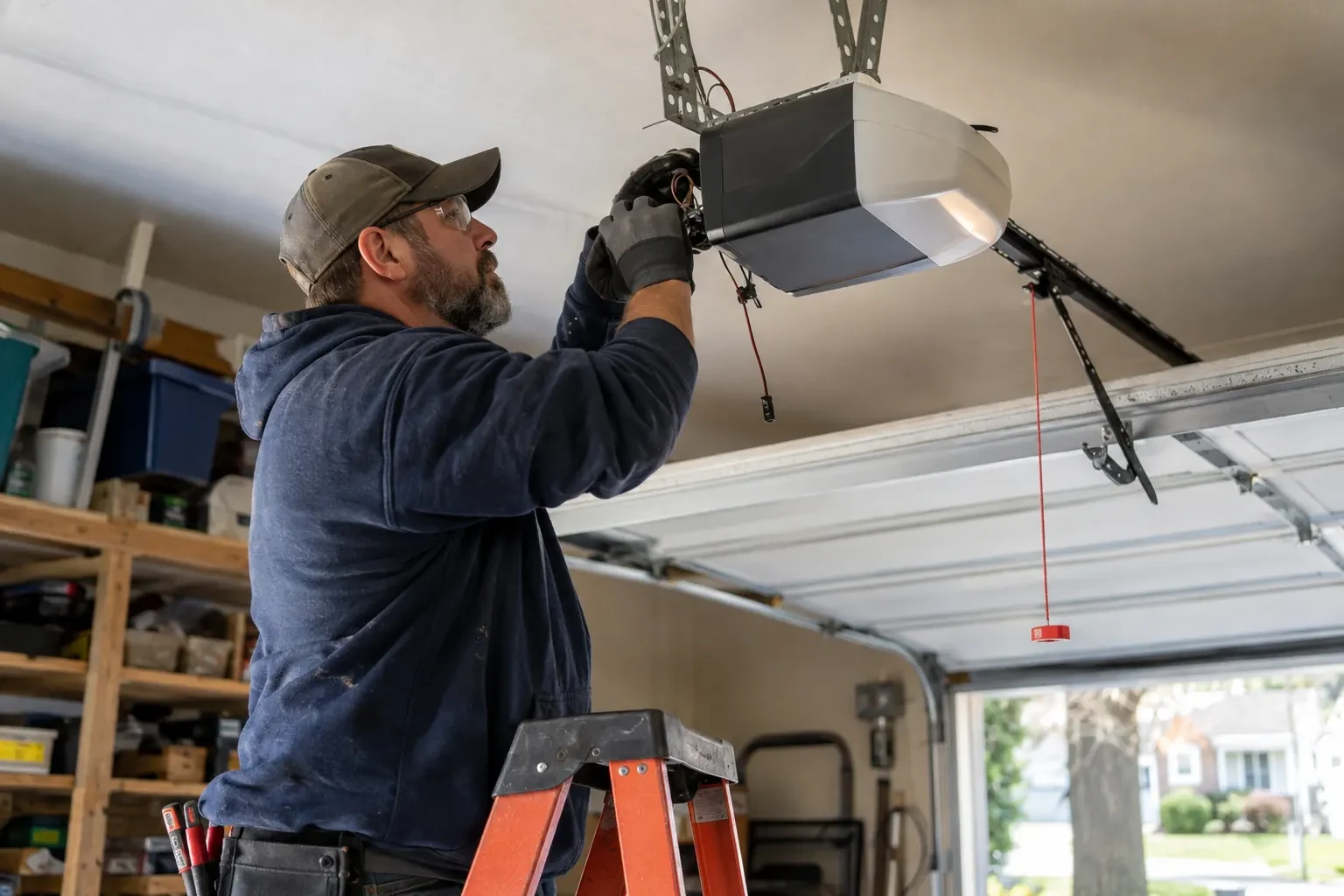
Since the storm the door behaves oddly: it reverses halfway down for no reason, the light flickers, and the travel limits drift so it either slams or stops short. The board inside is discontinued and the last repair only bought a few months.
Someone backed the car in a little too far, a bin or a bicycle brushed the track, and since then the door starts to close and comes back up. One sensor now sits at a slightly different angle from the other.
It is the coldest morning of the year. A week of slush and road salt has crusted over the outside release lock, the key will not seat, and the opener inside is silent after the overnight outage.
Which fix fits?
The gap under the door is a finger wide at one end and nothing at the other.
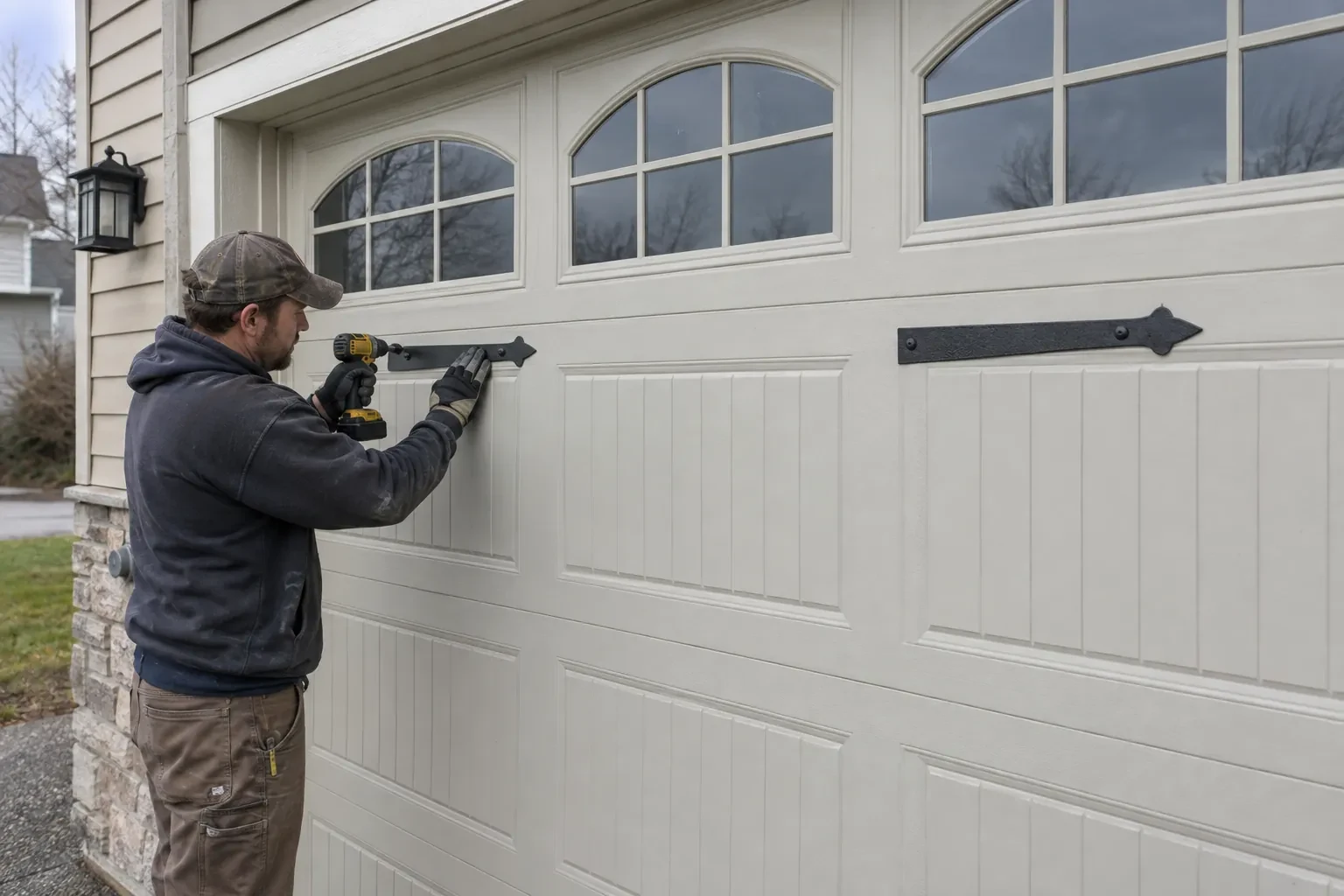
WhyThis conversion is a measured redesign of an existing sectional-door system.
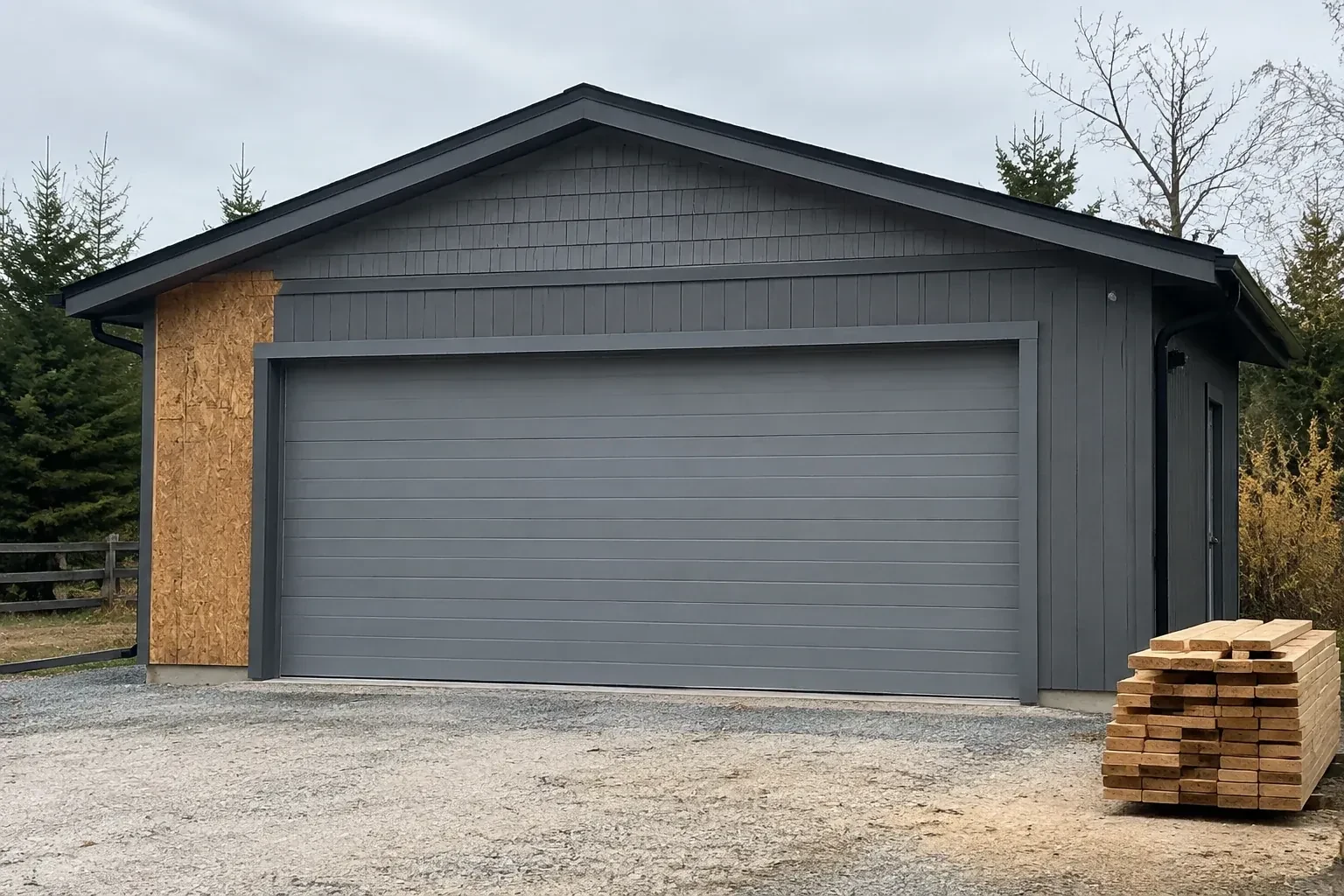
An entrance. Not an afterthought.
1/10Garage Door Bottom Seal Replacement
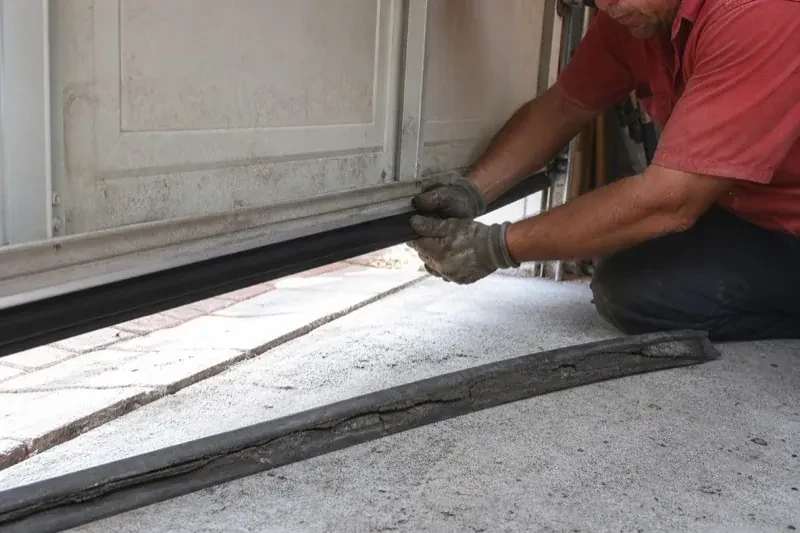
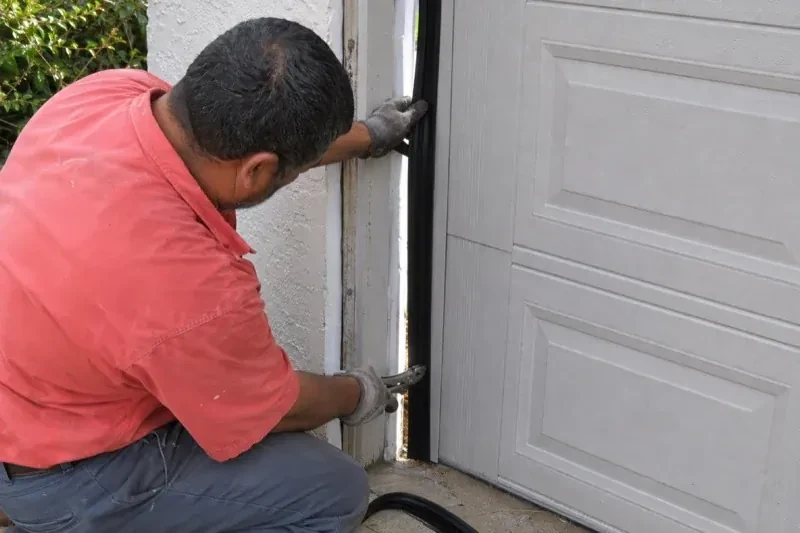
The gap under the door is a finger wide at one end and nothing at the other. The door itself looks straight, but the floor drops away toward the corner where the slab has settled, and drafts pour through the wedge.
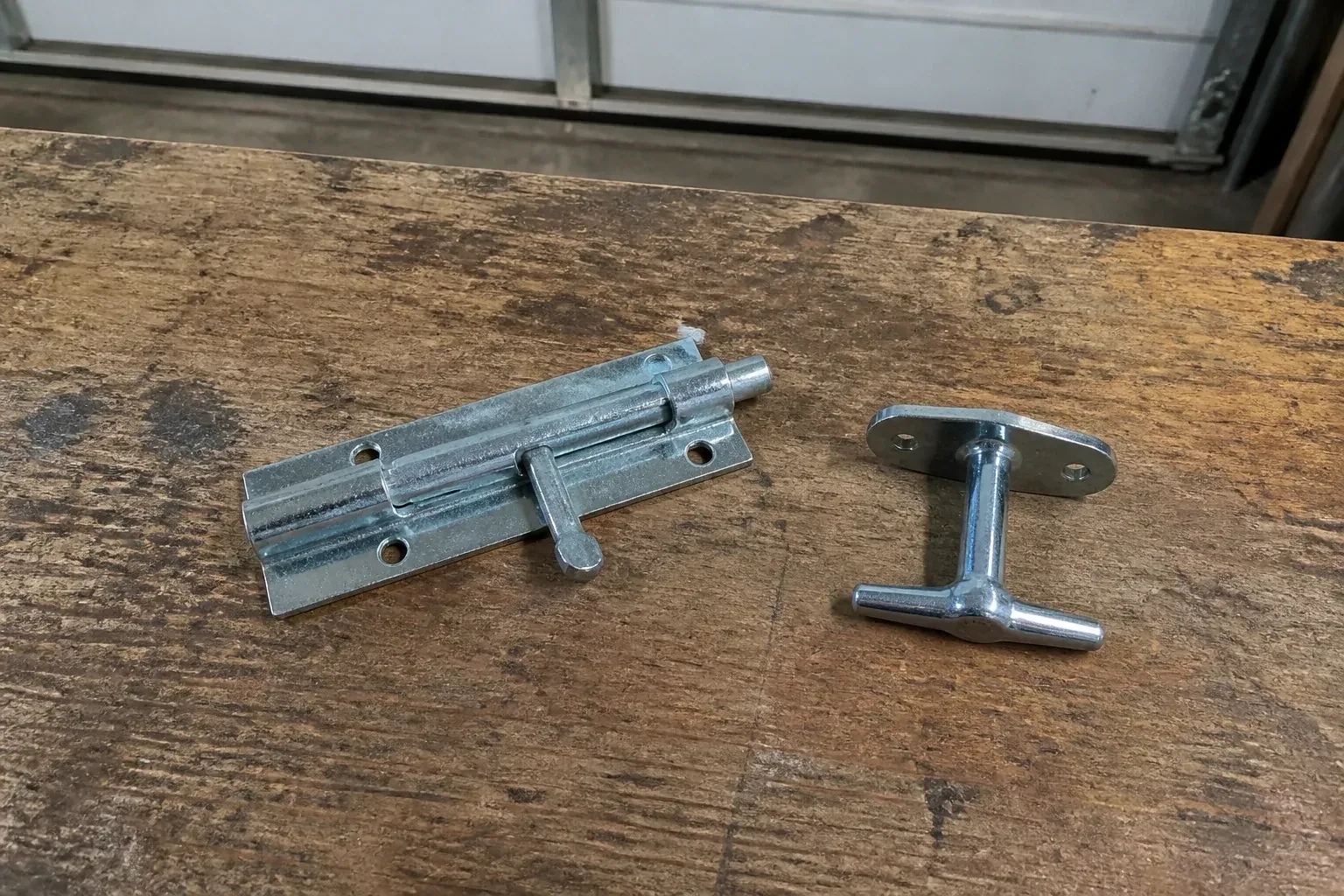
You have just moved in. The garage door carries a proper keyed handle on the outside, but no key came with the house, and the inside slide is painted over. You would like to be able to use it.
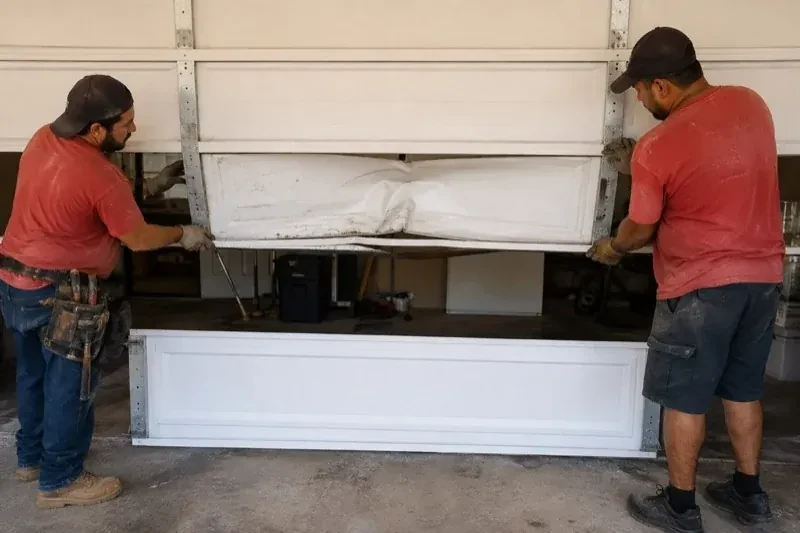
A roller near the top corner is riding on the lip of the track rather than inside it, and the section above leans back a little more each week. The door still moves, but it looks one bump away from coming out altogether.
The door went up as usual this morning, then stopped a third of the way with one corner higher than the other. It is wedged at an angle in the opening, the opener is humming, and nothing you press will move it.
After pulling the red release cord, you tried lifting the door yourself and it would barely leave the floor. A door that used to glide up with one hand now takes real effort, which points to the counterbalance rather than the opener.
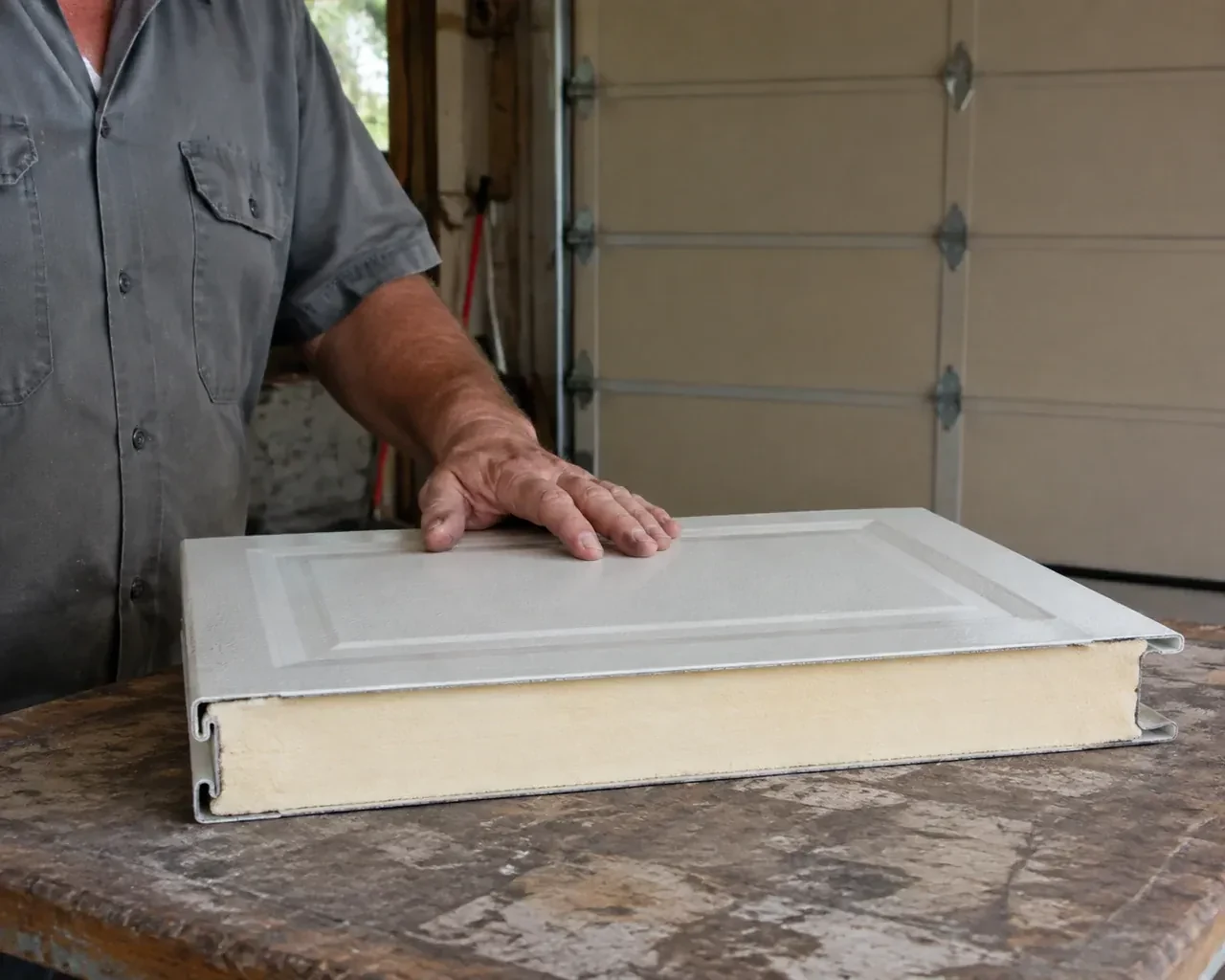
Since the new insulated panels went in, the door feels like a different animal. It closes with a thud, the opener labours where it used to hum, and lifting it by hand takes a proper heave rather than a fingertip.
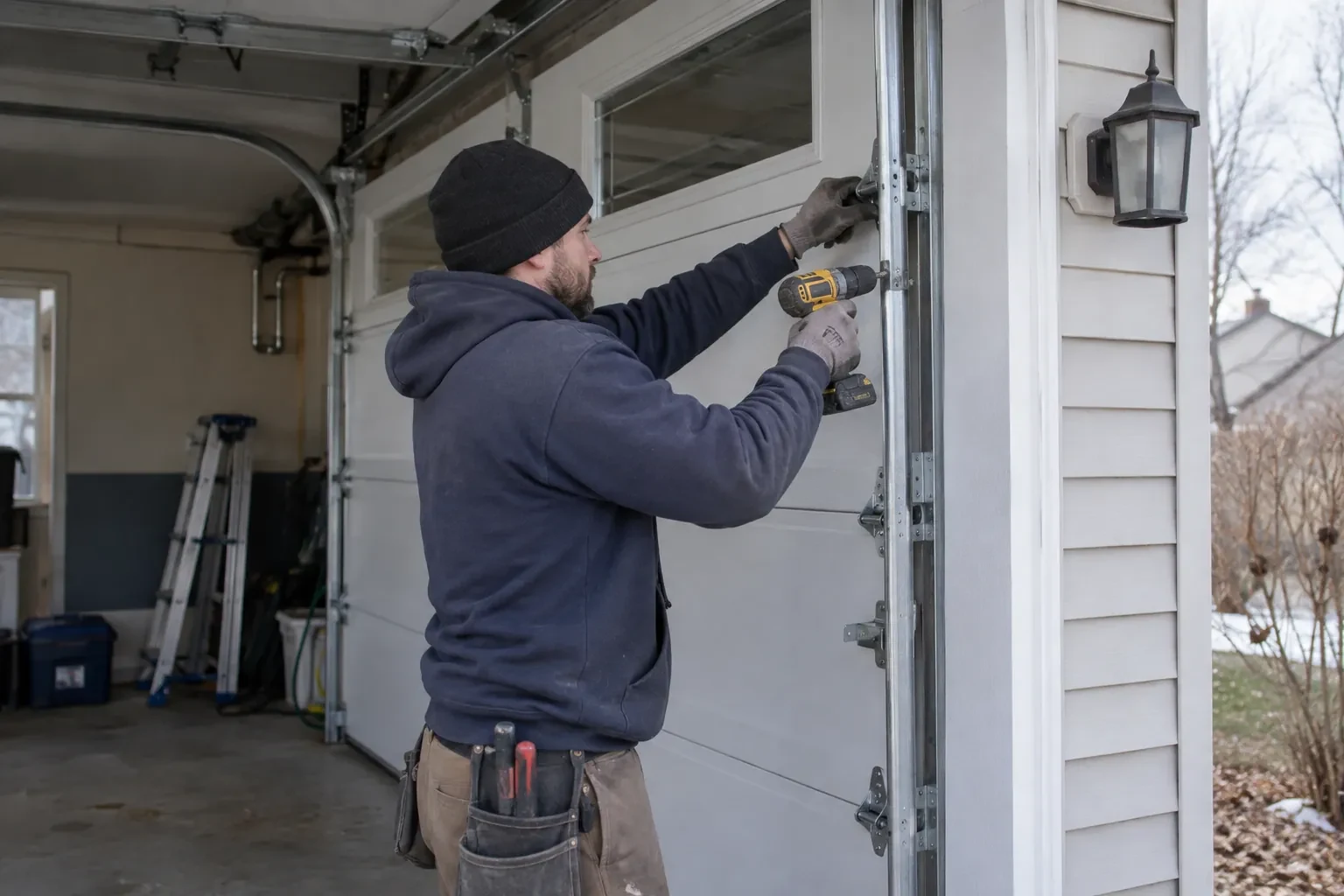
The door shakes through the curved track, hinges have loosened in worn mounting points, and repairs now involve several parts at once. A coordinated new system offers a cleaner path than chasing wear across the assembly.
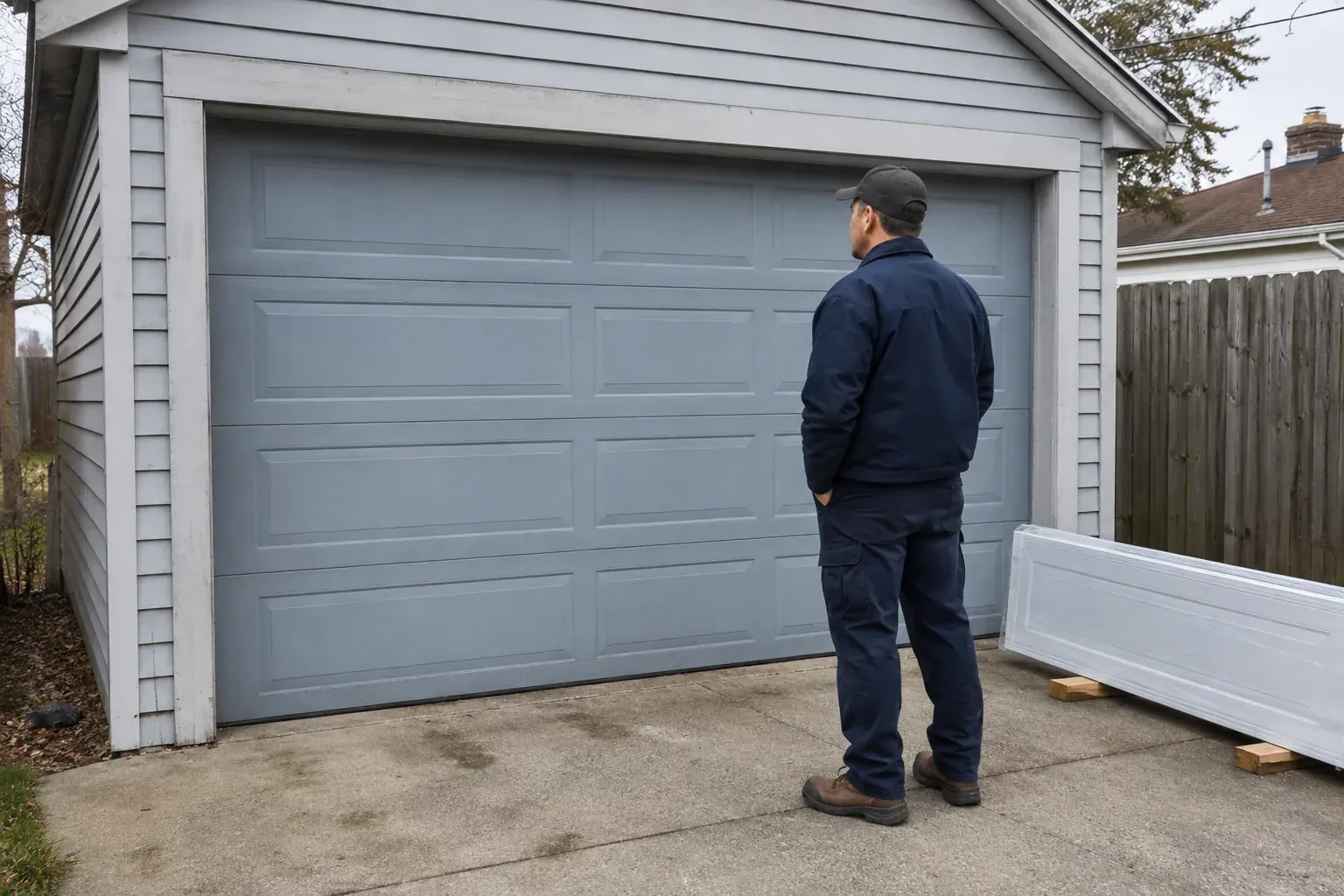
Two new garage openings sit side by side on the same elevation. Their door sections, window layouts and tracks need consistent alignment while each system remains properly matched to its own size and weight.
The operator runs and the drive chain moves, yet the sectional door hesitates near the floor. It feels unusually heavy during manual operation, pointing to a counterbalance problem rather than a simple control-station fault.
Your new vehicle lift fits the floor plan, but the open garage door crosses the space above it. The ceiling is high enough; the standard track simply turns too soon and leaves the panels hanging over the raised vehicle.
Plan on an hour or two for a straightforward replacement on a standard door, including the inspection and the opener reset. A retainer replacement, a hardened seal that has to come out in pieces, a wood door with a nail-on strip or the addition of a threshold seal each add time. The technician will give you a realistic window once the door has been looked at.
My key will not turn in the cold. What is happening?
Meltwater has run down the door face into the keyway during a thaw and frozen overnight, or cold has stiffened old lubricant inside the cylinder. Lock de-icer or gentle warmth frees it; hot water is avoided because it refreezes and can crack cold metal. Afterwards the cylinder is dried and given a dry graphite or PTFE lubricant that sheds moisture instead of trapping it.
How long do garage door rollers last?
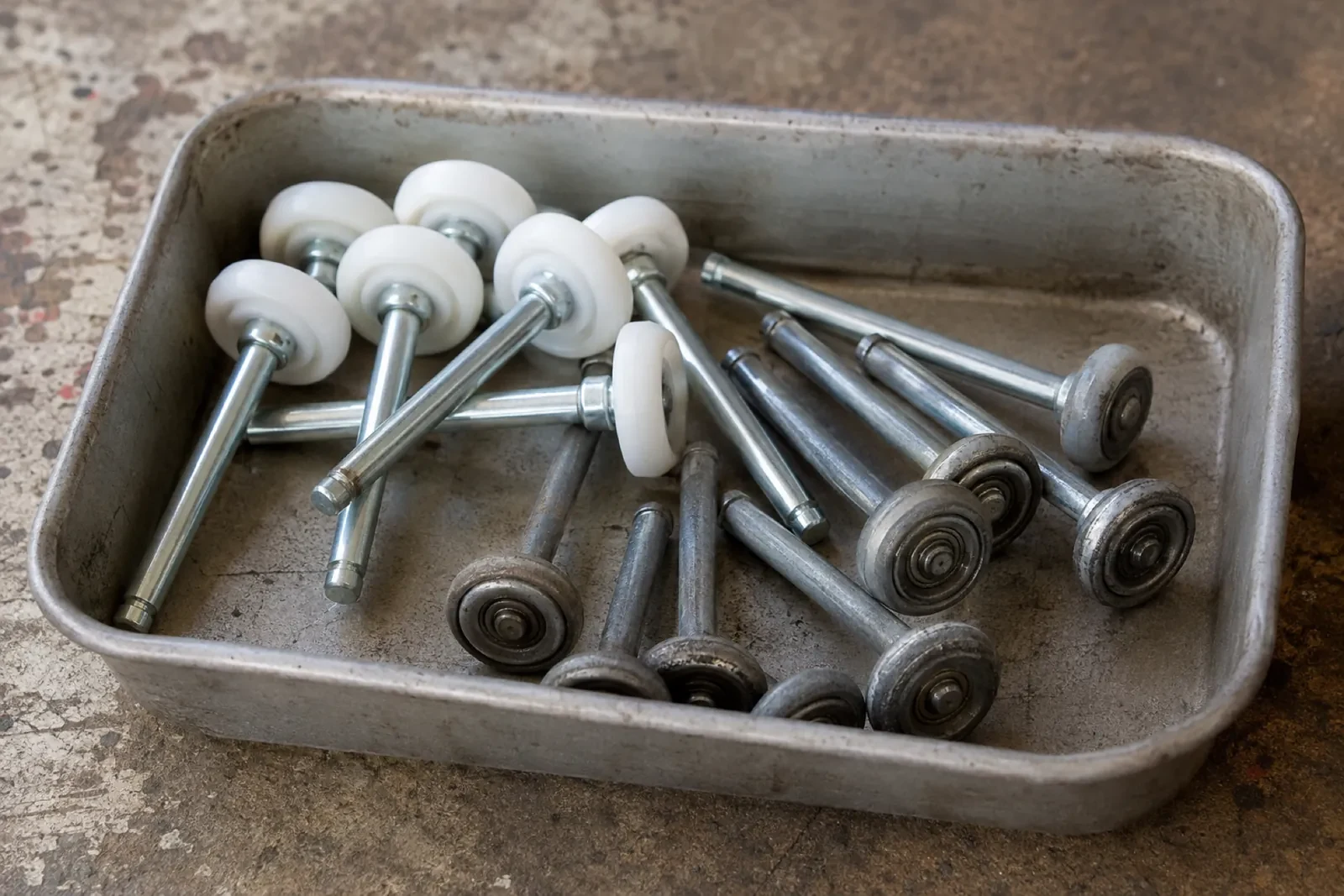
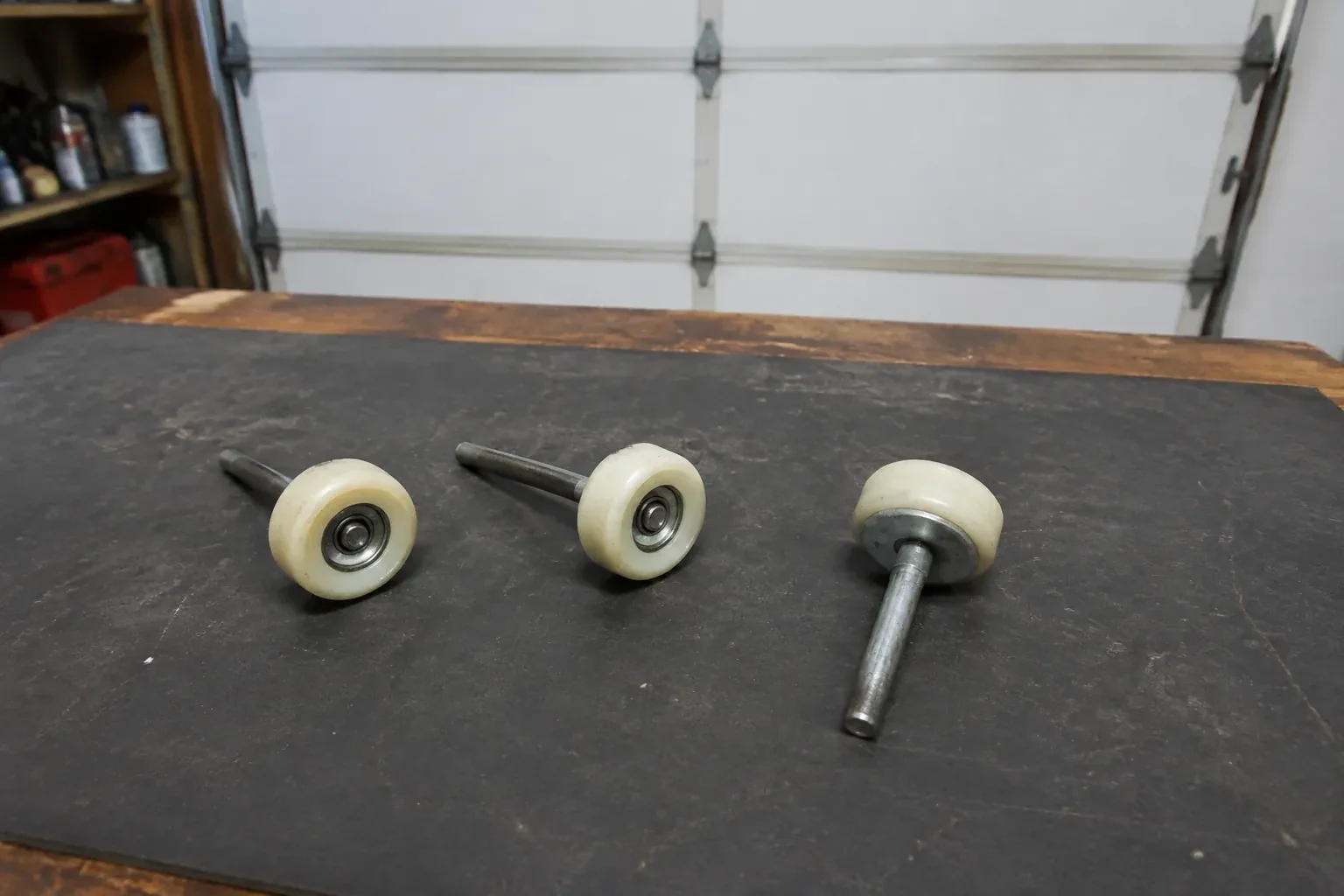
It depends on what they are made of and how often the door moves. Builder-grade plastic wheels with no bearings often show wear after only a few years. Steel and nylon rollers with seven to thirteen ball bearings are typically rated for ten to fifteen thousand cycles, roughly the life of a torsion spring, which for many households means seven to ten years. Sealed-bearing nylon rollers are rated far higher. A door used many times a day, or one living with salt and slush, shortens all of those.
Does the new cable have to match the old one exactly?
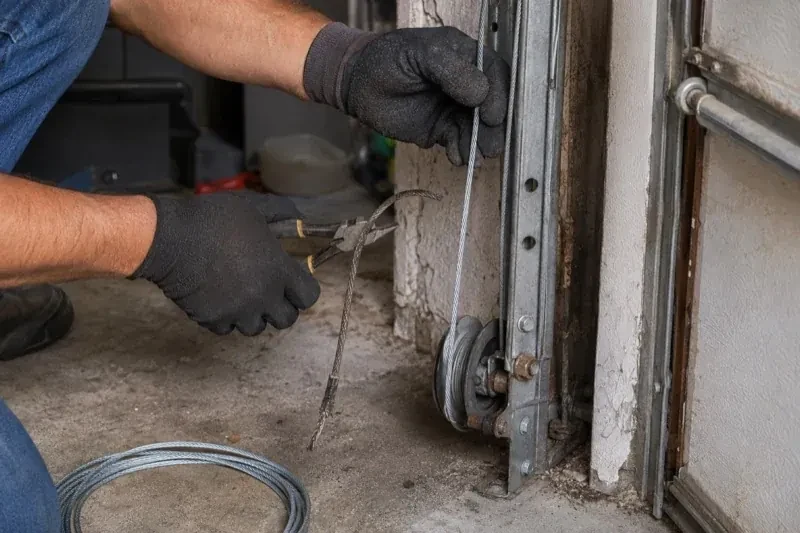
It has to match the door, which may not be the same thing if the old cable was wrong. Length is set by the door height, the drum profile and the lift type; diameter and construction by the door's weight. A cable that is a little long overlaps on the drum and wears; one that is short leaves the door out of level. The technician measures the door and the drum rather than trusting the old cable.
What happens if the header wood or centre bracket is damaged?
The centre bracket anchors the spring's reaction force to the framing above the door, so it has to be solid. If the header has split or softened, or the lag bolts have pulled, the technician can refasten into sound wood, add a reinforcing plate or replace the bracket before the new spring is wound. Dealing with this first keeps the shaft level and the spring pulling straight, which protects the bearings and the door.
How long does a balance adjustment take?
A straightforward tension adjustment on a sound door is generally about an hour, including the inspection, the hand tests and the opener checks at the end. Resetting cables to level the door, replacing rollers to remove friction, or moving to a spring replacement adds time. The technician will tell you what the inspection found and how the visit is shaping up before the work continues.
What should I move before the installation visit?
Clear vehicles, bicycles and stored items from the door's path and from the areas beside the jambs. Make overhead track and spring locations accessible, and identify anything delicate nearby. The technician can explain the required working area during measurement, especially where shelving, ceiling storage or a shared driveway affects access.
What is the difference between a rough opening and a finished opening?
A rough opening is the framed construction opening before its final jamb surfaces, cladding returns or other finishes are applied. The finished opening is the clear width and height the installed door actually closes against. Door sizing and seal position rely on that final geometry. Reviewing both helps the project team place framing correctly while preventing finish thickness from quietly reducing the space reserved for the selected door.
How should a repaired door be lubricated?
Use the product and interval specified by the door manufacturer. Hinges, roller bearings, shaft bearings and springs may have defined lubrication points, while track generally benefits from being clean rather than coated with material that holds grit. High-use openings may need a different schedule. The service record can note what was applied and where for consistent future care.
Can storage remain above or beside the door?
Storage can share the garage when it stays outside the door's movement and service envelope. The layout accounts for panels, rollers, tracks, shaft, springs, cables, operator and slight movement during operation. At handover, the technician can mark areas that should remain accessible. Planning cabinets or racks from those boundaries helps preserve both useful storage and orderly future maintenance access.
Request a visit
A garage door is heavy and the springs carry real force, so the work in Centre Wellington is done the careful way: door clamped, tension released with proper bars, parts measured before they are matched, and the door run through complete cycles afterwards. Careful is not slow; it is simply how a heavy door should be treated.