Springs · Centre Wellington
Torsion Spring Replacement in Centre Wellington
On a cold morning the remote does nothing useful: the light comes on, the motor turns briefly, the door stays shut.
In plain words
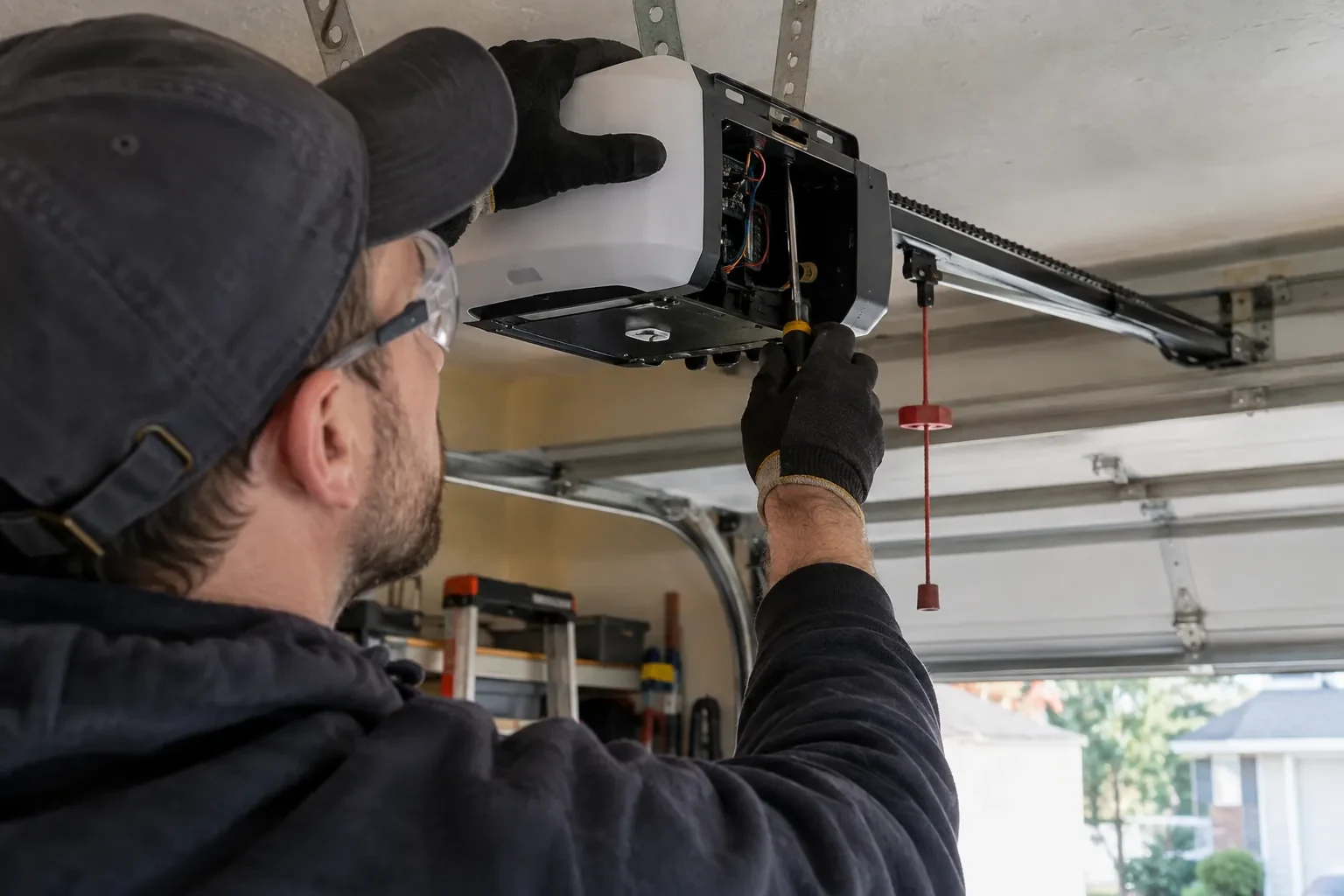
Think of the opener as a helper, not a lifter. It is built to push and pull a door that already weighs almost nothing thanks to the springs; asking it to hoist a full-weight door strains the trolley, bends the top section and wears the gear drive. Spring replacement puts the load back where it belongs. After fitting and winding the new spring, the technician balances the door, then reconnects the opener and resets its force and travel settings so it runs within its design limits. Owners usually notice the opener sounds calmer and the door moves more evenly afterwards.
How the visit goesAfter pulling the red release cord, you tried lifting the door yourself and it would barely leave the floor. A door that used to glide up with one hand now takes real effort, which points to the counterbalance rather than the opener.
Torsion Spring Replacement
How the visit goes
Confirming the system layout
Doors are set up in several ways, and the replacement has to match. The technician notes whether there is one spring or two, whether the shaft is a single piece or two halves joined by a coupler, and what the shaft diameter is. Drum type is read from the drums themselves: standard-lift drums for a normal ceiling, high-lift or vertical-lift drums where the door rises well above the opening, or a rear-mounted assembly in a low-headroom garage. Track radius and headroom are measured because they change how many turns the spring needs and which drums it must work with.
The replacement from start to finish
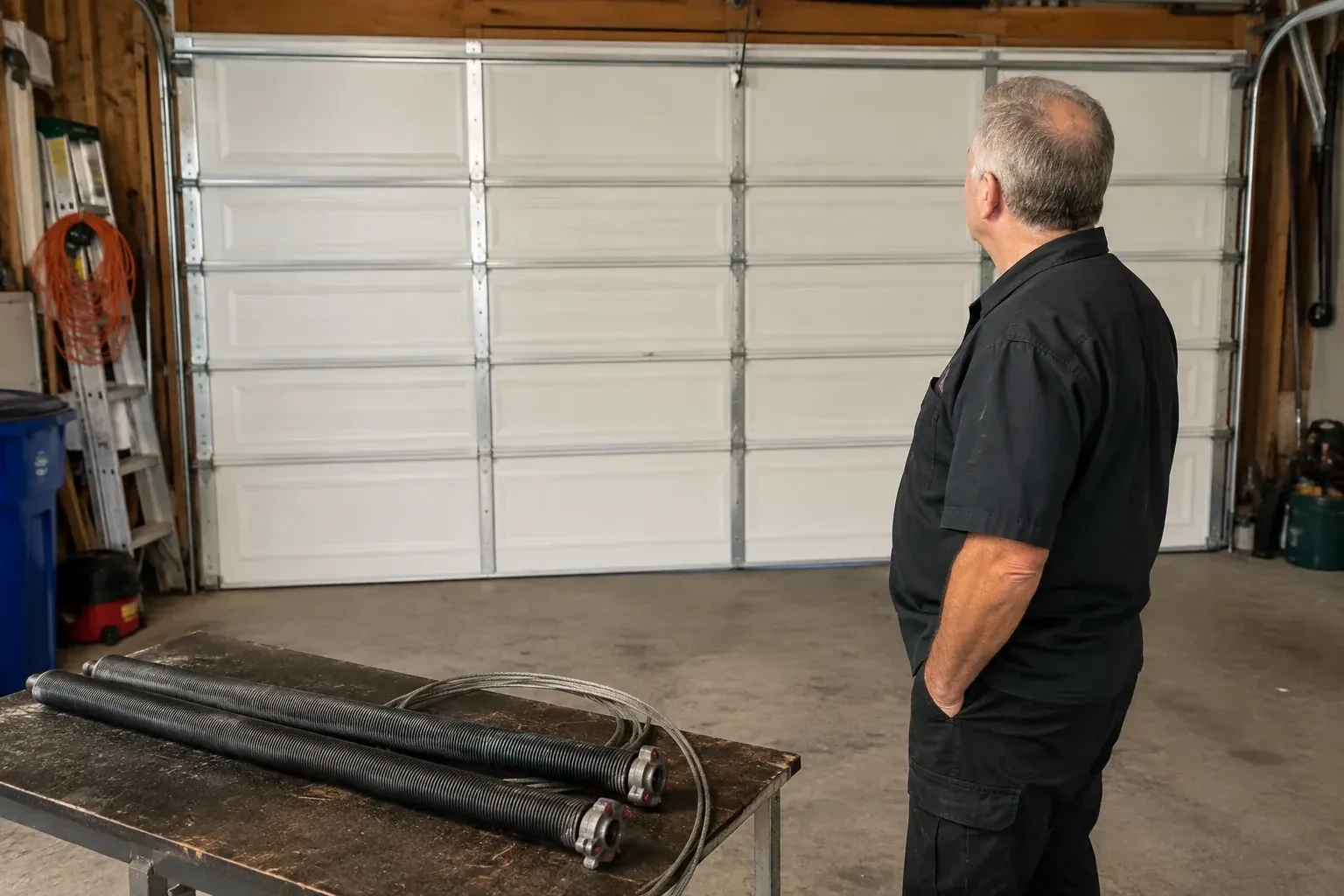
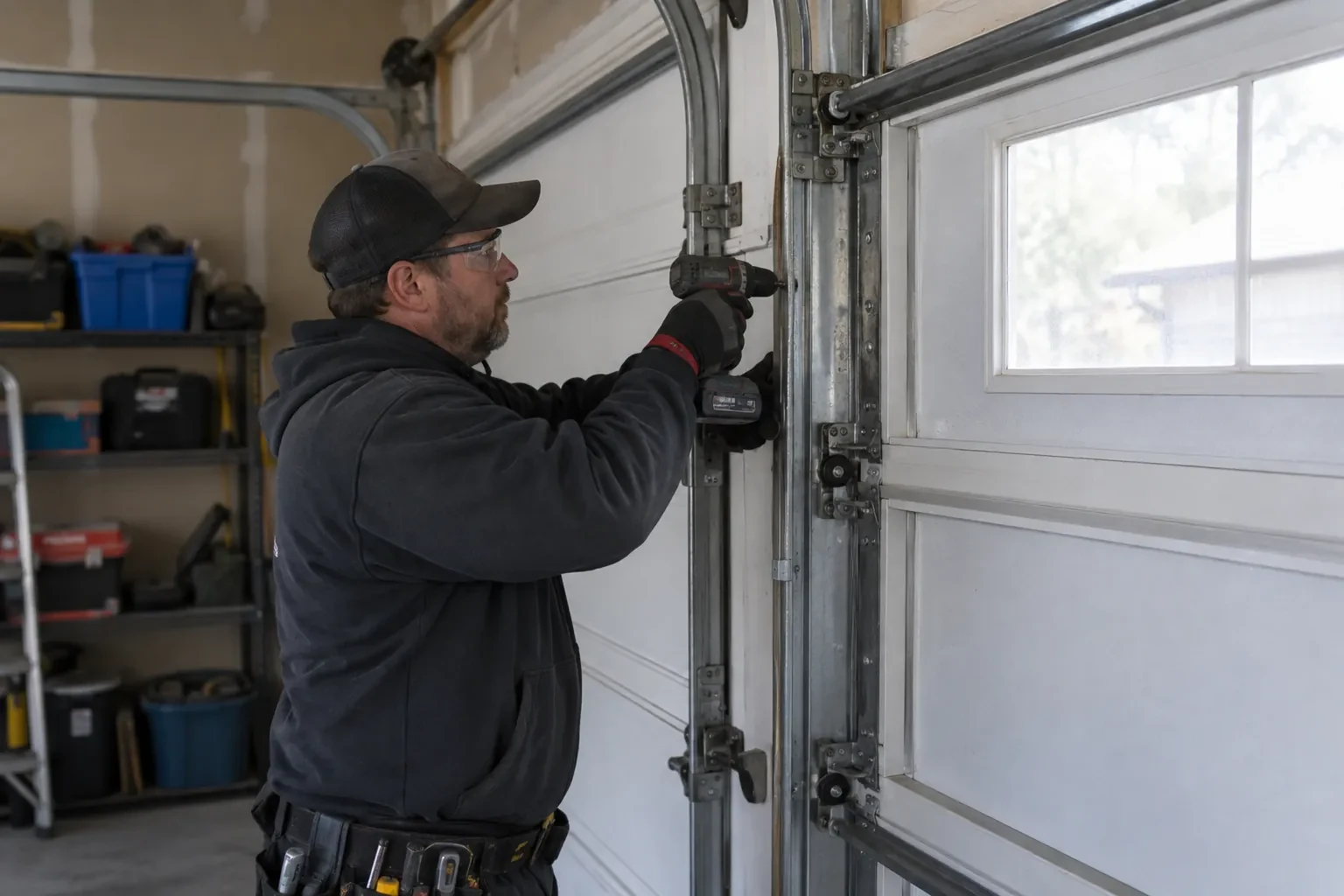
With the door clamped and the opener disconnected, the technician releases any tension left in an intact spring, loosens the drum set screws and slides the drums inward, then removes the old spring from the shaft. Bearings are inspected while the shaft is free. The new spring goes on with its stationary cone bolted to the centre bracket and the winding cone facing the drum. Drums are refitted, cables seated, the shaft levelled and cable tension evened on both sides. Winding follows, then the set screws are seated and the clamps come off for a balance check. Each stage is done deliberately and in order.
A door that carries its own weight
The clearest change is in your hands: with the opener released, the door lifts with light, even effort and holds its position at mid-height instead of sliding down. That is what a balanced counterweight feels like. The door closes softly at the floor and rises without hesitation, and the opener runs with a calmer sound because it is guiding the door rather than hauling it. You can test this yourself any time by pulling the release cord with the door closed and lifting to waist height; a door that stays put is a door in balance.
Torsion Spring Replacement
In the van
Lift cables
Centre bearing bracket and bearing
Stationary cone bolts and nuts
Locking pliers for the track
Wire gauge and tape measure
Torsion Spring Replacement
What affects the quote
Converting from extension springs
Moving a door from extension springs to a torsion system adds a shaft, bearings, drums and brackets, and removes the old pulleys, which is a broader job than replacing an existing torsion spring.
Cycle rating chosen
A standard-cycle spring and a high-cycle spring balance the door the same way but differ in wire and length. Choosing a longer-life spring is an option the household can weigh against how often the door is used.
Access and working space
A vehicle that stays inside, shelving under the shaft, a very high ceiling or a tight side clearance affects how the technician sets up and how long the visit runs.
What to have ready
- Is a vehicle parked inside the garage right now?
- Did you hear a loud bang before the door stopped working?
- Is the door a single or double width, and roughly how tall?
Torsion Spring Replacement: questions
QuestionsCan a spring be adjusted rather than replaced?
A spring that is intact but has relaxed slightly can be given a little more tension, within limits, to restore balance; this is a normal adjustment on a door that has settled. A spring with a broken coil is replaced as a unit, since the wire has reached the end of its life. The technician checks the condition of the steel and recommends whichever restores a balanced, safe door.
What happens if the header wood or centre bracket is damaged?
The centre bracket anchors the spring's reaction force to the framing above the door, so it has to be solid. If the header has split or softened, or the lag bolts have pulled, the technician can refasten into sound wood, add a reinforcing plate or replace the bracket before the new spring is wound. Dealing with this first keeps the shaft level and the spring pulling straight, which protects the bearings and the door.
What is the difference between torsion and extension springs?
Torsion springs mount on a shaft above the door and twist to store energy, lifting the door through cables and drums. Extension springs run alongside the horizontal tracks and stretch as the door closes, pulling it up through pulleys. Torsion systems tend to lift more evenly, take up less space beside the tracks and are the standard on most modern doors. Both are professional service items because of the energy they hold.