Repairs · Centre Wellington
Garage Door Manual Lock Repair in Centre Wellington
Someone slid the inside lock across before bed, and in the morning someone else pressed the remote.
In plain words
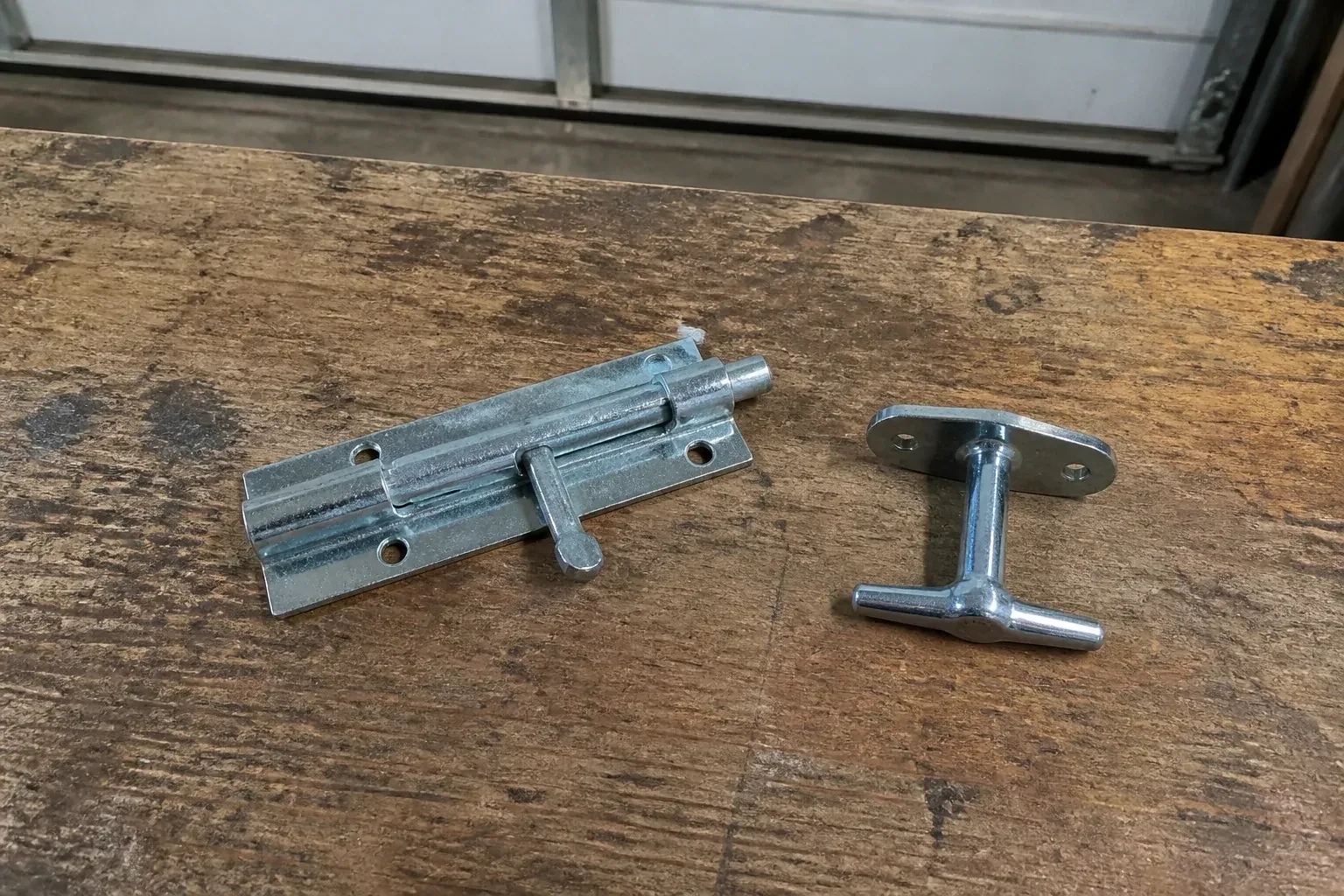
The cylinder in a garage T-handle is a small pin-tumbler lock, much like a front door's. If the key is lost, or a previous owner kept it, the cylinder is rekeyed to a fresh combination or swapped for a new one and keys are cut on the spot. Where the keyway matches the house locks, the garage handle can often be pinned to the same key, so one key runs the property. Worn keys that need a wiggle are replaced by keys cut to the new pinning rather than copied. All of it happens in the same visit as any mechanical repair.
How the visit goesYou have just moved in. The garage door carries a proper keyed handle on the outside, but no key came with the house, and the inside slide is painted over. You would like to be able to use it.
Garage Door Manual Lock Repair
How the visit goes
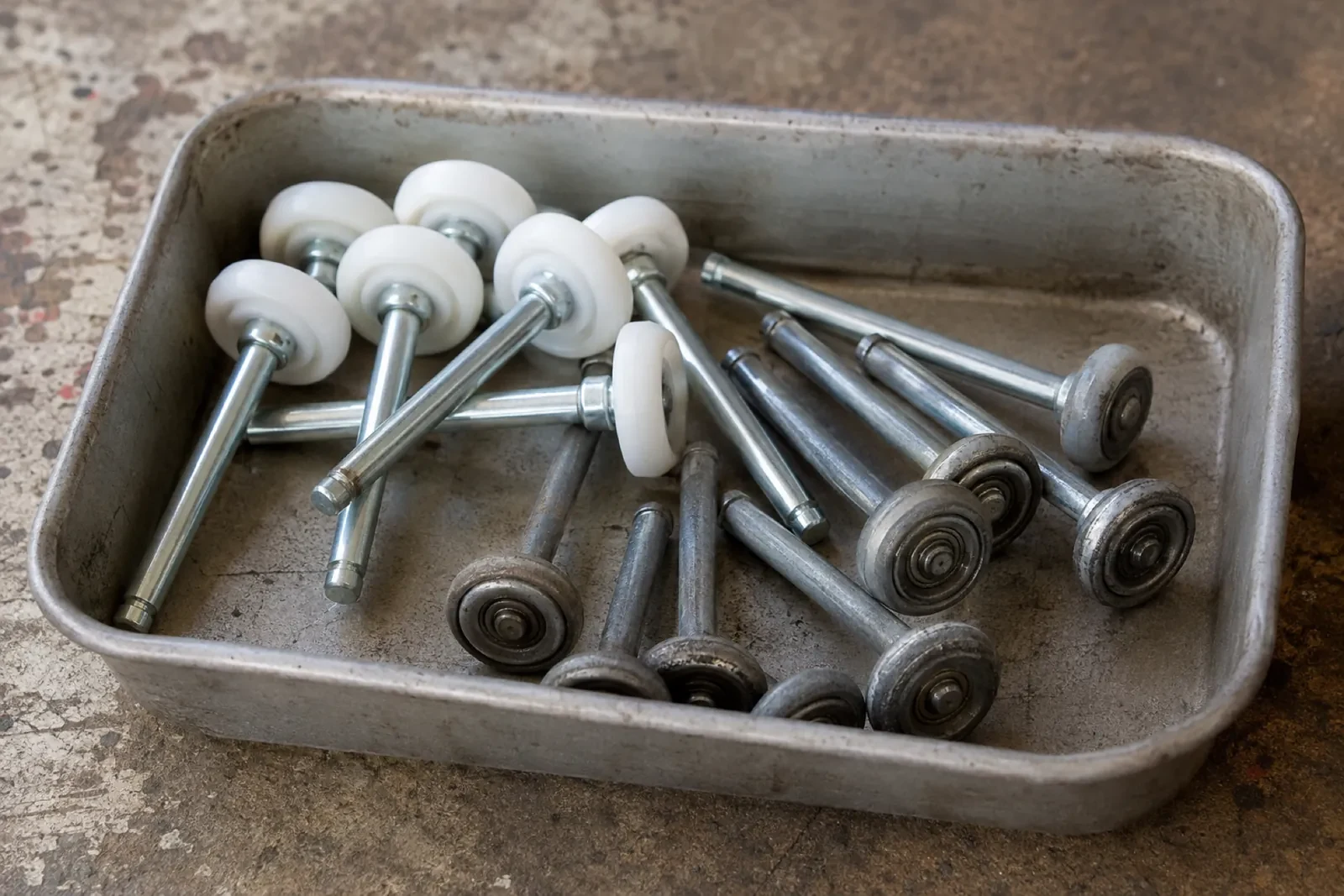
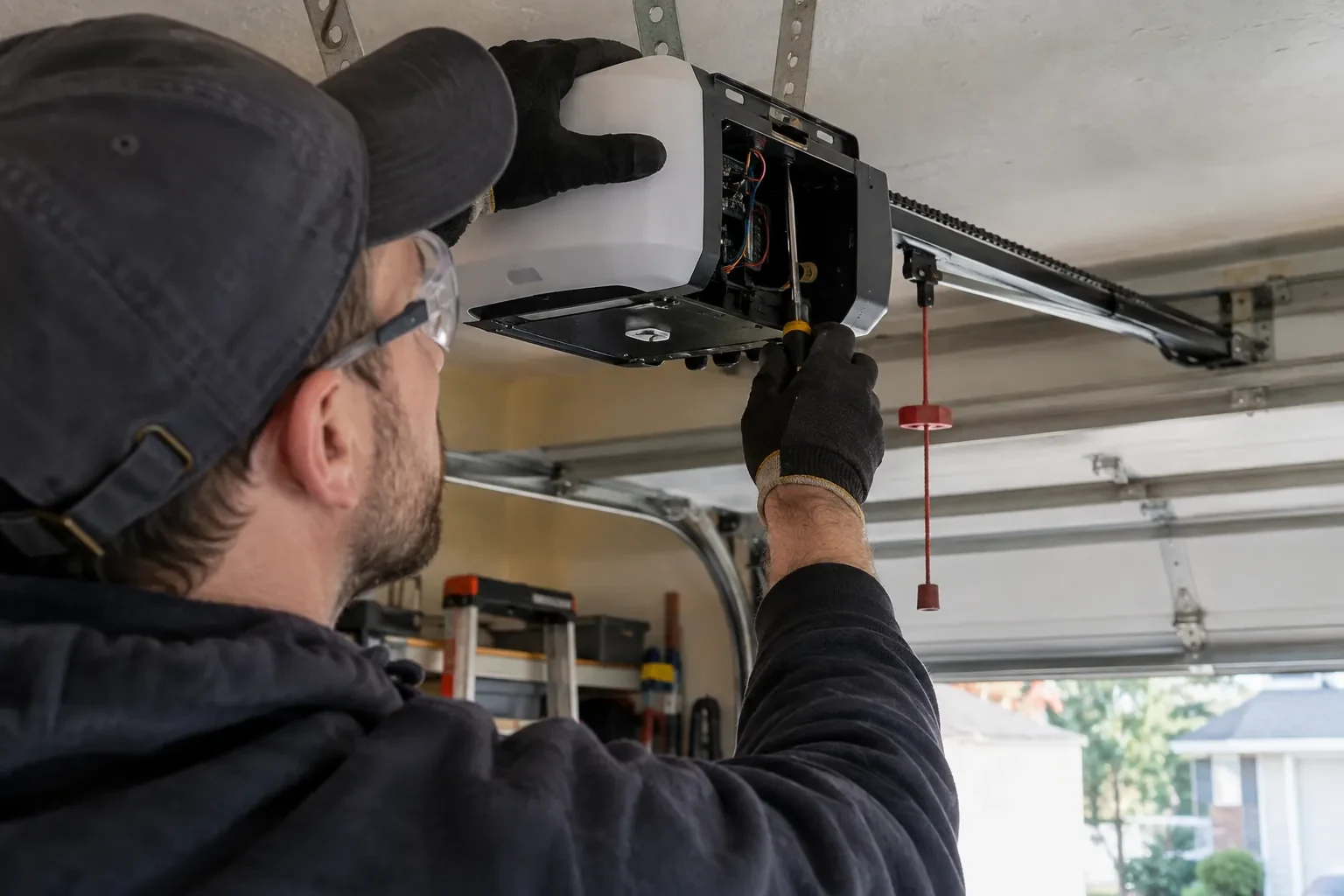
Following the bars to the tracks
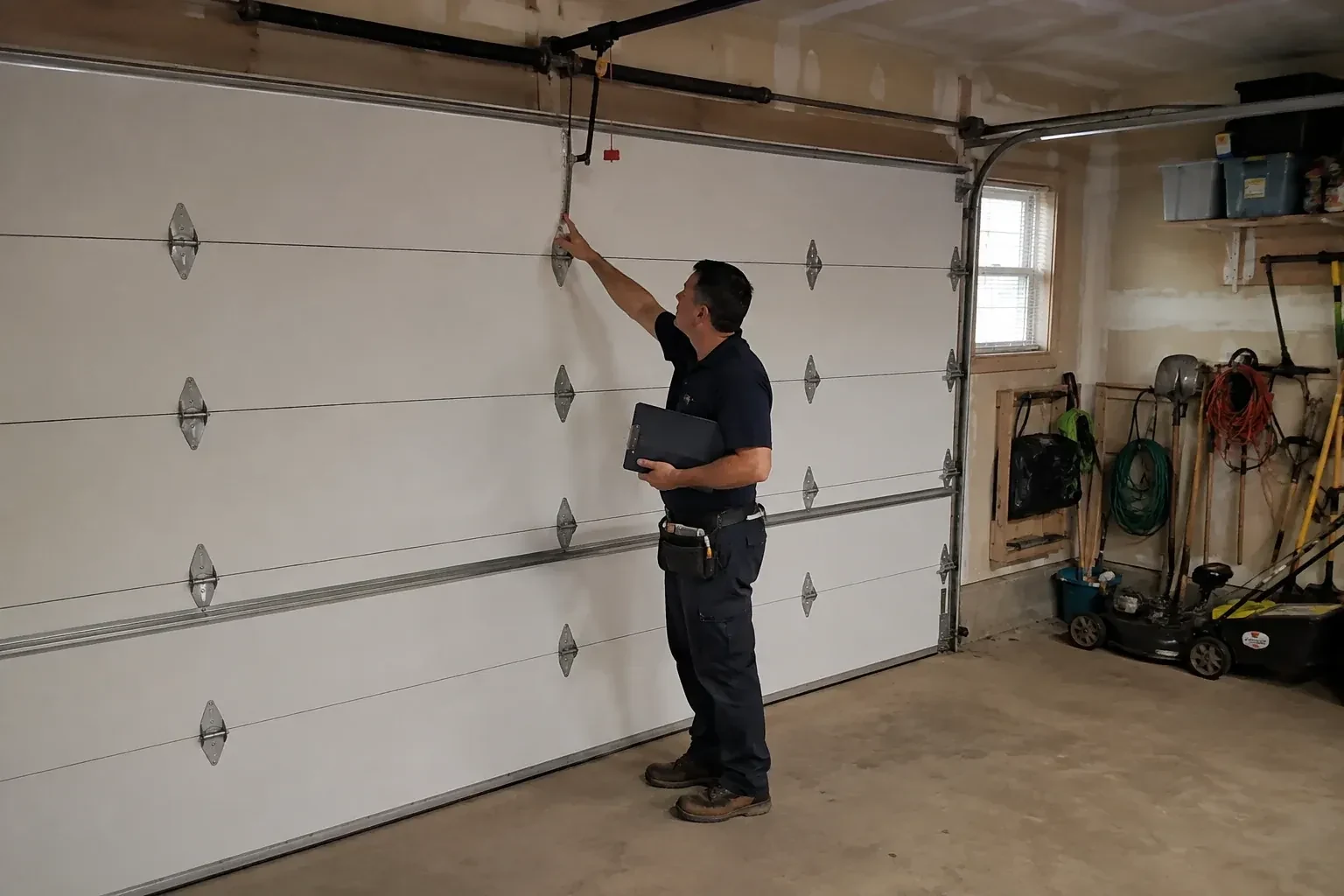
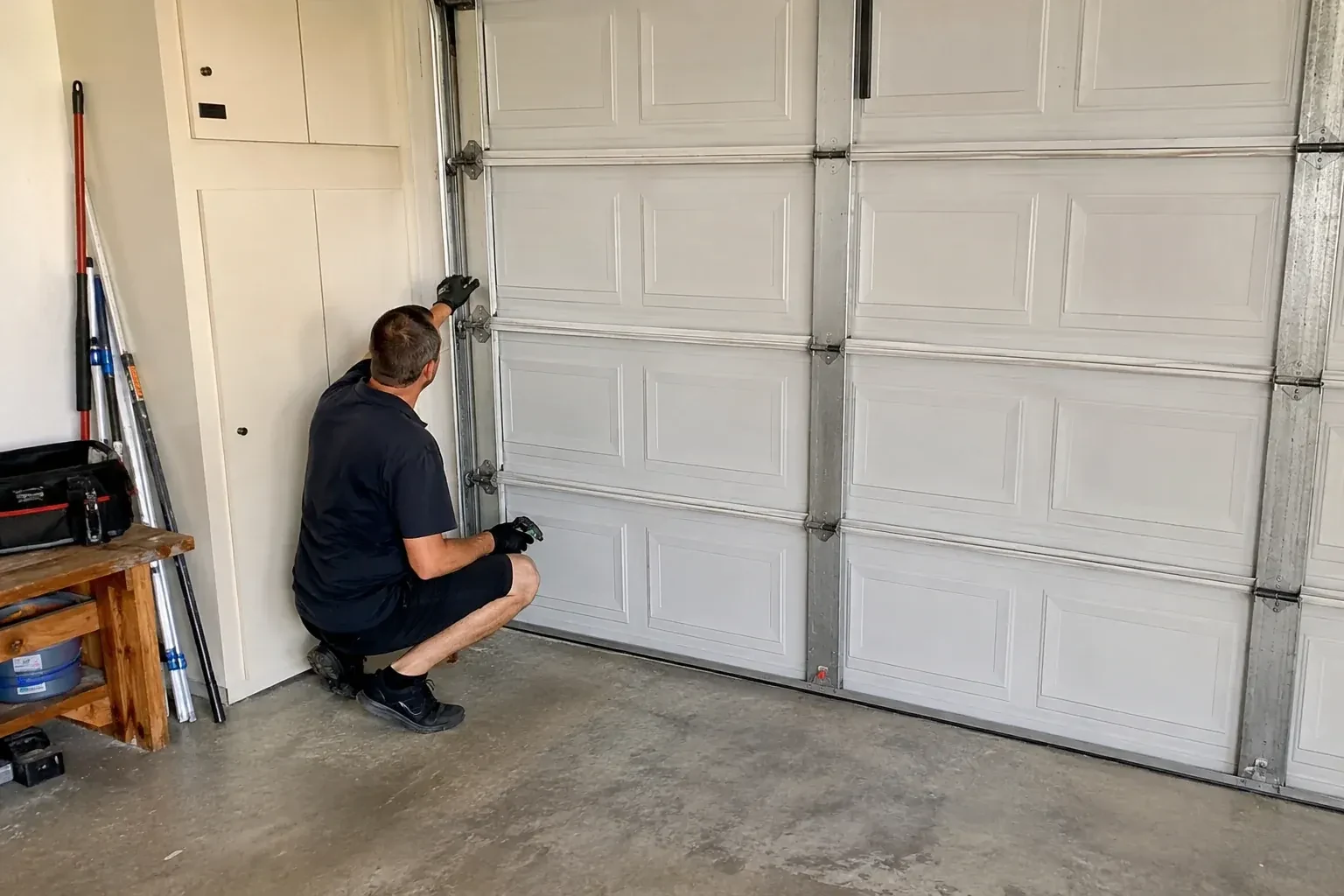
With the door shut, each bar is worked by hand while the technician watches its far end. It should travel smoothly through its guide, pass cleanly through the slot in the track, and come back the same way with no catching. A bar that binds points to rust in the guide or a guide that has been knocked out of line. A bar that reaches the track but not the slot points to alignment. A bar that is bent, kinked or hanging loose usually tells the story of an opener run against the lock. Both sides are checked even when only one is complained about, and the slots themselves are inspected for burrs, distortion and rust.
Lining the bar up with its slot
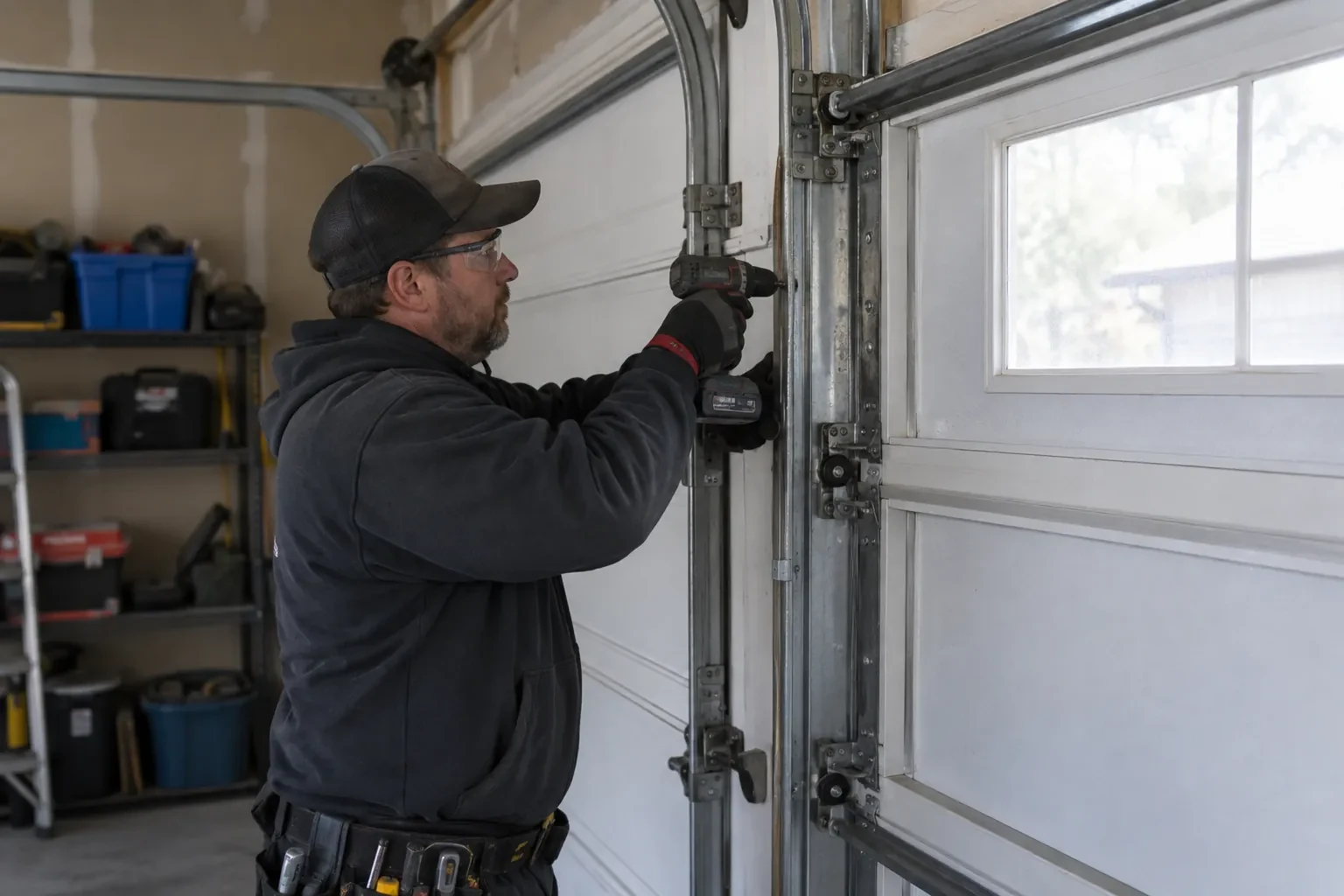
When door position is the cause, the fix goes to the door, not the lock. Track brackets that have loosened are tightened so the vertical track sits plumb and at the correct distance from the door. If the opener's down limit stops the door a little high, the limit is reset so the door rests on the floor. Bar guides are then repositioned or shimmed so each bar meets the centre of its slot with the door shut, and the slot is dressed with a file if a burr has formed. Only where a slot is genuinely in the wrong place is a new one punched, with the old one left clean.
Getting the cylinder and bars through winter
The outside cylinder sits on a cold steel face where meltwater runs, so it gets a dry graphite or PTFE lubricant rather than oil, which would trap moisture and grit. A puff at the start of the cold season and another after the first thaw keeps the pins moving. A small tube of lock de-icer in the car is the answer to a keyway that has frozen; hot water is never poured on it. The bars and their guides, which live where salt spray collects, take a light silicone film in late autumn. Keep the threshold clear of packed snow so the door closes to its full depth and the bolt still finds its slot.
Garage Door Manual Lock Repair
In the van
Lock cylinder with tailpiece
Keyed T-handle lock set
Inside turn handle and spindle
Dry graphite or PTFE lubricant
Carriage bolts and backing plates
Garage Door Manual Lock Repair
What affects the quote
Adjust, repair or replace
A guide reset or a cylinder rekey is a small job; a new mechanism or a complete handle set with bars is a larger one. The inspection settles which is needed before anything is quoted.
Door thickness and insulation
Insulated and thicker doors take longer spindles, longer through-bolts and sometimes a sleeve through the foam. Matching those parts to the door affects the parts list.
Damage from an opener run against the lock
A section creased above the lock, a torn lock body, a bent bar or a strained opener arm each add repair or parts beyond the lock itself, and are named separately once seen.
What to have ready
- Do you want to be able to lock the door by hand during a power outage?
- Does the key go in and turn, or is it stiff or spinning freely?
- Is the door steel, wood or aluminum, and roughly how old is it?
Garage Door Manual Lock Repair: questions
QuestionsDoes lock work involve the springs or cables?
The lock, its bars and its guides all live on the door sections and the tracks, well away from the counterbalance, so the visit involves no winding or unloading of springs. Where a lock misses its slot because the door hangs crooked or sits high, the door's balance or a cable may be part of the story, and the technician points that out so it can be dealt with properly.
My key will not turn in the cold. What is happening?
Meltwater has run down the door face into the keyway during a thaw and frozen overnight, or cold has stiffened old lubricant inside the cylinder. Lock de-icer or gentle warmth frees it; hot water is avoided because it refreezes and can crack cold metal. Afterwards the cylinder is dried and given a dry graphite or PTFE lubricant that sheds moisture instead of trapping it.
The wood around my lock is soft. Can it still be repaired?
Yes. The decayed wood is cut back to sound material and a hardwood block or a steel backing plate is let in behind the handle and along the stile where the bar guides sit. The handle, mechanism and guides are then fixed to that new material with through-bolts rather than screws into soft grain, so the lock turns without rocking and the bars hold their line.