Springs · Salem
Torsion Spring Replacement in Salem
On a cold morning the remote does nothing useful: the light comes on, the motor turns briefly, the door stays shut.
In plain words
The finished result is a door that behaves the way a good garage door should: it lifts by hand with light effort, stays where you leave it at mid-height, closes softly and lets the opener run with little strain. Reaching that point involves measuring the door, choosing a matched spring, winding it to the correct turns and testing the balance through the full travel. The technician then runs the opener's reversal test and lubricates the moving parts. You are left with a record of the spring installed, so future service starts from known specifications.
How the visit goesThe door drops the last stretch to the floor rather than settling, and when you stop it halfway by hand it slides down instead of staying put. Balance has drifted, and the spring is no longer holding its share of the weight.
Torsion Spring Replacement
How the visit goes
Making the door safe to work on
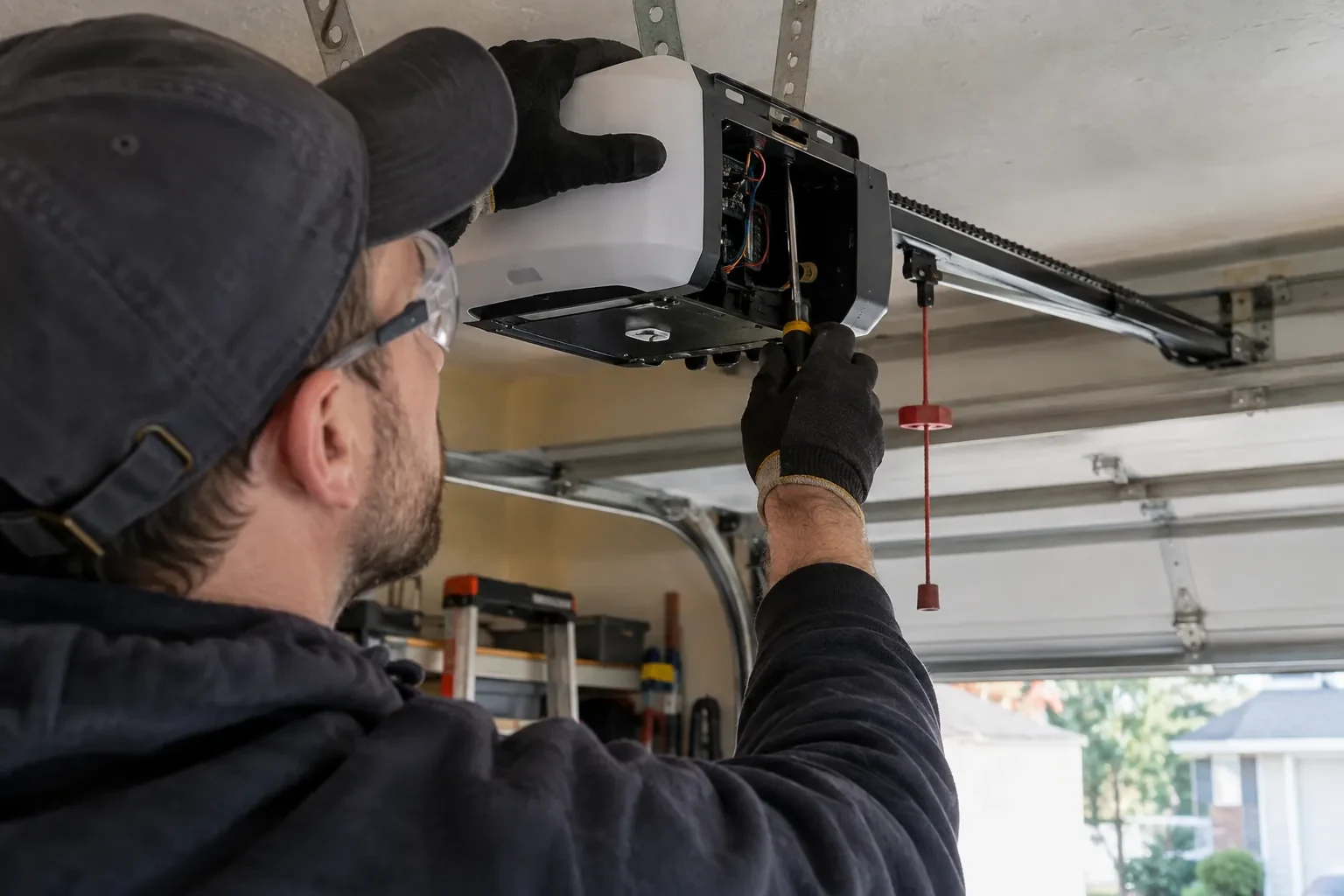
Before anything is measured or removed, the door and the opener are put into a controlled state. The opener is unplugged and the trolley released so the motor cannot move the door partway through the job. The door is brought fully closed, and locking pliers or clamps are set on the track just above a roller so the door stays down while spring tension changes. The technician clears the space beneath the shaft, checks that people and pets are out of the garage, and looks at where a vehicle sits so the ladder and winding position are safe.
The replacement from start to finish
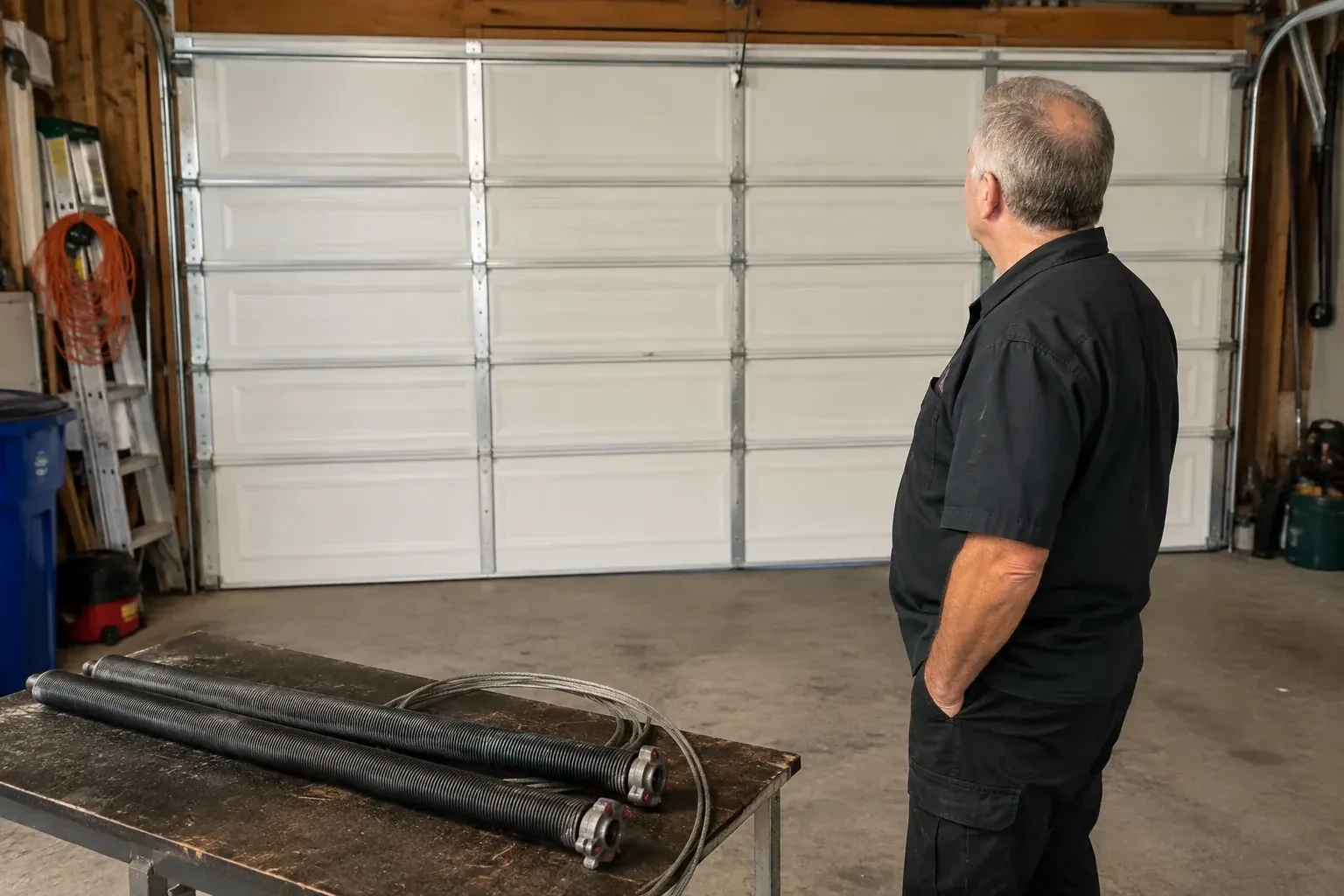
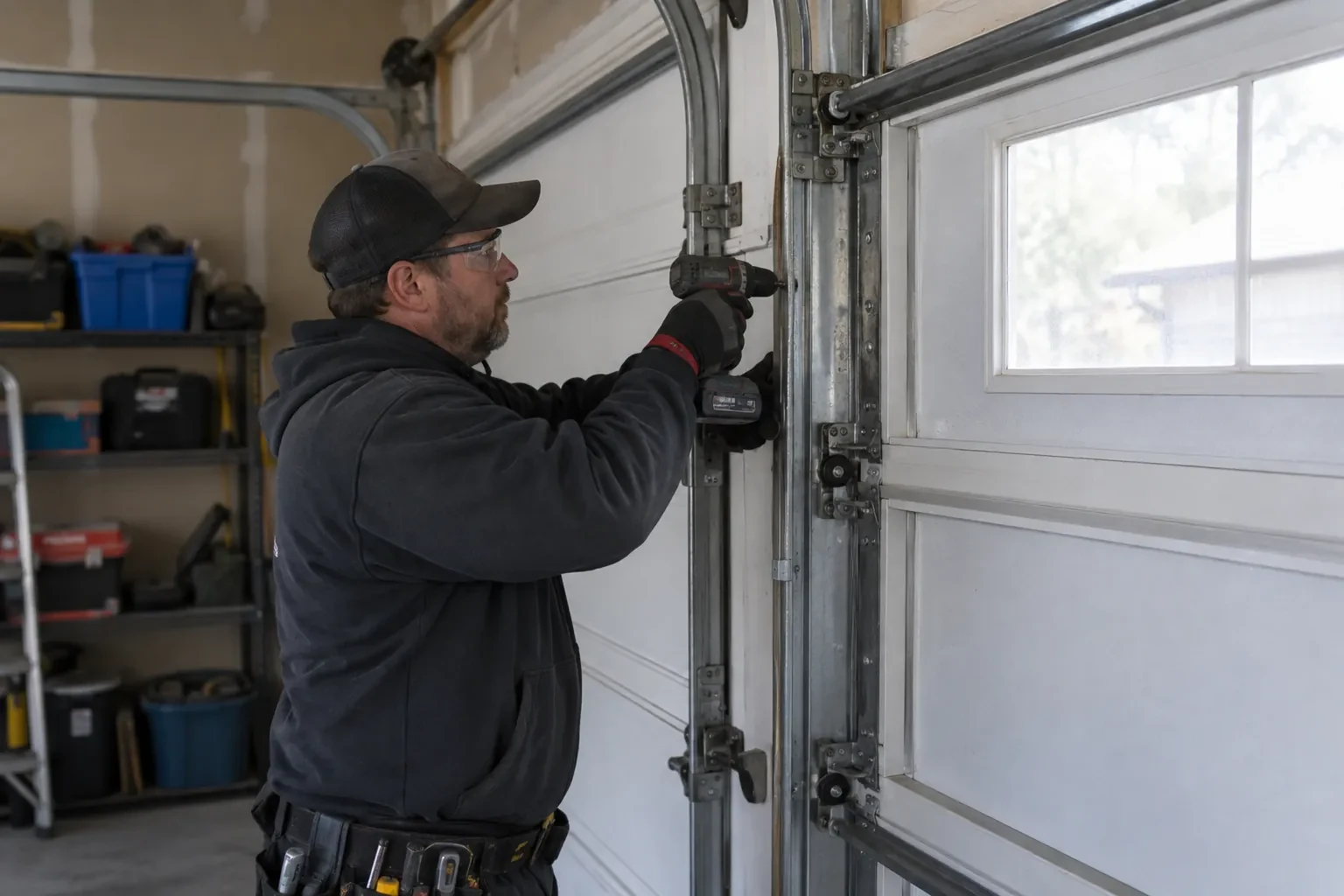
With the door clamped and the opener disconnected, the technician releases any tension left in an intact spring, loosens the drum set screws and slides the drums inward, then removes the old spring from the shaft. Bearings are inspected while the shaft is free. The new spring goes on with its stationary cone bolted to the centre bracket and the winding cone facing the drum. Drums are refitted, cables seated, the shaft levelled and cable tension evened on both sides. Winding follows, then the set screws are seated and the clamps come off for a balance check. Each stage is done deliberately and in order.
What cycle life means for you
The spring you chose is rated for a number of full open-close cycles, and that number translates into years according to your routine. A standard-cycle spring on a door used four times a day works out to several years of service; a household with teenagers and a home workshop will use cycles sooner, while a high-cycle spring stretches the same routine considerably further. Knowing your rating and your habits gives you a rough sense of when the next replacement falls due, so spring service becomes a planned item like furnace maintenance rather than a surprise on a cold morning.
Torsion Spring Replacement
In the van
Lift cables
Centre bearing bracket and bearing
Stationary cone bolts and nuts
Locking pliers for the track
Wire gauge and tape measure
Torsion Spring Replacement
What affects the quote
Door size and weight
A double-width door, a solid wood door or a thick insulated door weighs far more than a single-width steel panel, calling for heavier wire, longer coils or more springs to balance it.
Centre and end bearings
With the shaft out, bearings that grind, wobble or have seized are renewed. Smooth bearings reduce the load on the spring and opener, and their condition is confirmed by hand during the check.
Shaft condition
A bent, badly rusted or worn shaft is replaced so the drums and bearings turn true. Coupled two-piece shafts and their coupler are checked at the same time.
What to have ready
- About how many times a day does the door open and close?
- Are the cables on either side still tight, or hanging loose?
- Is a vehicle parked inside the garage right now?
Torsion Spring Replacement: questions
QuestionsCan a spring be adjusted rather than replaced?
A spring that is intact but has relaxed slightly can be given a little more tension, within limits, to restore balance; this is a normal adjustment on a door that has settled. A spring with a broken coil is replaced as a unit, since the wire has reached the end of its life. The technician checks the condition of the steel and recommends whichever restores a balanced, safe door.
What happens if the header wood or centre bracket is damaged?
The centre bracket anchors the spring's reaction force to the framing above the door, so it has to be solid. If the header has split or softened, or the lag bolts have pulled, the technician can refasten into sound wood, add a reinforcing plate or replace the bracket before the new spring is wound. Dealing with this first keeps the shaft level and the spring pulling straight, which protects the bearings and the door.
What is the difference between torsion and extension springs?
Torsion springs mount on a shaft above the door and twist to store energy, lifting the door through cables and drums. Extension springs run alongside the horizontal tracks and stretch as the door closes, pulling it up through pulleys. Torsion systems tend to lift more evenly, take up less space beside the tracks and are the standard on most modern doors. Both are professional service items because of the energy they hold.