Springs · Wellington North
Torsion Spring Replacement in Wellington North
On a cold morning the remote does nothing useful: the light comes on, the motor turns briefly, the door stays shut.
In plain words
Torsion spring replacement is really a service on the whole balance system. The spring sits on a shaft that turns in a centre bearing and two end bearings, drives a pair of cable drums, and lifts the door through two steel cables. With the shaft out for the new spring, the technician inspects each of these parts, replaces bearings that grind or wobble, checks cables for fraying at the bottom brackets and confirms the drums are seated. Refreshing worn pieces at the same time means the new spring works on smooth hardware and the door runs true.
How the visit goesOn a cold morning the remote does nothing useful: the light comes on, the motor turns briefly, the door stays shut. There may be a fresh crack in a rusty coil, and flakes of orange on the floor below the shaft.
Torsion Spring Replacement
How the visit goes
Understanding how the door is used
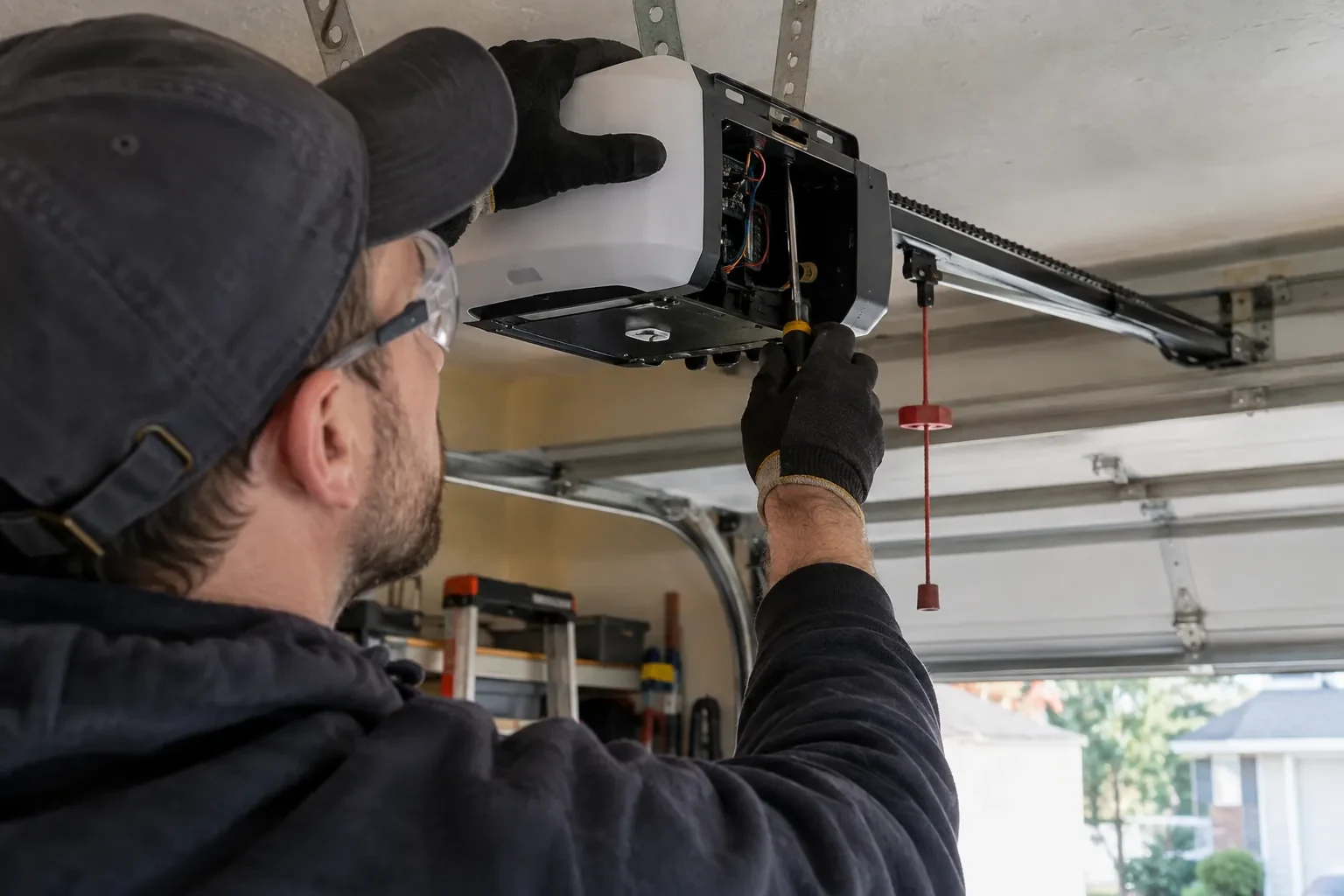
How the household uses the door shapes the spring that suits it. The technician asks how many times a day it typically opens, whether it is the main entrance to the home, and when springs were last replaced, if ever. A door cycled eight times a day accumulates use far sooner than a weekend garage. Age of the door and any previous partial repairs are also relevant, especially a single spring changed on a paired system. This conversation lets the customer choose between a standard-cycle spring and a higher-cycle option with a clear picture of what each means for them.
Fitting a matched pair
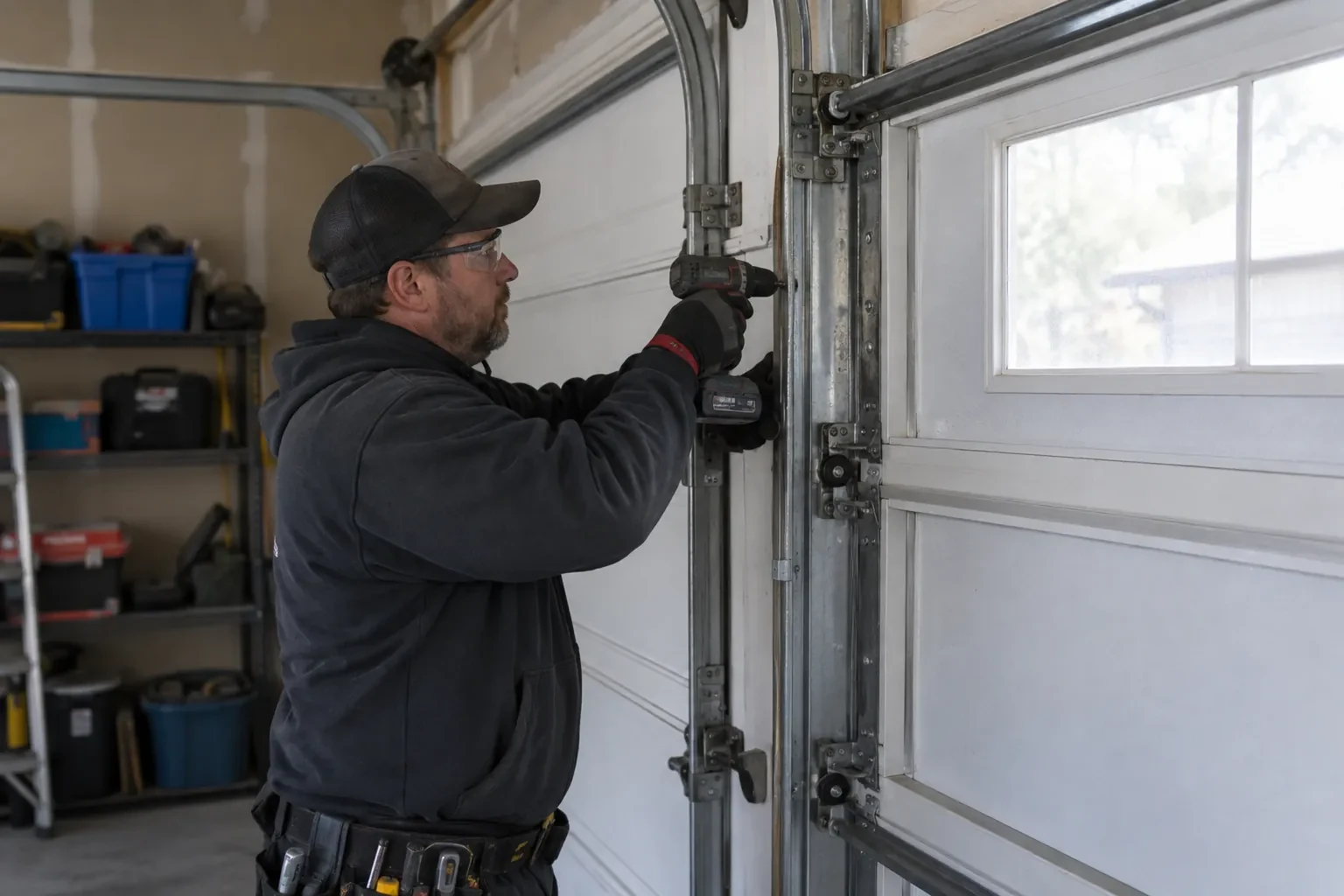
On a two-spring door the springs are installed as a set: one left-wound and one right-wound, mirrored on either side of the centre bracket, with matching wire size, diameter and length so each carries half the load. Both stationary cones bolt to the centre bracket and both winding cones face outward. The technician winds each spring the same number of quarter turns, alternating between them, so the shaft is never loaded unevenly. Once both are set, the door is balanced and tested as one system. Equal springs mean equal wear, so the pair reaches the end of its life together rather than one after the other.
Using the manual release with confidence
A balanced door is also a door you can operate safely by hand when the power is out. Pull the red release cord with the door closed to free the trolley, then lift the door with both hands on the handle or the bottom section; it should rise smoothly and stay open at full height. To re-engage, pull the cord toward the door until the trolley clicks back onto the carriage, or simply run the opener, which reconnects on most models. Because the spring now carries the weight, this is light work, and it is the recommended way to get a vehicle out during an outage.
Torsion Spring Replacement
In the van
Lift cables
Centre bearing bracket and bearing
Stationary cone bolts and nuts
Locking pliers for the track
Wire gauge and tape measure
Torsion Spring Replacement
What affects the quote
Age of the door and matching hardware
Older doors sometimes carry shaft diameters, bearing plates or drum patterns that are no longer common. Sourcing compatible hardware or adapting the mounting adds to the scope for these doors.
Converting from extension springs
Moving a door from extension springs to a torsion system adds a shaft, bearings, drums and brackets, and removes the old pulleys, which is a broader job than replacing an existing torsion spring.
Drum type and lift configuration
Standard-lift drums are the common case. High-lift, vertical-lift or low-headroom arrangements use different drums, cable lengths and turn counts, which changes the parts and the time involved.
What to have ready
- Are the cables on either side still tight, or hanging loose?
- Is the door currently closed, open, or stuck partway?
- Did you hear a loud bang before the door stopped working?
Torsion Spring Replacement: questions
QuestionsCan a spring be adjusted rather than replaced?
A spring that is intact but has relaxed slightly can be given a little more tension, within limits, to restore balance; this is a normal adjustment on a door that has settled. A spring with a broken coil is replaced as a unit, since the wire has reached the end of its life. The technician checks the condition of the steel and recommends whichever restores a balanced, safe door.
What happens if the header wood or centre bracket is damaged?
The centre bracket anchors the spring's reaction force to the framing above the door, so it has to be solid. If the header has split or softened, or the lag bolts have pulled, the technician can refasten into sound wood, add a reinforcing plate or replace the bracket before the new spring is wound. Dealing with this first keeps the shaft level and the spring pulling straight, which protects the bearings and the door.
What is the difference between torsion and extension springs?
Torsion springs mount on a shaft above the door and twist to store energy, lifting the door through cables and drums. Extension springs run alongside the horizontal tracks and stretch as the door closes, pulling it up through pulleys. Torsion systems tend to lift more evenly, take up less space beside the tracks and are the standard on most modern doors. Both are professional service items because of the energy they hold.