Repairs · Centre Wellington
Garage Door Manual Lock Repair
Someone slid the inside lock across before bed, and in the morning someone else pressed the remote.
In plain words
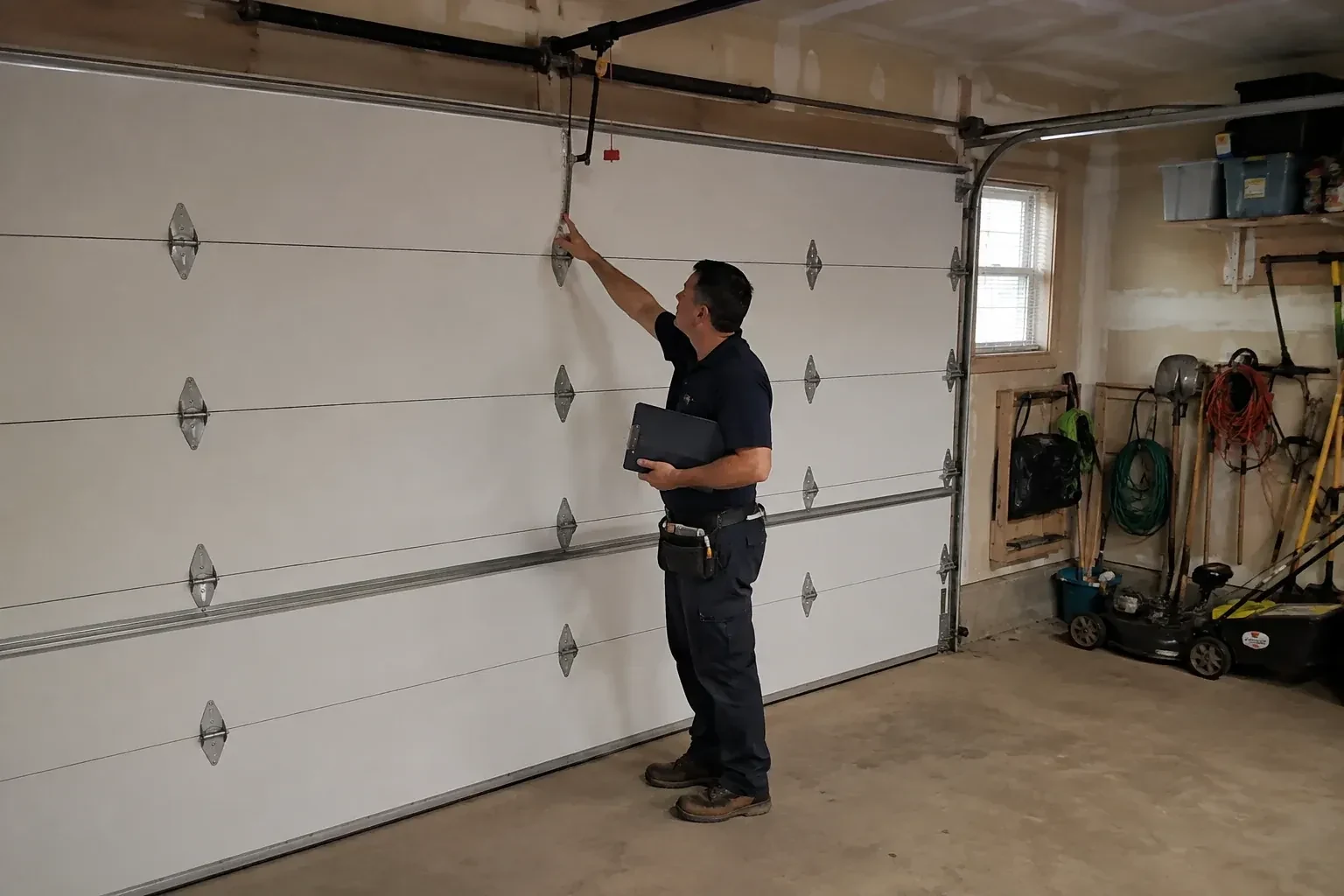
When an automatic opener is on the door, the manual lock and the motor have to be kept from meeting. Opener makers ask for the lock to be disabled or removed when the machine is installed, and the door industry's own guidance says the same, because a motor pulling against an engaged bar bends the bar, loosens the lock and strains the opener. Lock repair on a powered door therefore includes a decision: keep the lock removed or disabled and rely on the opener's own lock-out feature, or fit a manufacturer-approved interlock if the household wants the lock available when the power is off.
How the visit goesOn the old wooden door out back, one lock bar hangs loose from a rusted guide and the other is bent at an angle, so the handle turns but the door can still be lifted a hand's width from outside.
Garage Door Manual Lock Repair
How the visit goes
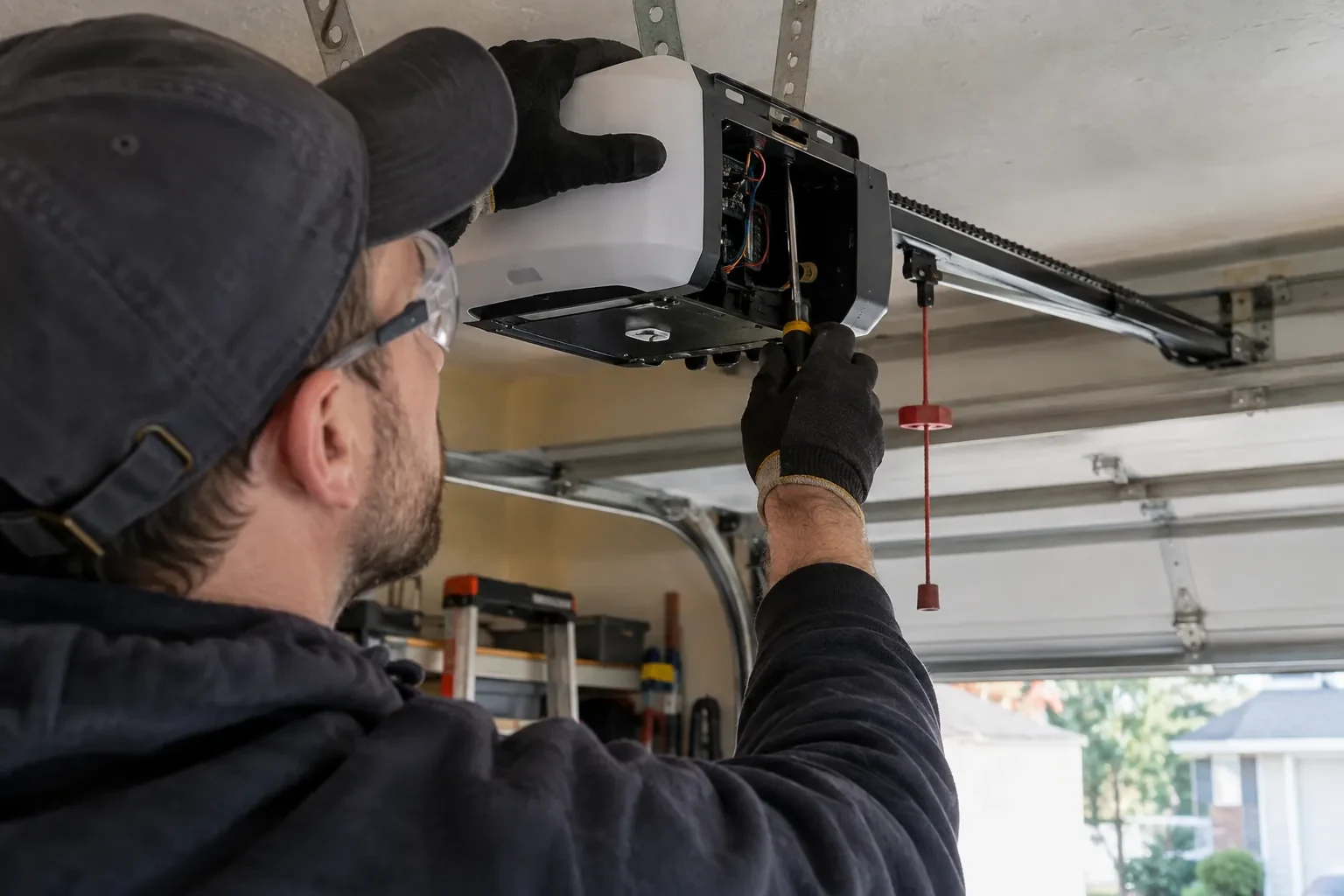
How the lock is fixed to the door
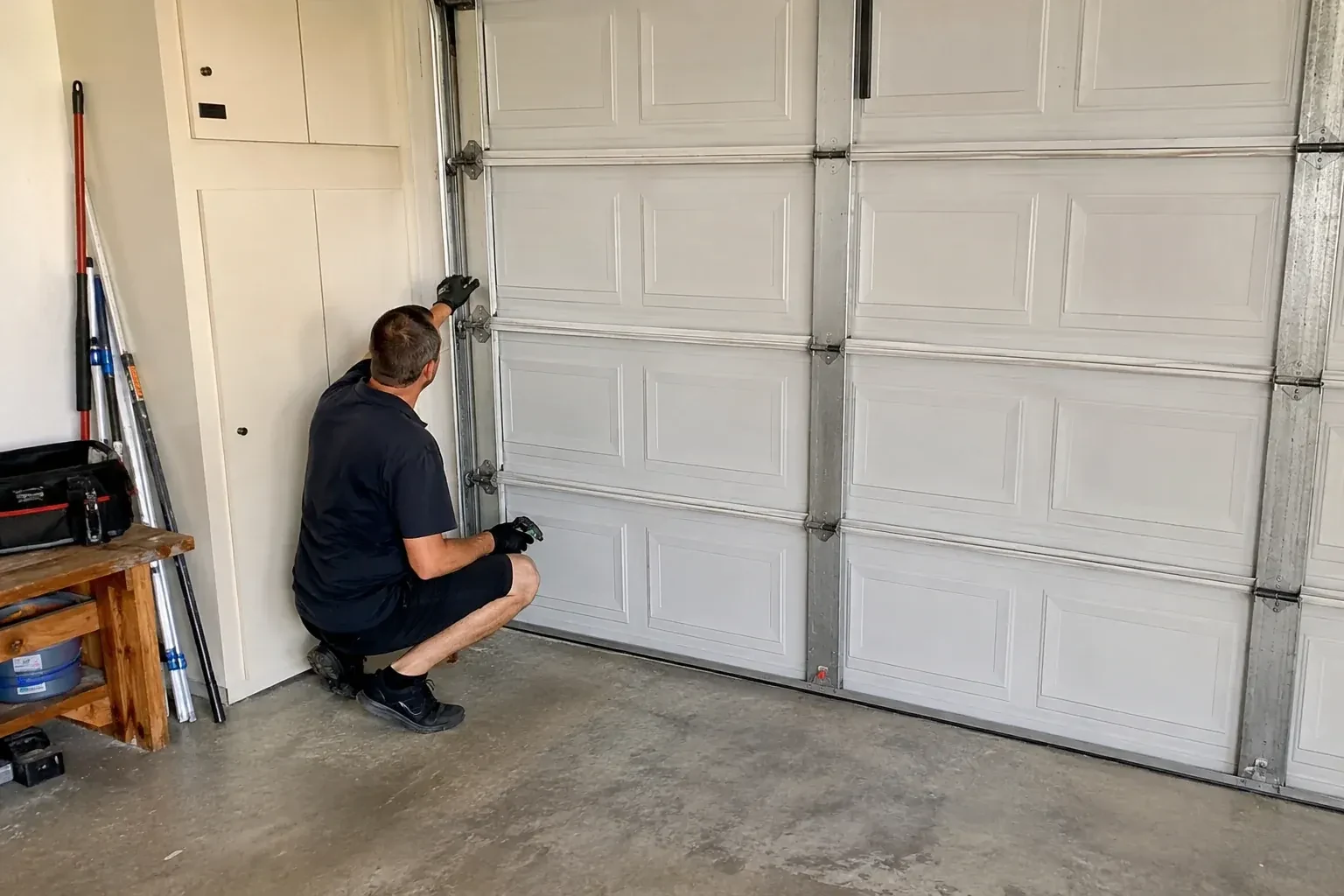
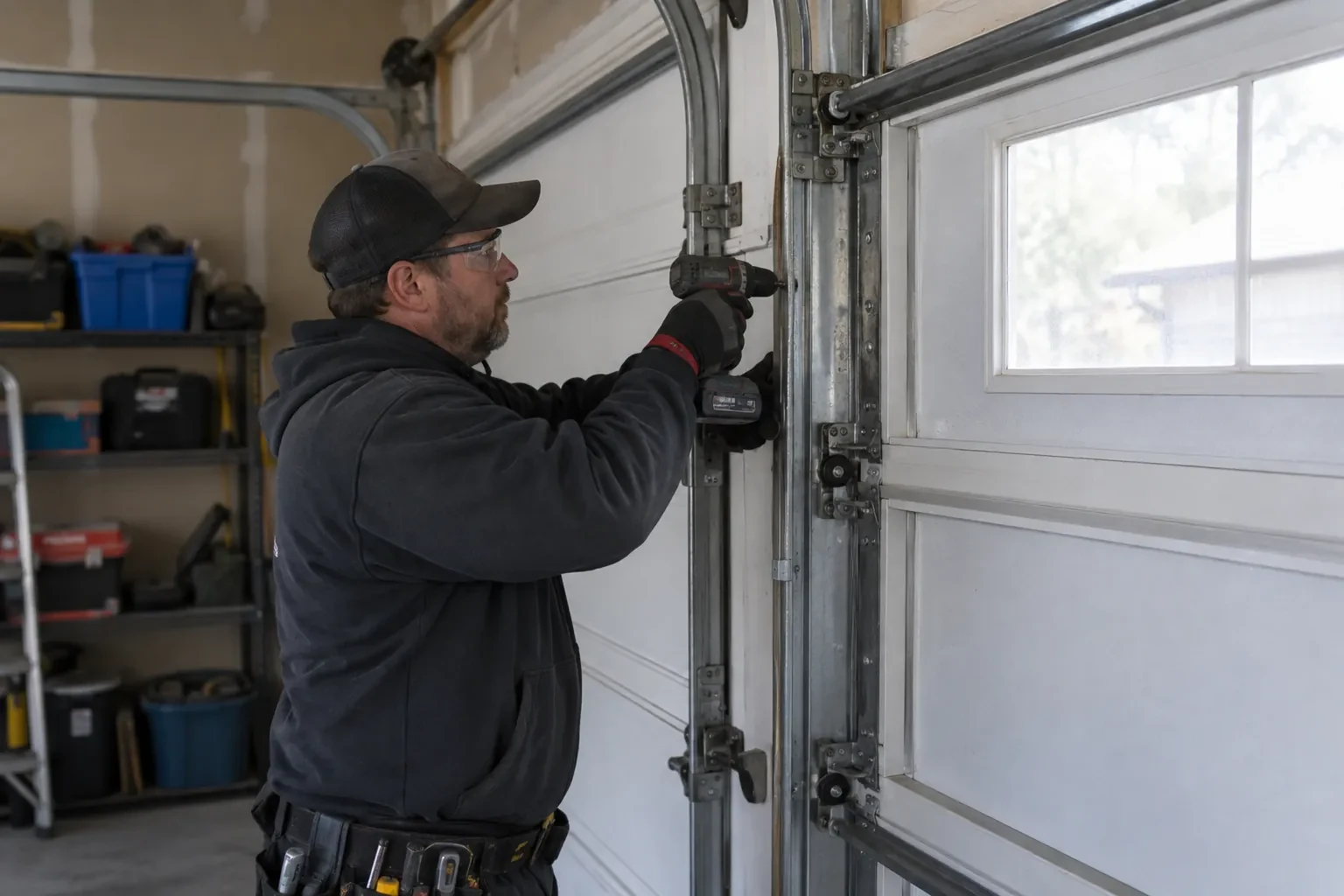
The lock lives on the door section, and the section has to hold it. On a steel door the technician checks whether the screws through the thin skin have pulled and left oval holes, whether the handle base is cracked, and whether the section around the cutout has creased. On a wooden door the check is for softness and rot around the handle and along the stile where the bar guides are screwed, and for a handle that spins in an oversized hole. Insulated doors are measured for thickness so the replacement spindle and through-bolts reach. This tells the technician whether ordinary screws will hold again or whether carriage bolts and backing plates are needed for a lasting fix.
Replacing an inside slide lock
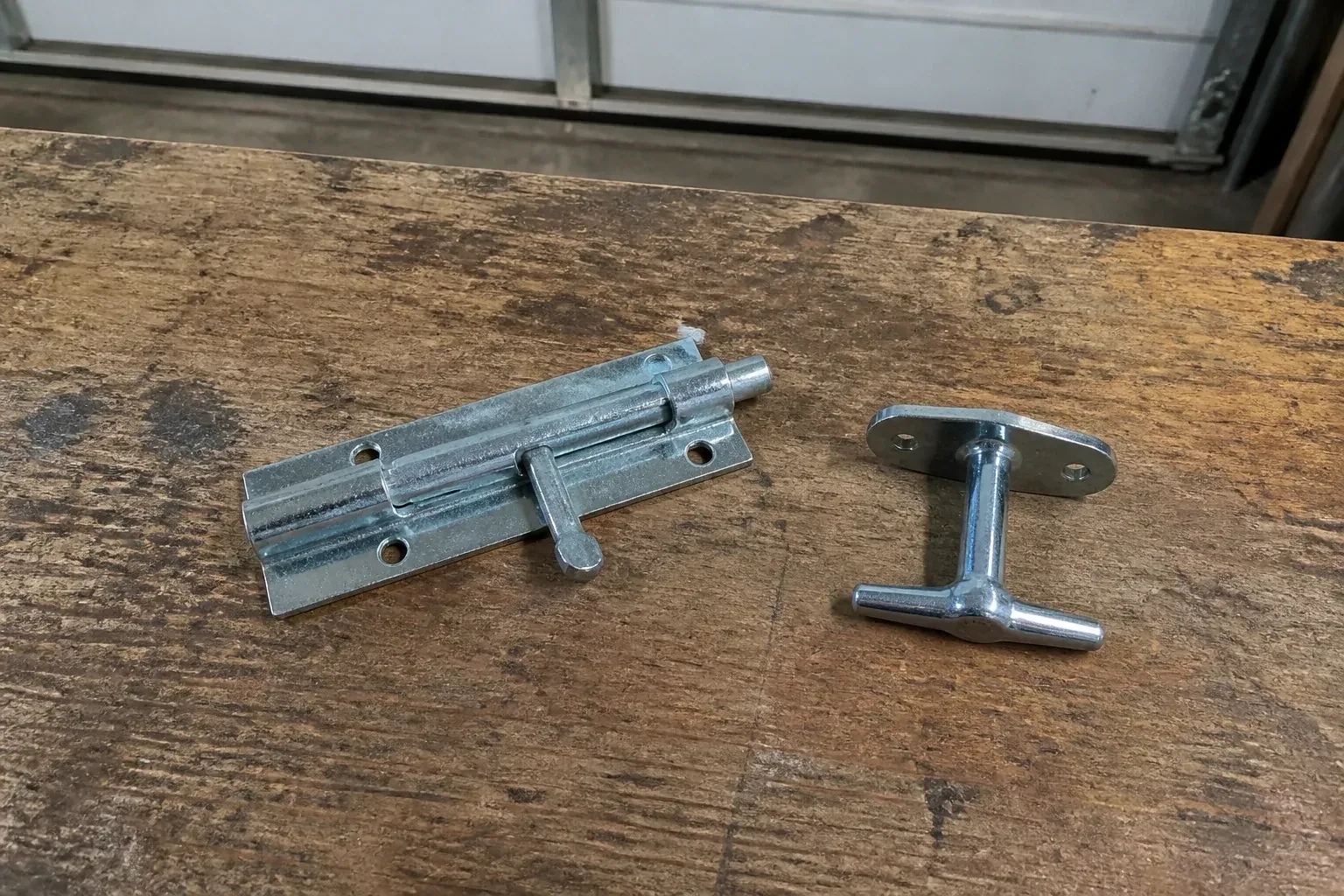
A slide bolt that is bent, seized or missing is replaced with a new lock of the same style, fixed to the door's edge stile so its bar lines up squarely with the slot in the track. Spring-loaded snap latches, which lock by themselves when the door closes, are set so they engage on closing and can be held open with their catch when the door is to be used with an opener. The fixing screws go into solid steel or wood, with through-bolts where the material is thin. The bolt is then thrown and released several times with the door down, and the technician confirms it clears the track fully so the door can rise without catching.
Locking the door when the power is out
The manual lock is now your plan for a dark evening. The sequence is simple: with the door closed, pull the opener's release cord so the trolley disconnects, then throw the slide bolt or turn the T-handle to lock. In the morning, or when the power returns, reverse it exactly: unlock first, confirm both bars are clear of the track, then re-engage the opener as its manual describes, usually by running it once so the trolley picks up the arm. The technician walks through this with you at the door, and it is worth practising once so the order is second nature before the storm that makes it matter.
Garage Door Manual Lock Repair
In the van
Lock cylinder with tailpiece
Keyed T-handle lock set
Inside turn handle and spindle
Dry graphite or PTFE lubricant
Carriage bolts and backing plates
Garage Door Manual Lock Repair
What affects the quote
Corrosion and seized hardware
Screws rusted solid, a cylinder seized in its handle or bars welded into their guides take time to free or cut out, and corroded parts are replaced rather than reused.
Slide bolt or keyed handle
An inside slide bolt is a simple piece of hardware with one moving part. A keyed T-handle has a cylinder, spindle, centre body, springs and two bars, and its repair takes more time and more parts.
Door thickness and insulation
Insulated and thicker doors take longer spindles, longer through-bolts and sometimes a sleeve through the foam. Matching those parts to the door affects the parts list.
What to have ready
- Are the lock bars bent, rusty or hanging loose?
- Would you like the garage lock keyed to match your house key?
- Does the handle turn, and does anything move inside the door when it does?
Garage Door Manual Lock Repair: questions
QuestionsDoes lock work involve the springs or cables?
The lock, its bars and its guides all live on the door sections and the tracks, well away from the counterbalance, so the visit involves no winding or unloading of springs. Where a lock misses its slot because the door hangs crooked or sits high, the door's balance or a cable may be part of the story, and the technician points that out so it can be dealt with properly.
My key will not turn in the cold. What is happening?
Meltwater has run down the door face into the keyway during a thaw and frozen overnight, or cold has stiffened old lubricant inside the cylinder. Lock de-icer or gentle warmth frees it; hot water is avoided because it refreezes and can crack cold metal. Afterwards the cylinder is dried and given a dry graphite or PTFE lubricant that sheds moisture instead of trapping it.
The wood around my lock is soft. Can it still be repaired?
Yes. The decayed wood is cut back to sound material and a hardwood block or a steel backing plate is let in behind the handle and along the stile where the bar guides sit. The handle, mechanism and guides are then fixed to that new material with through-bolts rather than screws into soft grain, so the lock turns without rocking and the bars hold their line.