Garage Doors
How doors work
The guides below are the explanations we give on site, written down. They cover the parts, the wear, the seasons and the upgrades, so you can revisit them whenever the door raises a question.
Curious about something?
Is the inspection different for an older detached garage with springs along the tracks?
The route is the same and the counterbalance looks different. Extension springs stretch beside the horizontal tracks and pull through pulleys, so the technician examines each spring for stretch and a broken end, each pulley for a grooved wheel or a seized bearing, the cable clips, and whether a containment cable runs through the centre of each spring. Balance, reversal and photo-eye tests are unchanged.
What does a garage door tune-up actually include?
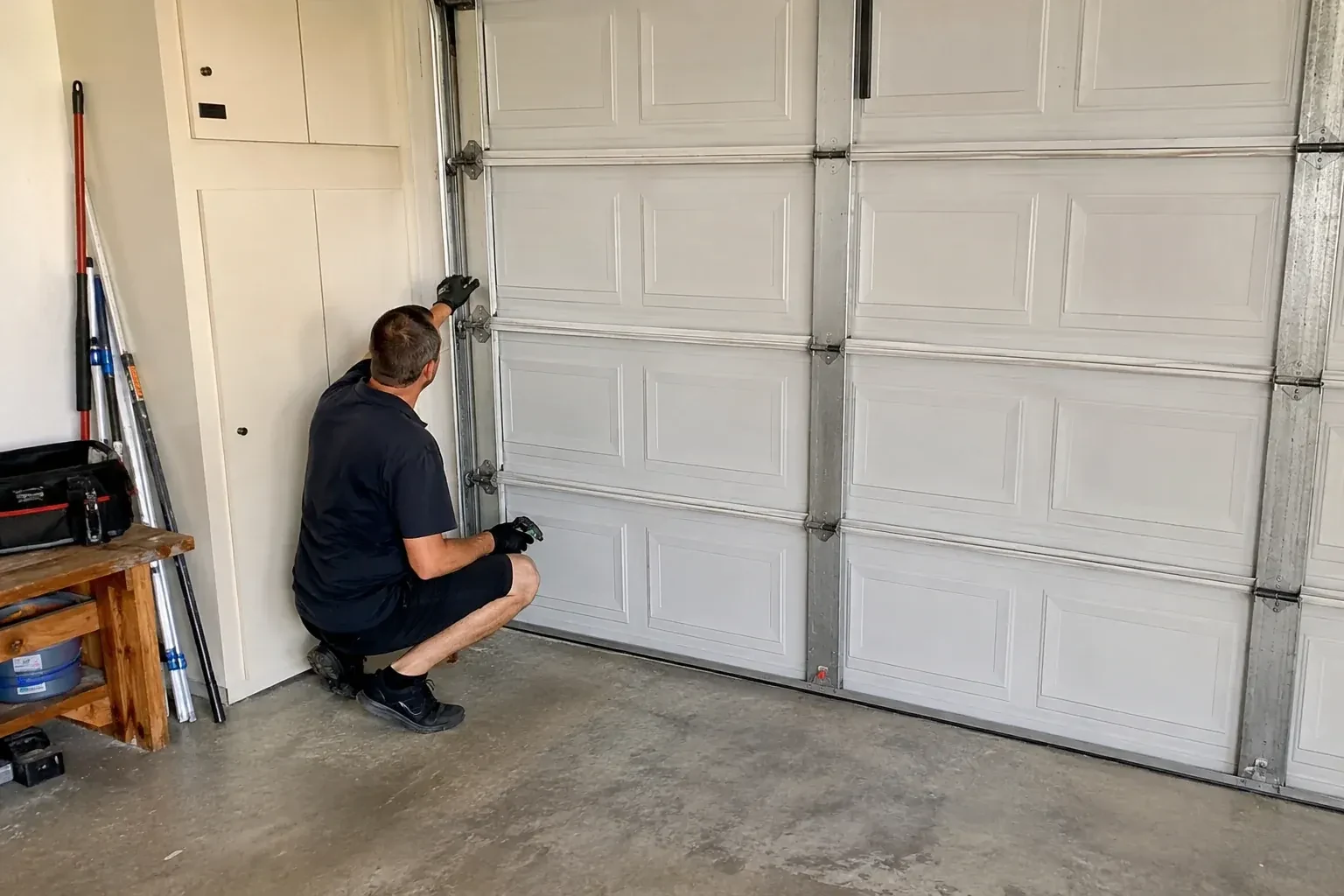
A full cycle observed before any work, a hands-on inspection of hinges, rollers, tracks, springs, cables, drums, brackets and the opener's attachments, tightening of the accessible fasteners, lubrication of the moving points with a garage door lubricant, a balance check with the door disconnected from the opener, adjustment of the opener's travel and force, cleaning and alignment of the photo-eyes, both reversal tests, a look at the seals, and a written record of the findings.
Will the door be as good as it was before?
In most cases it comes back better, because the reset includes truing the track, replacing worn rollers and correcting the misalignments that had been building unnoticed. The exception is a section creased by an impact: it may work perfectly well after the reset yet keep a visible dent, and the technician will tell you whether it is sound or worth replacing at some point. You are shown the door running before the visit ends.
Is a panel the same thing as a section?
In everyday speech, yes: people call the horizontal pieces of a garage door panels. In the trade's own terminology a section is the full-width piece that hinges to its neighbours, and a panel is one of the raised or recessed shapes embossed across it, so a door might have four sections of four panels each. When you ask for panel replacement, the technician understands you mean the section, and will confirm which one.
Why is the gap much bigger at one corner?
Two causes are common. The door may be hanging out of level because a lift cable has stretched, a drum has crept on its shaft or spring tension is uneven, which drops one corner. Or the slab may have settled or heaved at that end so the floor falls away. The technician checks both before choosing a seal, since a level door and the right seal height together close a wedge-shaped gap.
Why is there daylight on one side but not the other?
It can be either. Worn rollers, a track bracket that has shifted or a top section that bows can move the door face toward one jamb and away from the other, and a seal that is damaged, shrunk, the wrong size or set slightly off the door face shows the same way. The technician checks both the door's alignment and the seal itself, corrects what is out of true, then fits the new seal to a door that closes evenly.
Does lock work involve the springs or cables?
The lock, its bars and its guides all live on the door sections and the tracks, well away from the counterbalance, so the visit involves no winding or unloading of springs. Where a lock misses its slot because the door hangs crooked or sits high, the door's balance or a cable may be part of the story, and the technician points that out so it can be dealt with properly.
Do nylon rollers need lubricating?
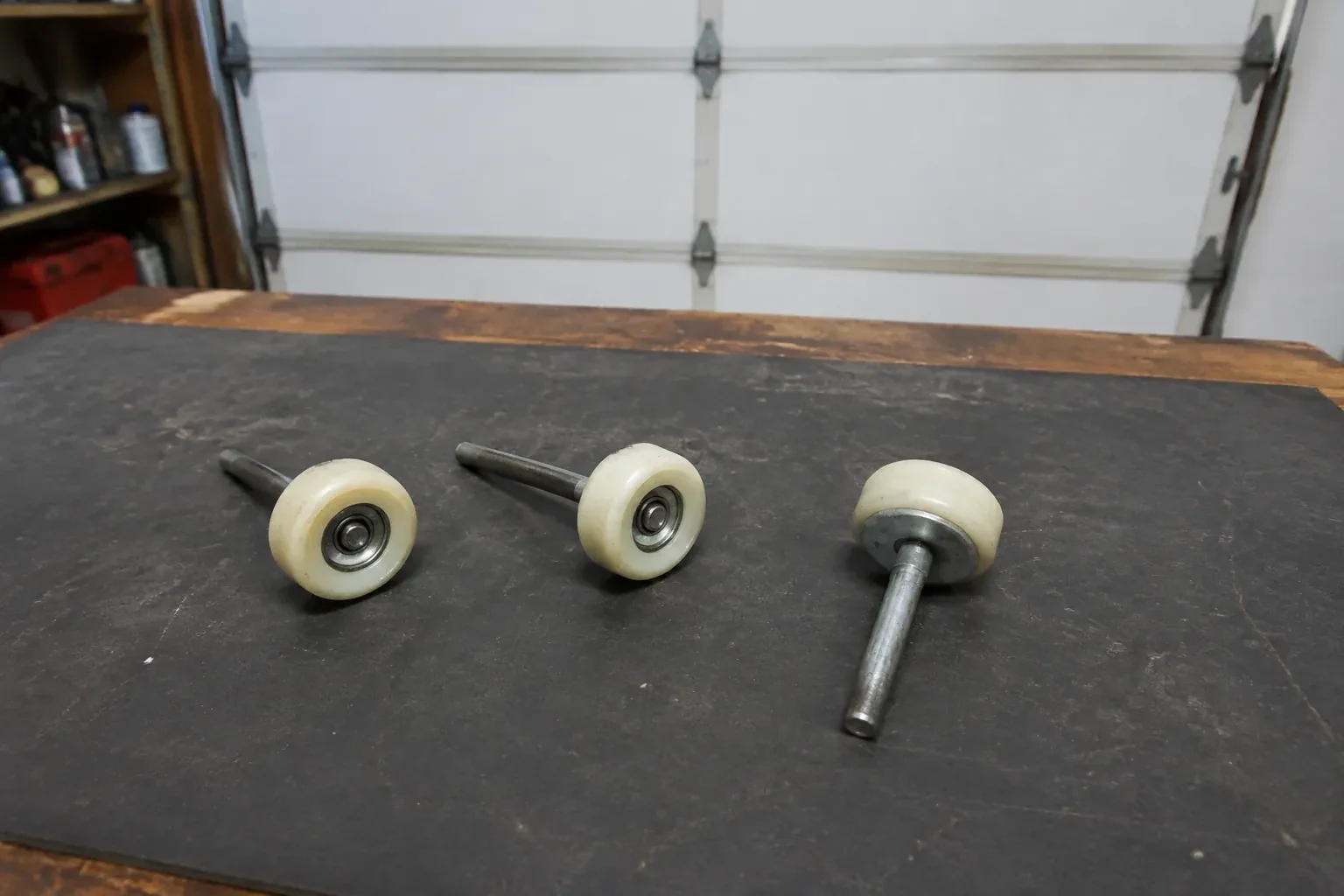
The nylon tire itself needs none; spraying it or the track only collects dust that grinds the wheel. The hinge knuckles and stems where they turn benefit from a light coat of garage door lubricant once or twice a year, worked in by running the door. The ball bearings themselves are lubricated only where the roller's own maker calls for it, since some nylon rollers should not be greased there. Rollers with sealed bearings come greased from the factory and need only a wipe and a look.
Can I tighten loose hinge screws myself?
Yes, hinge screws are a homeowner task. Disconnect the opener, leave the door closed, and snug each hinge screw with a socket wrench without forcing it, since overtightening strips the hole. Leave the bottom brackets alone; they anchor the cables and are under spring tension. If a screw spins freely or a hinge is cracked, stop there and have it looked at, because a stripped hole needs a fresh anchor rather than more turns.
Does a new piece of track have to match the rest of the set?
It does. Profile, gauge and radius all need to agree so a roller passes from old track to new without a step, and so both sides carry the door the same way. A two-inch track cannot mix with three-inch hardware, and a 12-inch curve beside a 15-inch one leaves the door meeting the horizontal run at two different heights. The technician measures the existing track and orders to it rather than to a general size.
Why should the bottom brackets never be loosened by hand?
The bottom bracket is where the cable attaches, so whenever the springs are wound it carries a share of the door's weight as tension. Loosening it while the counterbalance is loaded releases that tension all at once. Many manufacturers now fit tamper-resistant fasteners for this reason. The technician unloads the springs first, after which the bracket is just a piece of hardware to unbolt and replace.
Can a spring be adjusted rather than replaced?
A spring that is intact but has relaxed slightly can be given a little more tension, within limits, to restore balance; this is a normal adjustment on a door that has settled. A spring with a broken coil is replaced as a unit, since the wire has reached the end of its life. The technician checks the condition of the steel and recommends whichever restores a balanced, safe door.
Why does the opener get adjusted after new springs?
Because the door is now much lighter for the opener to move. Over the years, as the old springs weakened, the opener's force setting may have been turned up to keep the door going, and its travel limits were set against a door that sat differently on the floor. Left alone, that extra force would push the newly balanced door too hard. Resetting force and travel, then repeating the reversal tests, matches the opener to the door it now has.
What information helps when I book the visit?
Whether the door drifts up, sinks, or hangs crooked when released; whether there is one spring on a shaft above the door or springs along the tracks; whether it is a single or double door and roughly how tall; when the springs were last changed if you know; what has been added to the door; and whether the opener strains, reverses or stalls. A photo of the spring area is useful.
How long does a diagnosis visit take?
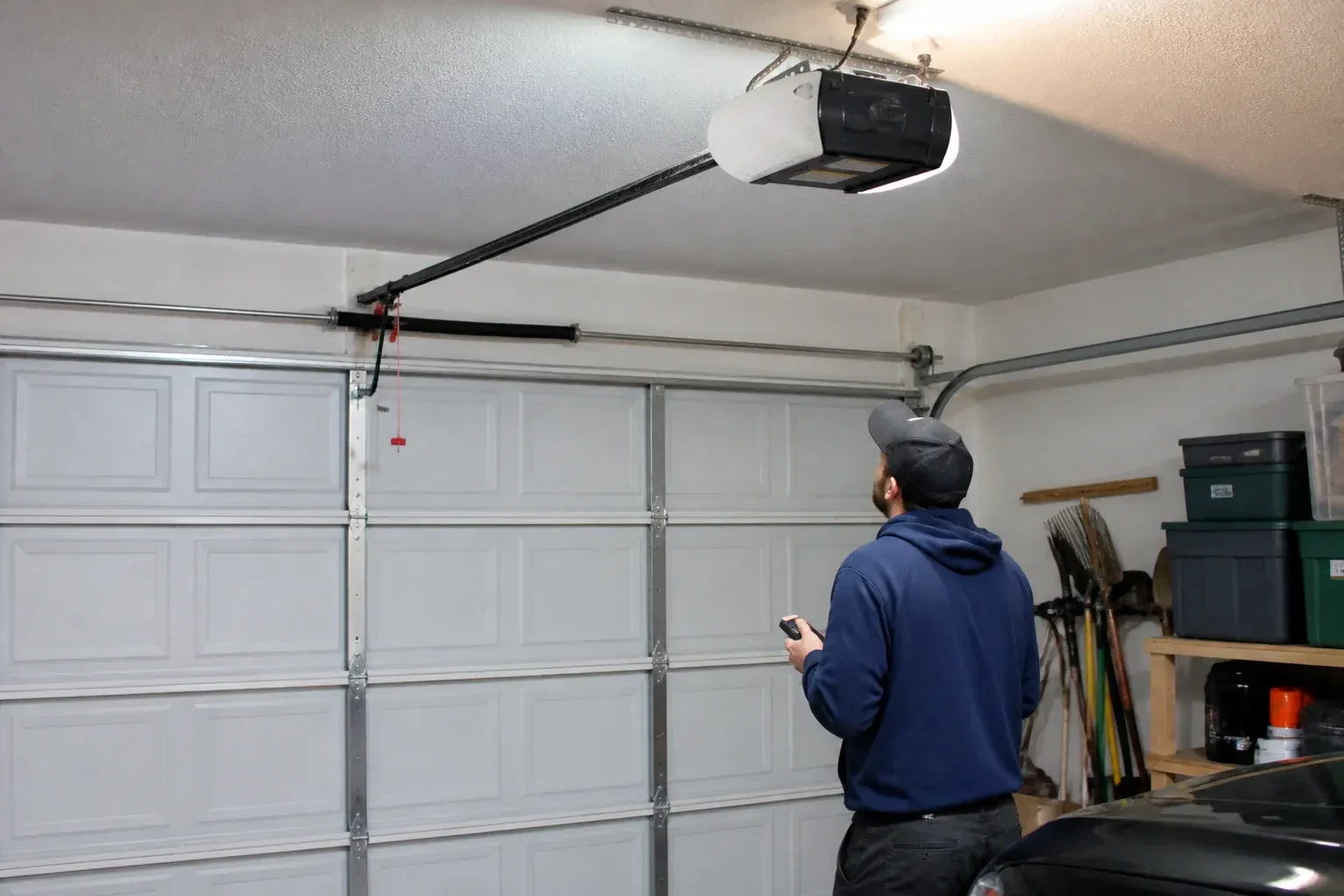
The checks themselves run in a set order and take a modest part of an hour on most doors. What extends a visit is the repair that follows: a gear kit or capacitor adds a little, a sensor re-wire or a trolley change adds more, and a door-side problem such as a balance fault may mean a second piece of work. You are told where things stand once the cause is found, before any further work begins.
What does the sprocket do, and how does it wear?
The sprocket is the toothed wheel on top of the motor head that pulls the chain. Every cycle drags the chain over its teeth, and over years the teeth wear thin and hooked, letting the chain ride up and skip under load, often at the same point on the rail each time. A sprocket that has loosened on its shaft lags behind the motor. Worn sprockets are replaced as part of the gear and sprocket assembly.
How long should a belt last once repaired?
A belt's life is counted in cycles and years, and on a balanced door with the rail straight and the tension right it runs for many years. What shortens it is a heavy door, an over-tight adjustment, a bent rail rubbing one edge, or grease on the rubber. Keep the door balanced and lubricated, the belt dry, and glance along the rail a few times a year.
The door is frozen to the floor. Why does the opener reverse?
Because the operator is protecting the door. Its force setting is tuned to the small effort a balanced door needs, so a seal glued to the concrete by ice registers as an obstruction and the door heads back up rather than ripping the rubber or bowing the top panel. Loosen the seal with a plastic scraper or a hair dryer along the sill, then try again; a shovelled threshold before a cold night keeps it from recurring.
Is it all right to keep using the door until the visit?
Use the door in a way that keeps you in control. If the opener closes only while the wall button is held, do that only while you can see the whole doorway and nobody is near it. Otherwise close the door first if you can, then move it by hand with the manual release, and get help if it feels heavy or binds. Keep children and pets clear during any test. A door that reverses is being cautious on your behalf.
Will unplugging the opener reset the remotes?
No. The stored controls survive a power cut or a long unplugging; the opener remembers them when power returns, and manufacturers say this plainly. Removing a control is done at the learn button, following the model's sequence, either by erasing the whole memory or, on some models, by deleting a single device through a supported wall control or app. That is reassuring after an outage and important after a lost remote.
Can one controller handle two garage doors?
Many hubs support two doors from one unit, each with its own door sensor, and each door appears separately in the app with its own name, status and history. Openers with built-in radios register individually, so a two-door garage with two connected openers simply shows two doors under one account. The technician confirms which arrangement your hardware supports before the visit.
Can I replace the cord and handle myself?
A rope and handle kit is a simple part, and many homeowners fit one. The details matter, though: the knot at the lever has to hold under a hard pull, the handle has to end up at the right height, and the lever should be checked for wear while you are up there. If the cord failed because the lever or trolley is worn, a new rope alone leaves the real fault in place. Have it done as part of a release check and both get looked at.
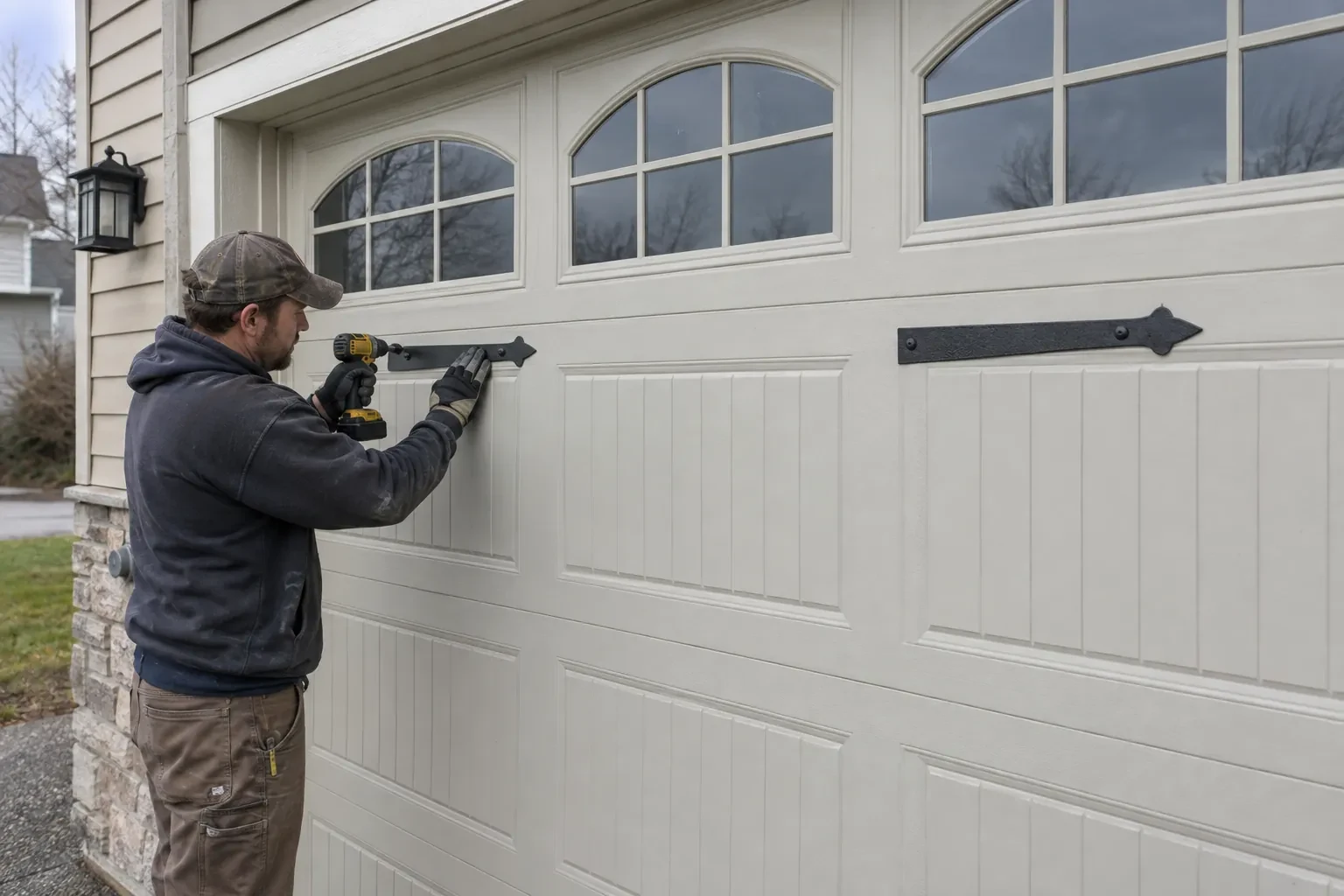
Can I choose a different colour and panel style?
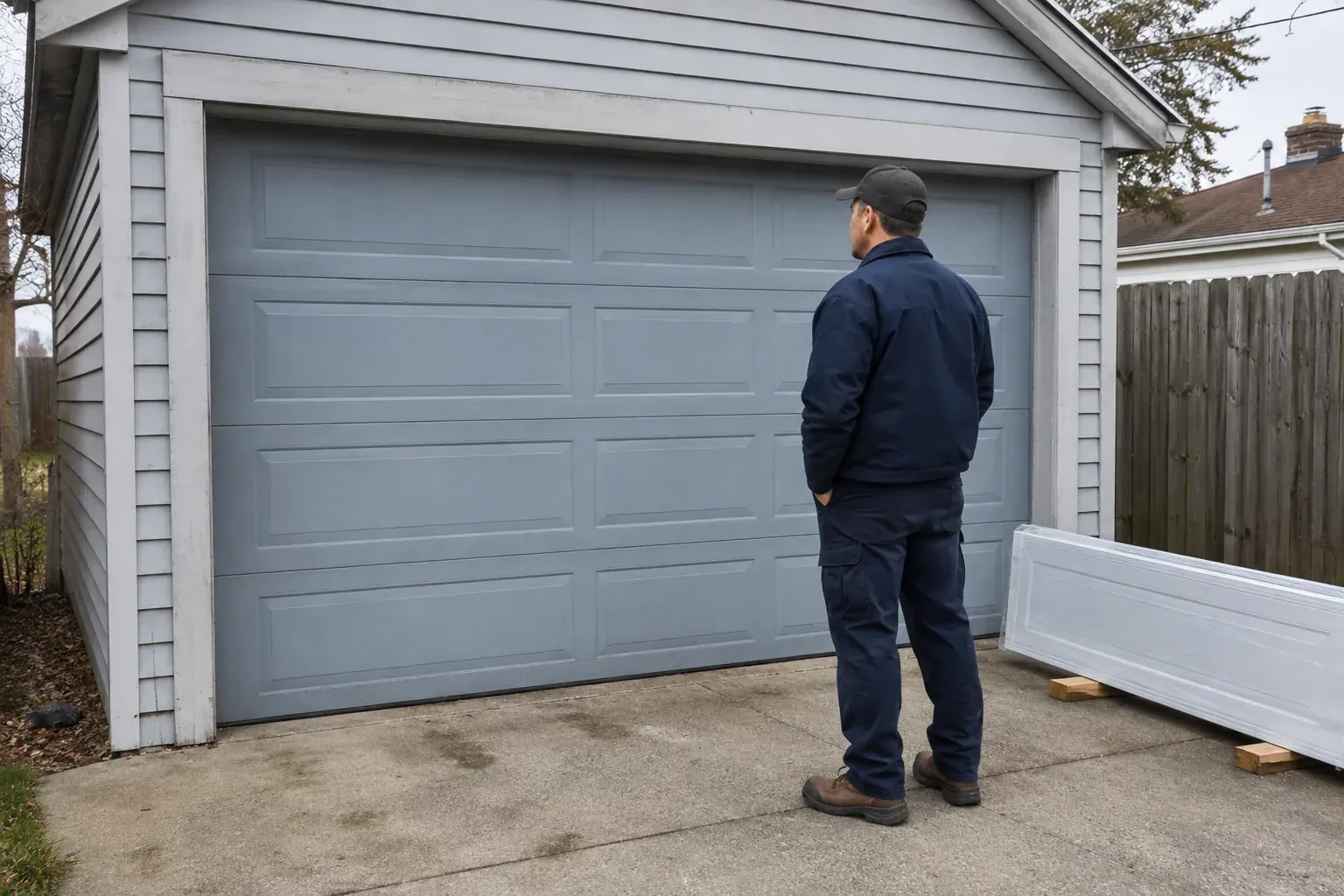
Replacement is an opportunity to select the exterior design as part of the order. Panel profiles, factory colours, window patterns and decorative details vary by product line. Samples and current literature help compare them in the building's actual light. Mechanical details are then specified around the completed door rather than separately from its appearance.
When should installation wait for other work?
The project may be sequenced after framing repairs, masonry work, floor correction, electrical preparation or removal of an obstruction in the travel zone. Identifying that dependency during measurement protects the selected door dimensions and attachment plan. The proposal can separate door work from tasks handled by another trade, with a clear condition that must be ready before fitting begins.
Can reinforcement be added to my current door instead?
Sometimes a door manufacturer provides a documented reinforcement arrangement for an existing model and size. Adding generic struts does not create a known rating by itself because tracks, rollers, hinges, anchors, sections, and jamb connections also share the load. The existing label and construction should be identified before deciding whether a supported upgrade path exists or replacement is more appropriate.
What information should I keep after the project?
Retain the door and opener instructions, product identifiers, colour or finish reference, glass selection, spring information and the final work record. Photographs of labels and the completed decorative layout can also help. This small file supports correct cleaning choices, makes later parts discussions more precise and gives future service technicians a clear account of the system originally installed.
What is tested before the installation is handed over?
The installer checks track support, fasteners, cable seating, manual balance, section movement and perimeter contact. Powered cycles confirm open and closed limits, clearances and normal control response. Photo-electric interruption and contact reversal are tested by the operator's instructions. The manual release and re-engagement sequence are demonstrated, and labels, manuals and care information remain with the door.
Does all framing need to be complete first?
The jambs, header, spring anchoring area and overhead attachment points used by the door system need to be complete, accessible and accepted by the responsible project party. Their locations depend on the selected track and counterbalance arrangement. If drywall or cladding will cover them, coordination happens before closing the surfaces. Structural design or framing changes remain separate project responsibilities, guided by the building drawings and door requirements.
Can several doors be assessed during one facility visit?
Yes. Numbering each opening and providing a short symptom list keeps the assessment organized. The technician can define the requested repair for the affected door and record visible conditions on comparable doors separately. Shared model data and installation history may help with parts planning, while each opening still receives its own mechanical and control checks before any work is scoped.
How are salt and winter moisture handled?
The lower guides, sill, fasteners, bottom seal and sensor faces are checked for ice, grit and corrosion. Buildup is cleared with methods suited to the material, drainage issues are noted and damaged sealing parts can be renewed within scope. The door is tested after cleaning because cold-weather resistance can exist alongside an alignment or balance problem.
Why are new cable drums usually part of the project?
A high-lift door changes how cable must wind as the panels move vertically and then turn. High-lift drums use a contoured groove profile to manage that changing leverage and help balance the door through its travel. Drum selection is coordinated with door weight, lift dimension, cable length, shaft and spring design rather than chosen as an isolated hardware swap.