Springs · Conn
Garage Door Hinge Replacement in Conn
The car nudged the door on the way in.
In plain words
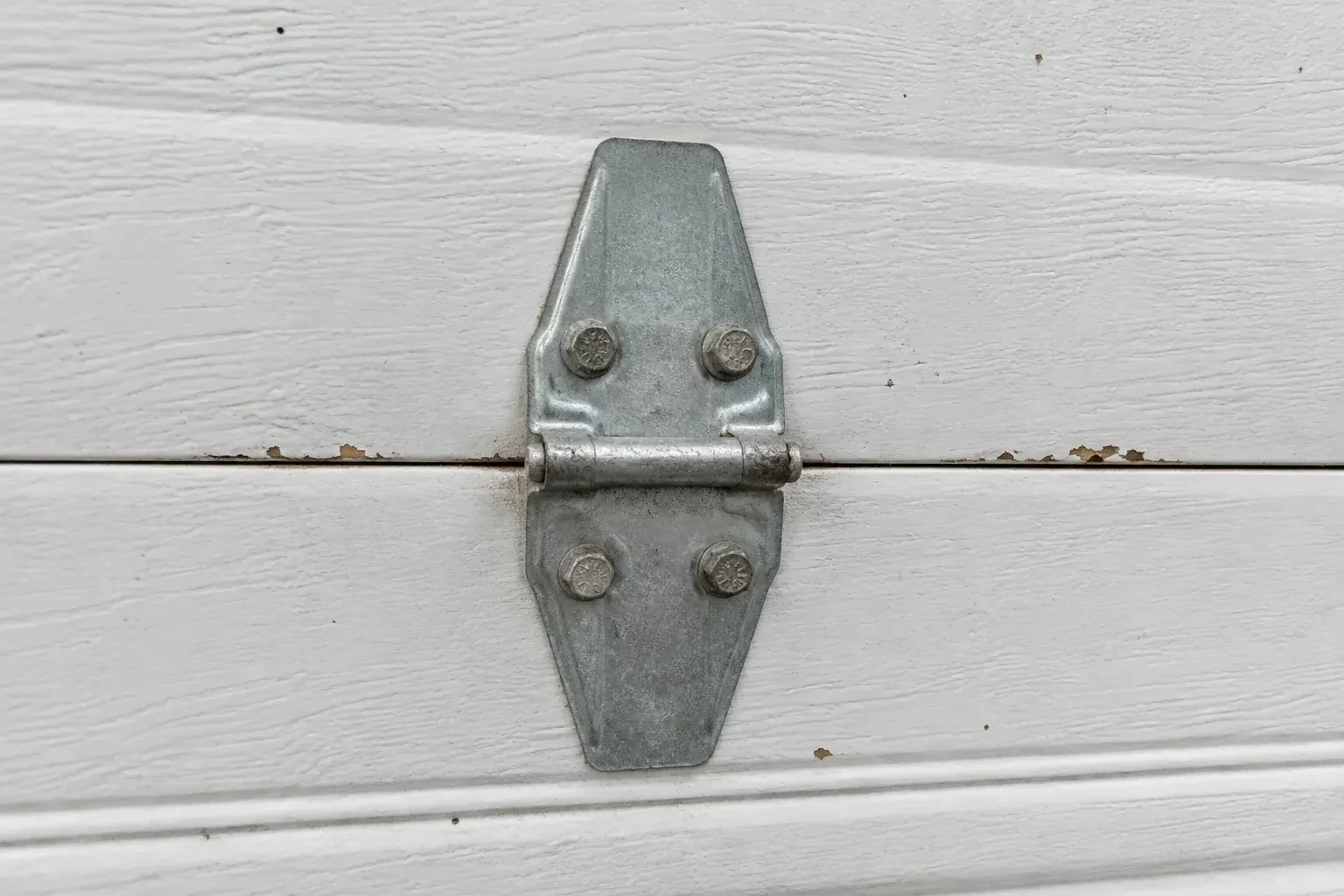
Hinges are the joints of a sectional garage door. Each pair of panels is connected by two hinges at the edges, which also hold the rollers, and by one or more centre hinges along the middle. Hinge replacement removes a hinge that has cracked, bent, worn loose at the pin or lost its grip on the panel and fits a matching one in its place. The technician keeps the door closed and the opener disconnected, changes each hinge on its own, checks the panels line up and the rollers sit true, and runs the door to confirm it folds around the curve as one piece.
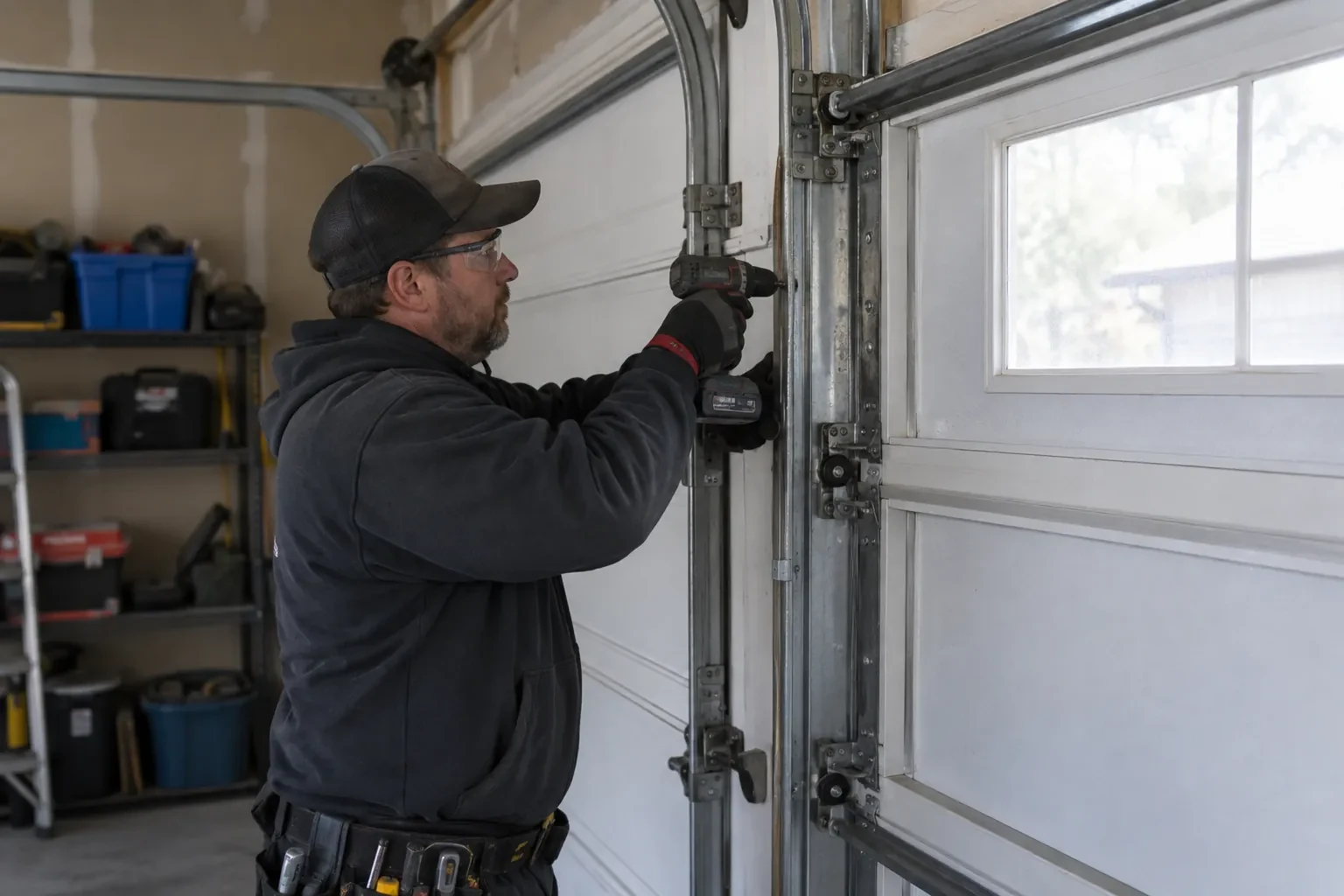
How the visit goesThe car nudged the door on the way in. There is a dent low on one end, and above it the hinge that carries the roller is bent so the panel edges rub together and squeal as the door lifts.
Garage Door Hinge Replacement
How the visit goes
Reading the number on each edge hinge
Every edge hinge carries a stamped number, and the technician reads it rather than assuming. A 1 sits at the joint above the bottom panel, a 2 at the next joint up, then 3, with 4 and 5 appearing on taller doors. The number sets how far the roller stands off the door, so the door leans into the jambs when closed and follows the track as it climbs. An earlier repair sometimes leaves a 2 where a 3 belongs, and that door binds or gaps at the curve for years without anyone knowing why. Confirming the number on each joint, and correcting any that are wrong, is part of the first look.
Changing an edge hinge with its roller
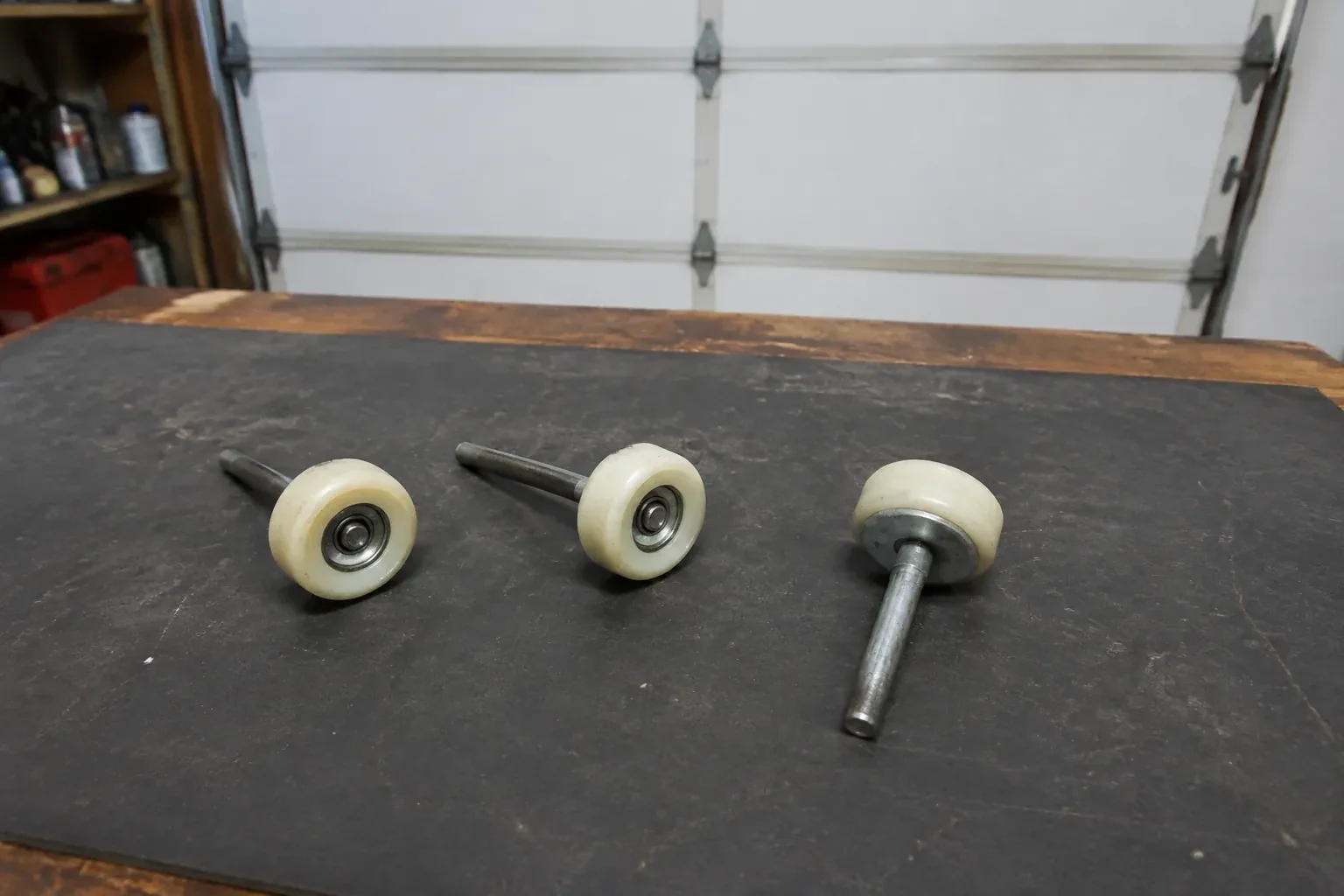
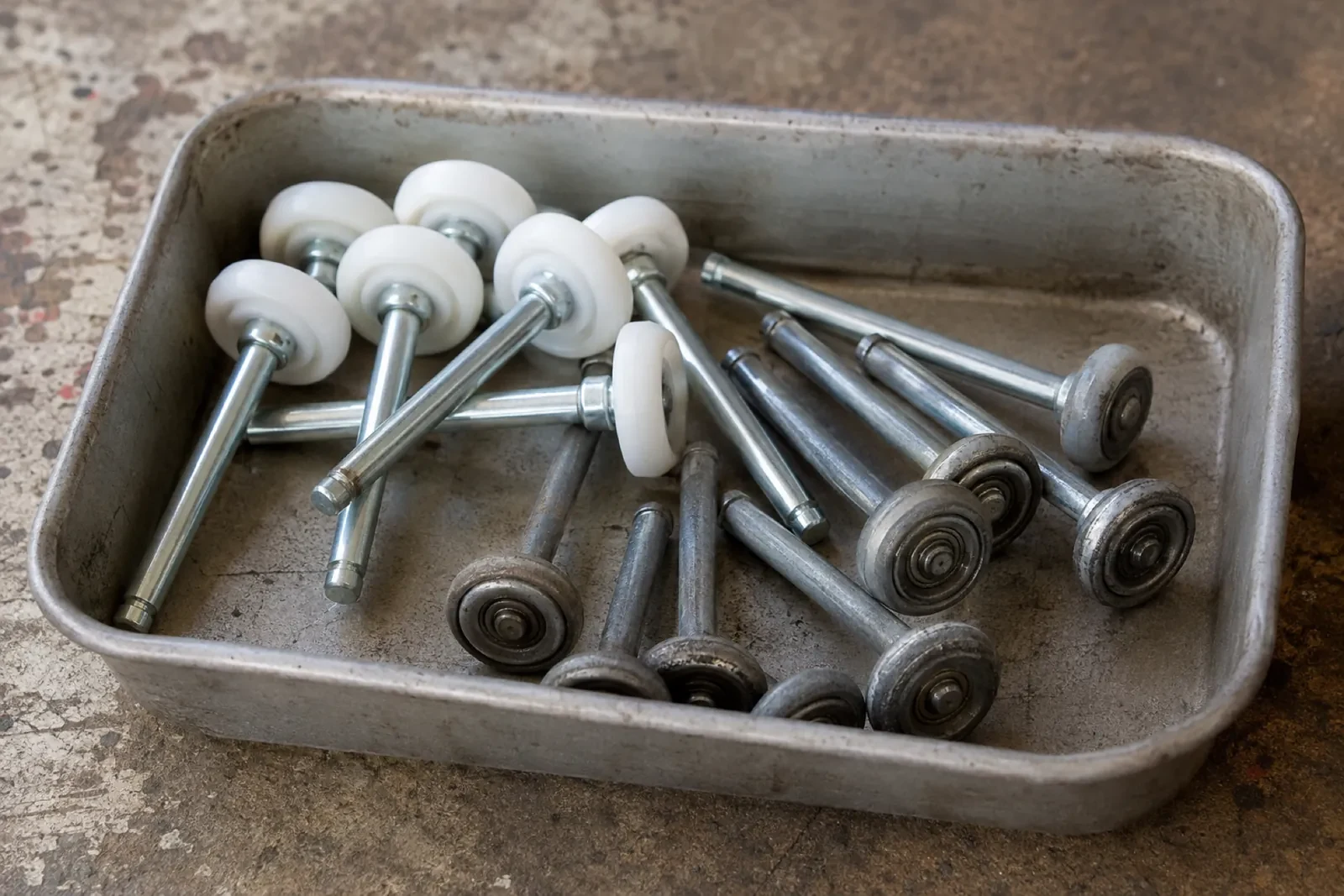
An edge hinge holds the roller in the track, so the roller comes with it. The technician steadies the panel with a clamp, backs out the hinge screws, then eases the roller stem out of the hinge tube while tilting the wheel clear of the track, or loosens a track bracket a fraction to make room. The old hinge comes off, the new one of the same number goes on with the roller stem seated in its tube, the wheel is guided back into the track, and the hinge is fastened. Both edge hinges on a joint are handled this way, one after the other, with the panel alignment rechecked between them.
Screws you can tighten and hardware you leave alone
Hinge screws loosen with vibration and temperature swings, and snugging them with a socket wrench once a year is a homeowner task; do it with the door closed and the opener disconnected. The hardware to leave alone is the bottom bracket in each lower corner, which anchors the lift cable and is under spring tension whenever the springs are wound; many doors fit tamper-resistant fasteners there for that reason. The springs, cables and their brackets are the technician's job. Knowing which screws are yours and which are not is what makes the annual tighten-up both useful and uneventful.
Garage Door Hinge Replacement
In the van
Panel strut
Silicone or lithium hinge lubricant
Numbered galvanized edge hinges
Flashlight and level
Socket set and impact driver
Garage Door Hinge Replacement
What affects the quote
Condition of the mounting holes
Stripped or torn holes need a larger screw, a through-bolt with nut and washer, or a backer plate. That extra anchoring is small but is quoted separately from the hinge itself.
Rollers renewed at the same time
Where a roller is cracked, seized or flat-spotted, replacing it while the hinge is off is efficient, and the roller set is listed as an optional item you can accept or decline.
Track or balance problems found
If the inspection shows a track out of line or a door out of balance behind the hinge failure, correcting it is explained and priced on its own alongside the hinge work.
What to have ready
- Is the loose or broken hinge at the edge of the door or in the middle?
- Can you read a number stamped on the hinges near the edge?
- Do any screws turn without tightening when you press a hinge?
Garage Door Hinge Replacement: questions
QuestionsCan I tighten loose hinge screws myself?
Yes, hinge screws are a homeowner task. Disconnect the opener, leave the door closed, and snug each hinge screw with a socket wrench without forcing it, since overtightening strips the hole. Leave the bottom brackets alone; they anchor the cables and are under spring tension. If a screw spins freely or a hinge is cracked, stop there and have it looked at, because a stripped hole needs a fresh anchor rather than more turns.
How should I lubricate the hinges?
A short burst of silicone or white lithium spray made for garage doors on each hinge knuckle and roller stem, spring and autumn, then run the door a few times to work it in. Wipe away any excess. Skip heavy grease and general-purpose oil, which trap grit and salt against the steel. Leave the track dry and simply wipe it clean, since lubricant in the track makes wheels slide instead of roll.
Why did the hinge crack in the first place?
Steel flexed often enough eventually cracks, and several things speed that up. A door out of balance is dragged by the opener, and every hinge takes the strain. A seized roller twists its hinge on each trip. A track out of line pinches the panels at the curve. A wide panel without a strut flexes at the joint. Corrosion at the low hinges thins the steel. The technician looks for which of these was at work so the new hinge is spared the same stress.
Related services
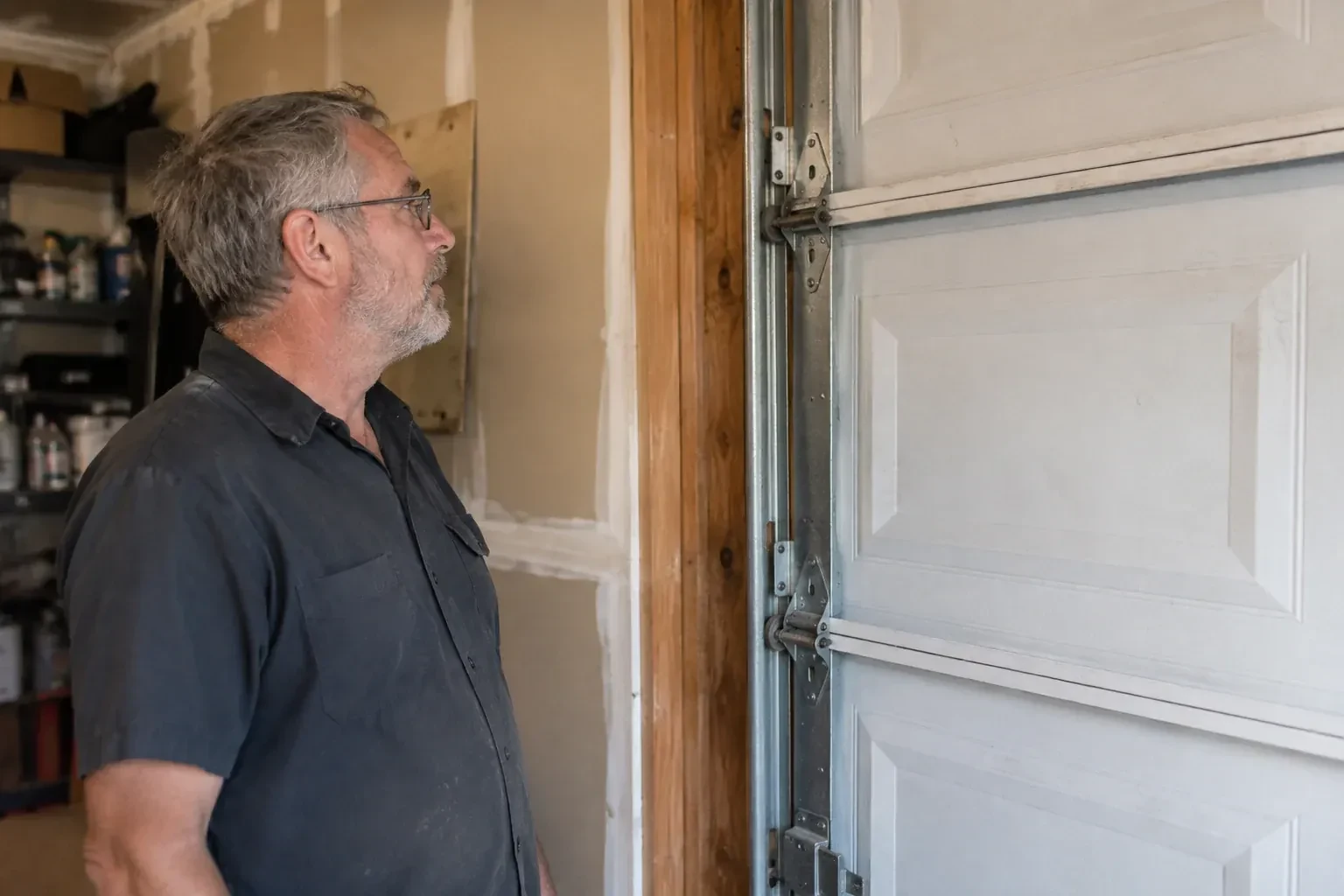
- Garage Door Track Repair or ReplacementThe door climbs crooked, one side clearly ahead of the other.
- Garage Door Cable ReplacementThe car bumper kissed the door on the way in.
- Torsion Spring ReplacementOn a cold morning the remote does nothing useful: the light comes on, the motor turns briefly, the door stays shut.