Springs · Mapleton
Garage Door Hinge Replacement in Mapleton
The car nudged the door on the way in.
In plain words
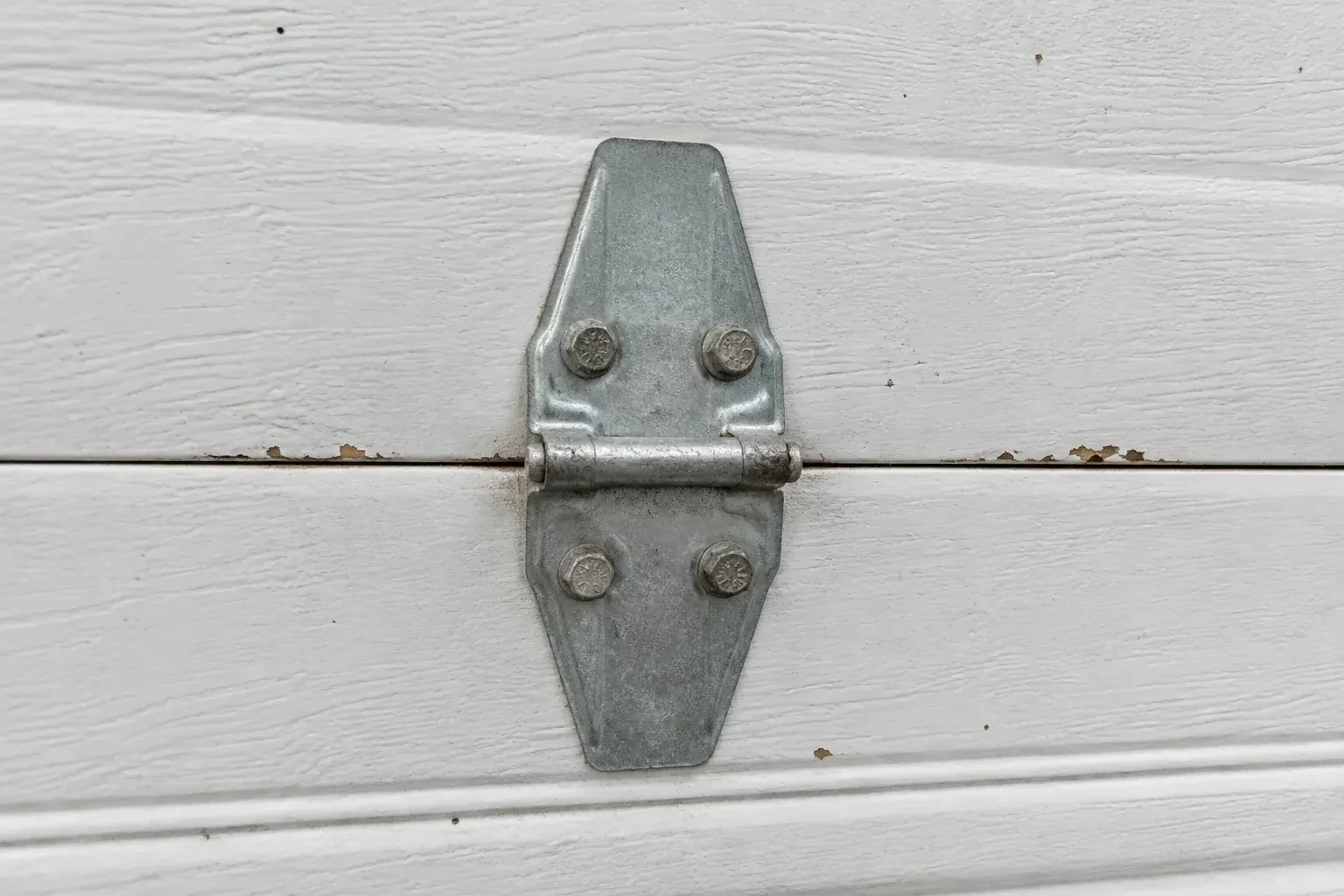
A hinge rarely fails on its own. A door that has drifted out of balance makes the opener drag it, and every hinge takes that strain on each trip. A roller whose bearing has seized twists the hinge that holds it. A track that has crept out of line makes the panels bind at the curve, and the hinge at that joint flexes until it cracks. Hinge replacement therefore begins with the whole door: rollers, track, balance and the panel edges around each hinge. The cause is corrected alongside the new hinge so the fresh part is not asked to absorb the same stress that finished the old one.
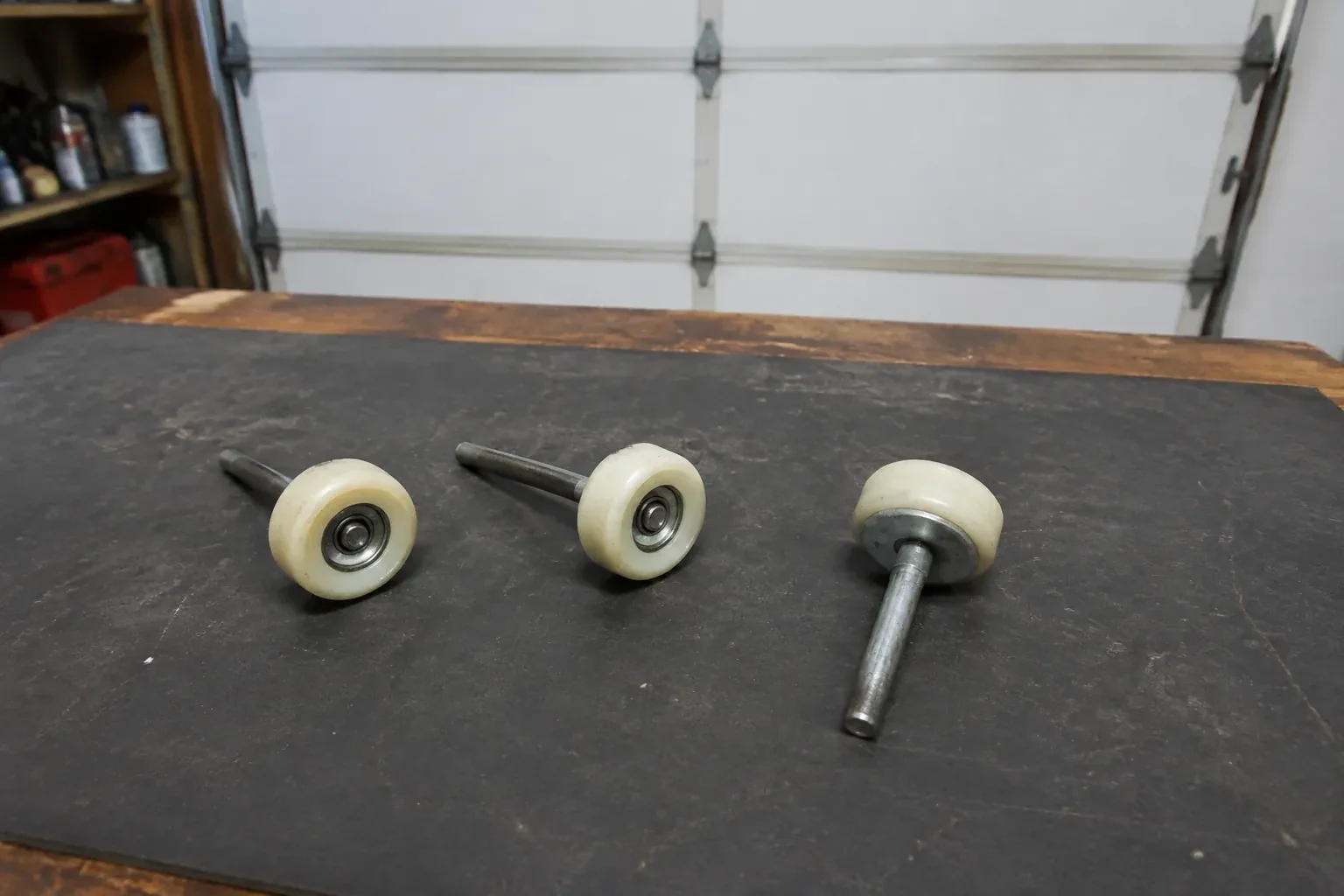
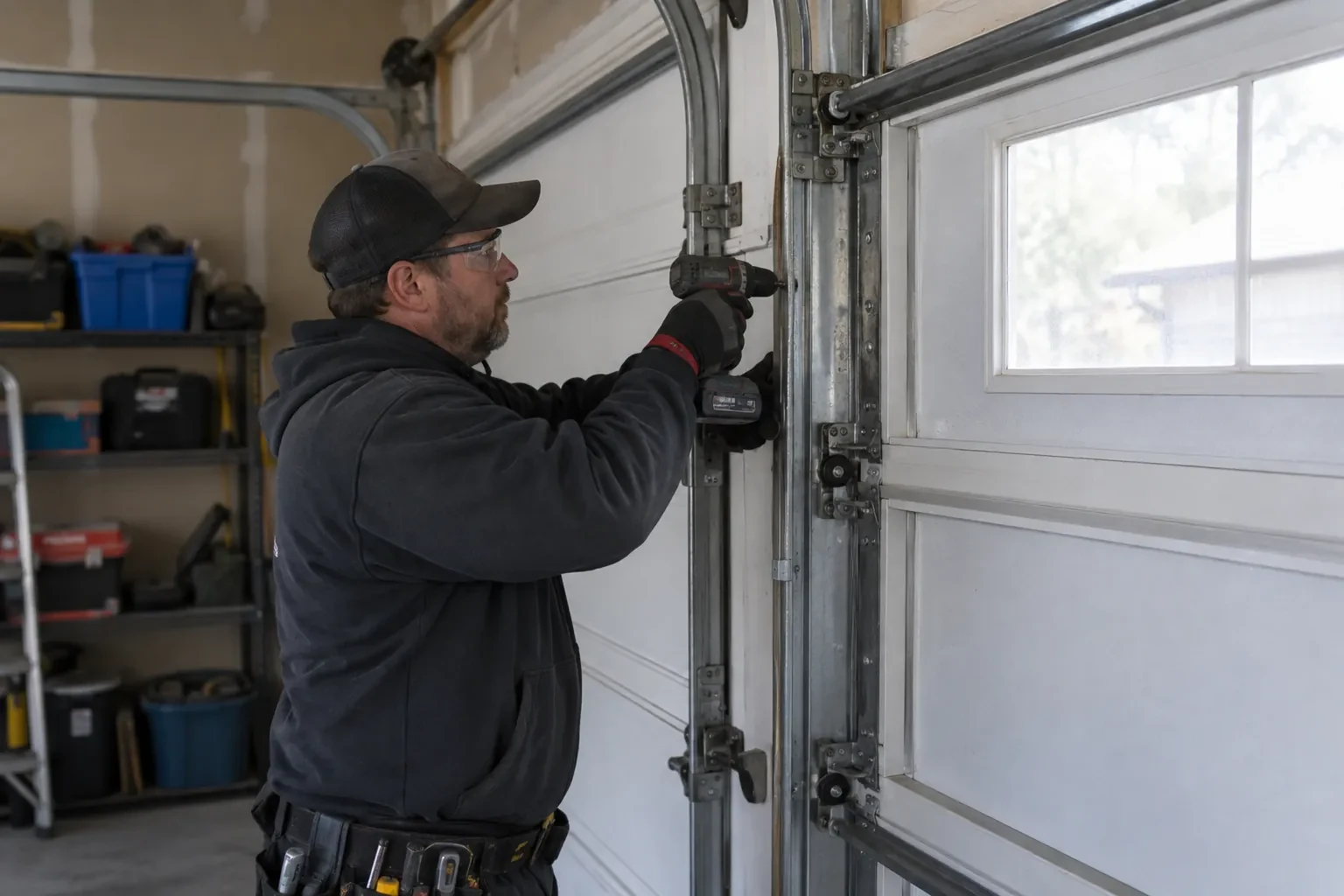
How the visit goesThe roller at the top of the second panel is leaning outward and only half of the wheel is still in the track. Behind it, the hinge that should hold it flat against the door has a screw missing and another hanging by a thread.
Garage Door Hinge Replacement
How the visit goes
Why the hinge gave up
The technician wants the reason as much as the symptom. A door that is out of balance is dragged by the opener, and each hinge takes a share of that force many times a day. A vertical track that has shifted pinches the panels at the curve, and the hinge at that height flexes until it cracks. A bumper touch bends an edge hinge in a way that shows up as rubbing panel edges. Vibration alone works screws loose over the years. You will be asked what the door was doing before the hinge failed, because a stiff, jerky or noisy door before the break points to the cause.
Going over the rest of the hardware
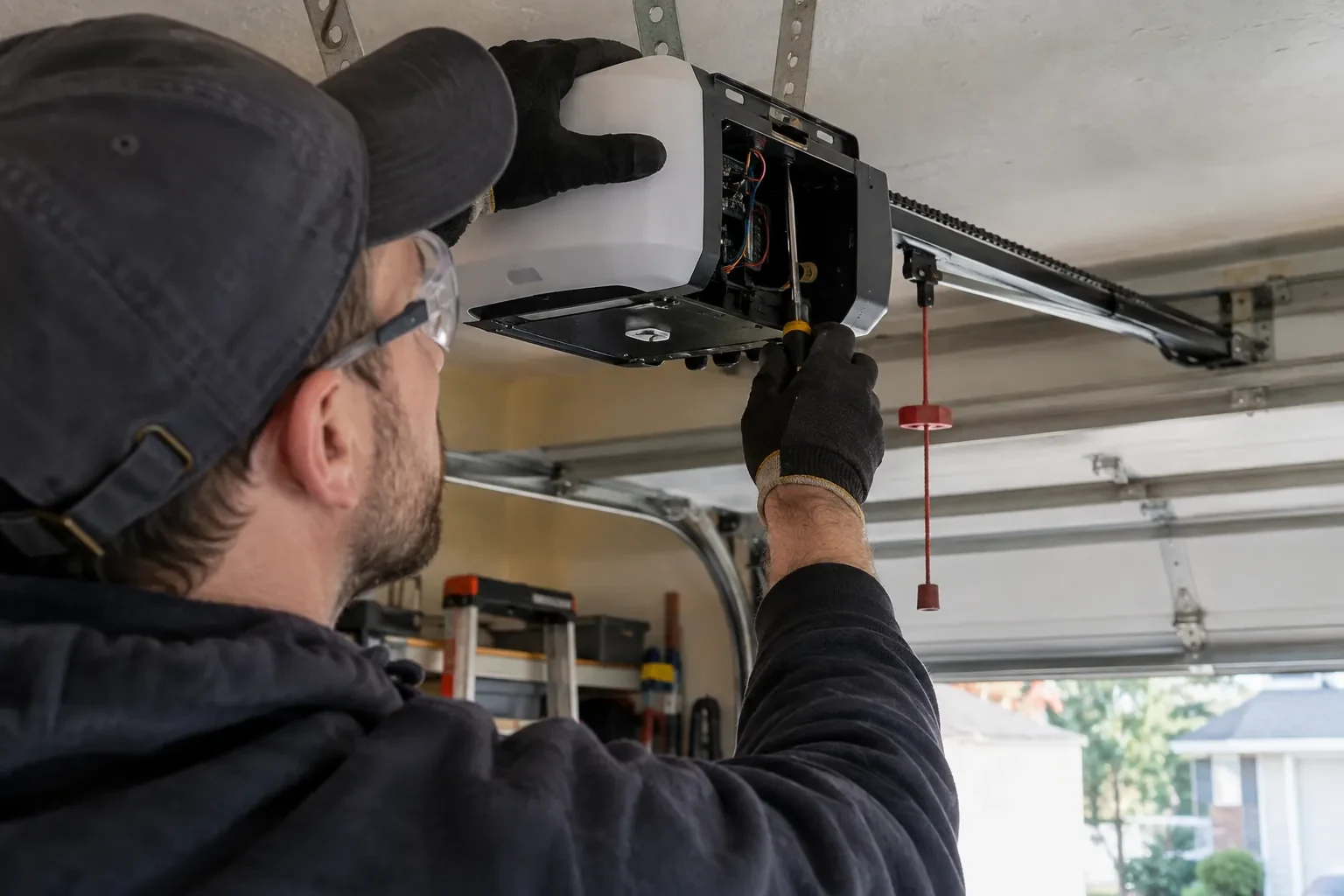
With tools out and the door still, the technician goes down the whole door: every hinge screw snugged, roller stems and hinge knuckles given a garage door lubricant, top fixtures checked for tight fasteners, and the track brackets on the jambs confirmed secure. The bottom brackets are looked at but left alone, because they anchor the lift cables and are under spring tension. Struts and their fasteners get the same pass. This sweep takes little time and usually catches the next loose screw before it becomes the next cracked hinge, so the door leaves in better shape than the single repair would suggest.
Panels that fold as one door again
The first thing you notice is quiet. The pop at the curve is gone, the panels turn into the horizontal track without a gap opening on one side, and the rollers ride flat in the track rather than leaning out. Closed, the door sits evenly against the jambs on both edges with no daylight showing. Opened by hand with the opener released, it moves with light effort and the joints stay tight. This is what a correctly hinged sectional door feels like, and it is worth running the door a few times yourself while the technician is still there so you know its new normal.
Garage Door Hinge Replacement
In the van
Panel strut
Silicone or lithium hinge lubricant
Numbered galvanized edge hinges
Flashlight and level
Socket set and impact driver
Garage Door Hinge Replacement
What affects the quote
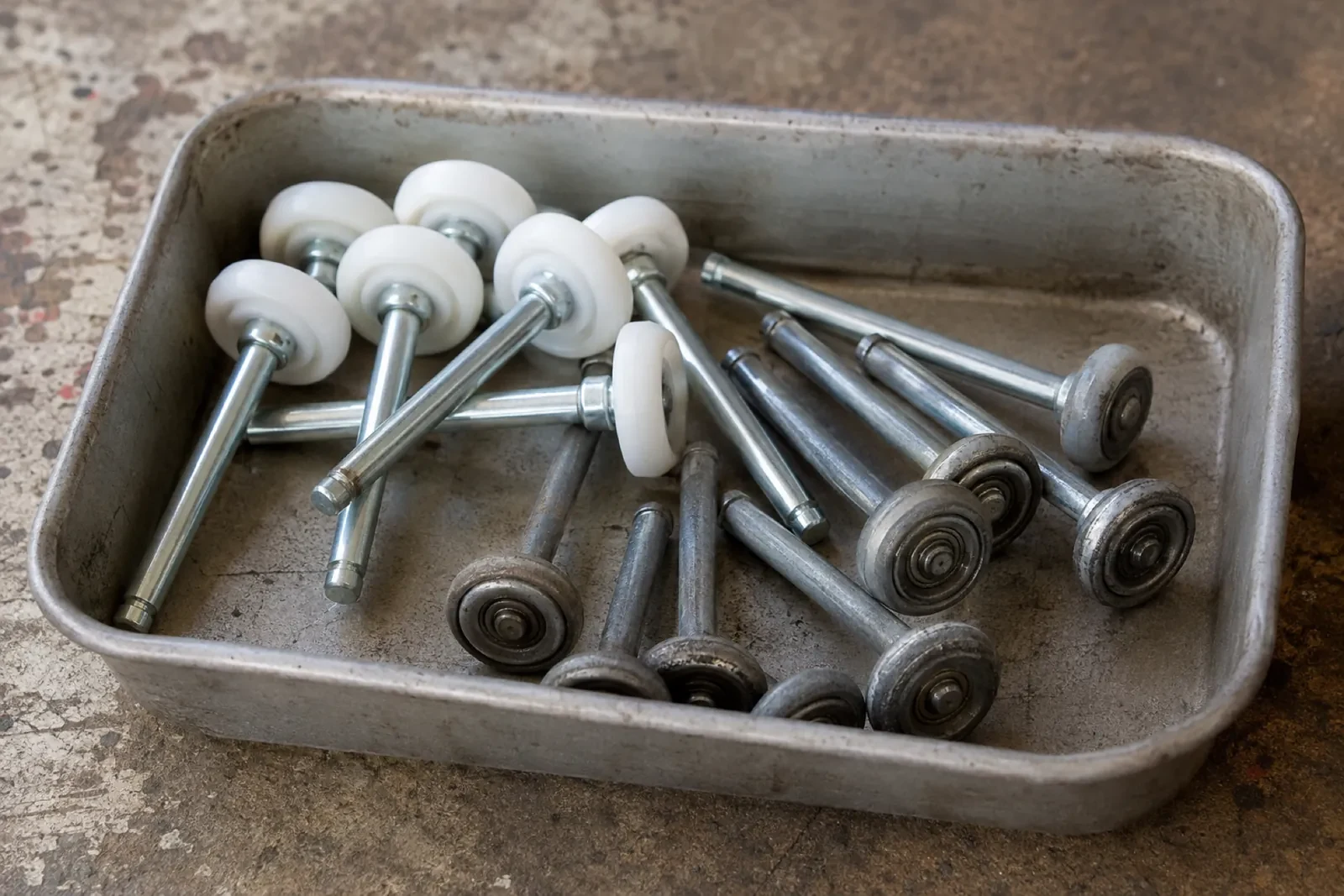
Rollers renewed at the same time
Where a roller is cracked, seized or flat-spotted, replacing it while the hinge is off is efficient, and the roller set is listed as an optional item you can accept or decline.
Adding a strut to a wide door
A wide panel without a strut flexes and loosens its hinges. Fitting one is an optional item that stiffens the panel and protects the new hinges from the same movement.
Condition of the mounting holes
Stripped or torn holes need a larger screw, a through-bolt with nut and washer, or a backer plate. That extra anchoring is small but is quoted separately from the hinge itself.
What to have ready
- Did the door feel heavy, jerky or noisy before the hinge failed?
- Is a roller leaning or partly out of the track anywhere?
- Where does the pop, click or gap appear, and roughly how high up?
Garage Door Hinge Replacement: questions
QuestionsCan I tighten loose hinge screws myself?
Yes, hinge screws are a homeowner task. Disconnect the opener, leave the door closed, and snug each hinge screw with a socket wrench without forcing it, since overtightening strips the hole. Leave the bottom brackets alone; they anchor the cables and are under spring tension. If a screw spins freely or a hinge is cracked, stop there and have it looked at, because a stripped hole needs a fresh anchor rather than more turns.
How should I lubricate the hinges?
A short burst of silicone or white lithium spray made for garage doors on each hinge knuckle and roller stem, spring and autumn, then run the door a few times to work it in. Wipe away any excess. Skip heavy grease and general-purpose oil, which trap grit and salt against the steel. Leave the track dry and simply wipe it clean, since lubricant in the track makes wheels slide instead of roll.
Why did the hinge crack in the first place?
Steel flexed often enough eventually cracks, and several things speed that up. A door out of balance is dragged by the opener, and every hinge takes the strain. A seized roller twists its hinge on each trip. A track out of line pinches the panels at the curve. A wide panel without a strut flexes at the joint. Corrosion at the low hinges thins the steel. The technician looks for which of these was at work so the new hinge is spared the same stress.
Related services
- Garage Door Track Repair or ReplacementThe door climbs crooked, one side clearly ahead of the other.
- Garage Door Cable ReplacementThe car bumper kissed the door on the way in.
- Torsion Spring ReplacementOn a cold morning the remote does nothing useful: the light comes on, the motor turns briefly, the door stays shut.