New Doors · Conn
Commercial Sectional Door Repair in Conn
The operator runs and the drive chain moves, yet the sectional door hesitates near the floor.
In plain words
Weather-related repair focuses on the lower part of the opening as well as the moving door. Ice at the threshold, slush, salt, a torn bottom seal and corrosion around lower fixtures can change how the door lands and how long components last. The technician clears the travel path, checks the bottom section and retainer, examines cables and brackets for deterioration, and corrects the seal or alignment issue. The result is an opening that closes squarely and manages drafts and moisture more effectively through changing seasons.
How the visit goesThe operator runs and the drive chain moves, yet the sectional door hesitates near the floor. It feels unusually heavy during manual operation, pointing to a counterbalance problem rather than a simple control-station fault.
Commercial Sectional Door Repair
How the visit goes
Reading an uneven door
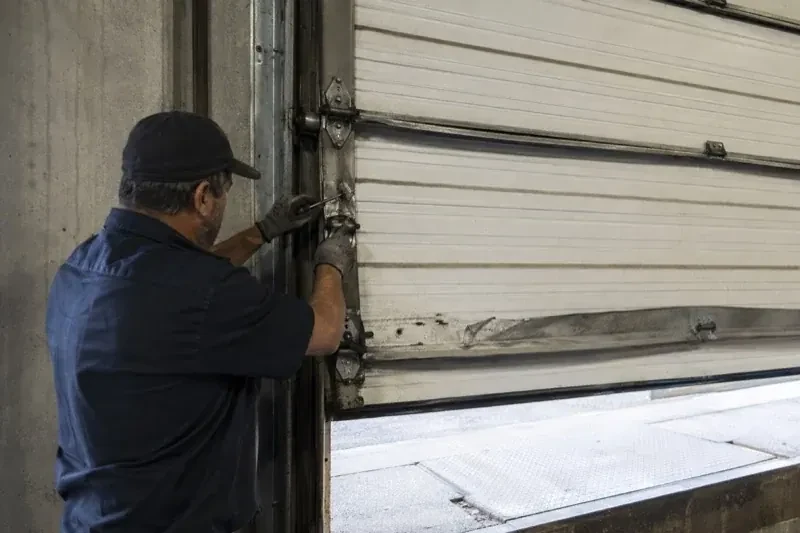
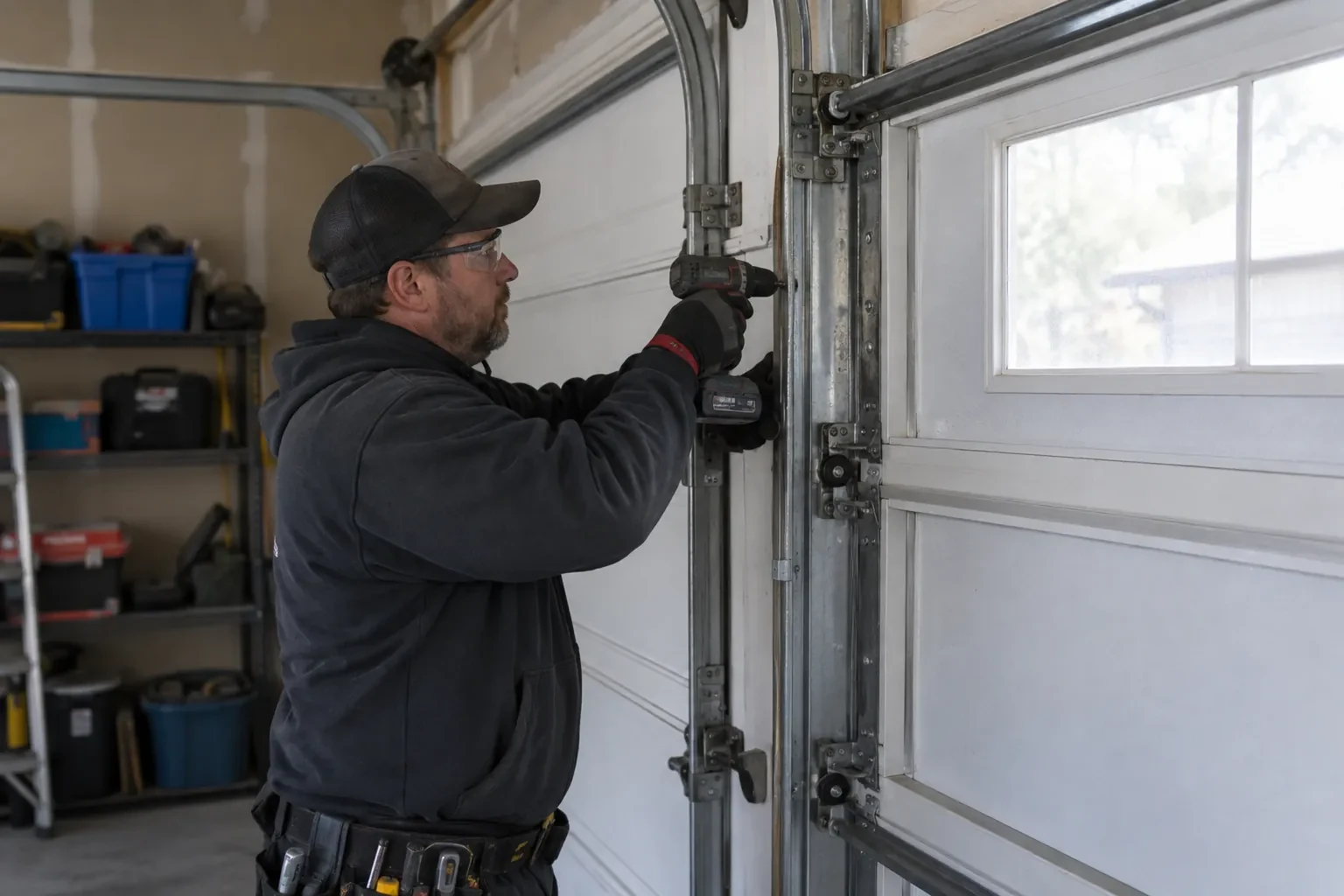
A crooked bottom edge leads to a side-by-side comparison. Cable condition and length, drum grooves, shaft position, bearing movement and bottom fixtures are viewed together. The technician notes whether one cable is slack, crossed or frayed and whether a roller has left its normal track position. Measurements at the tracks show if the guides remain parallel and plumb. The door is then secured so its weight cannot deepen the imbalance during inspection. These findings reveal whether the repair belongs in the lifting system, track alignment or impact-damaged hardware.
Completing a system-wide test
After tools and supports are cleared, the technician observes the repaired assembly through its entire range. Manual balance is evaluated where the design permits, followed by powered cycles that show cable tracking, roller travel, section alignment and final seating. The operator's stop and reverse responses are checked with its installed protective devices. Unusual vibration, contact marks and loose connections receive a final review. The service record identifies parts fitted, adjustments made, test results and any separate maintenance items the facility may wish to schedule.
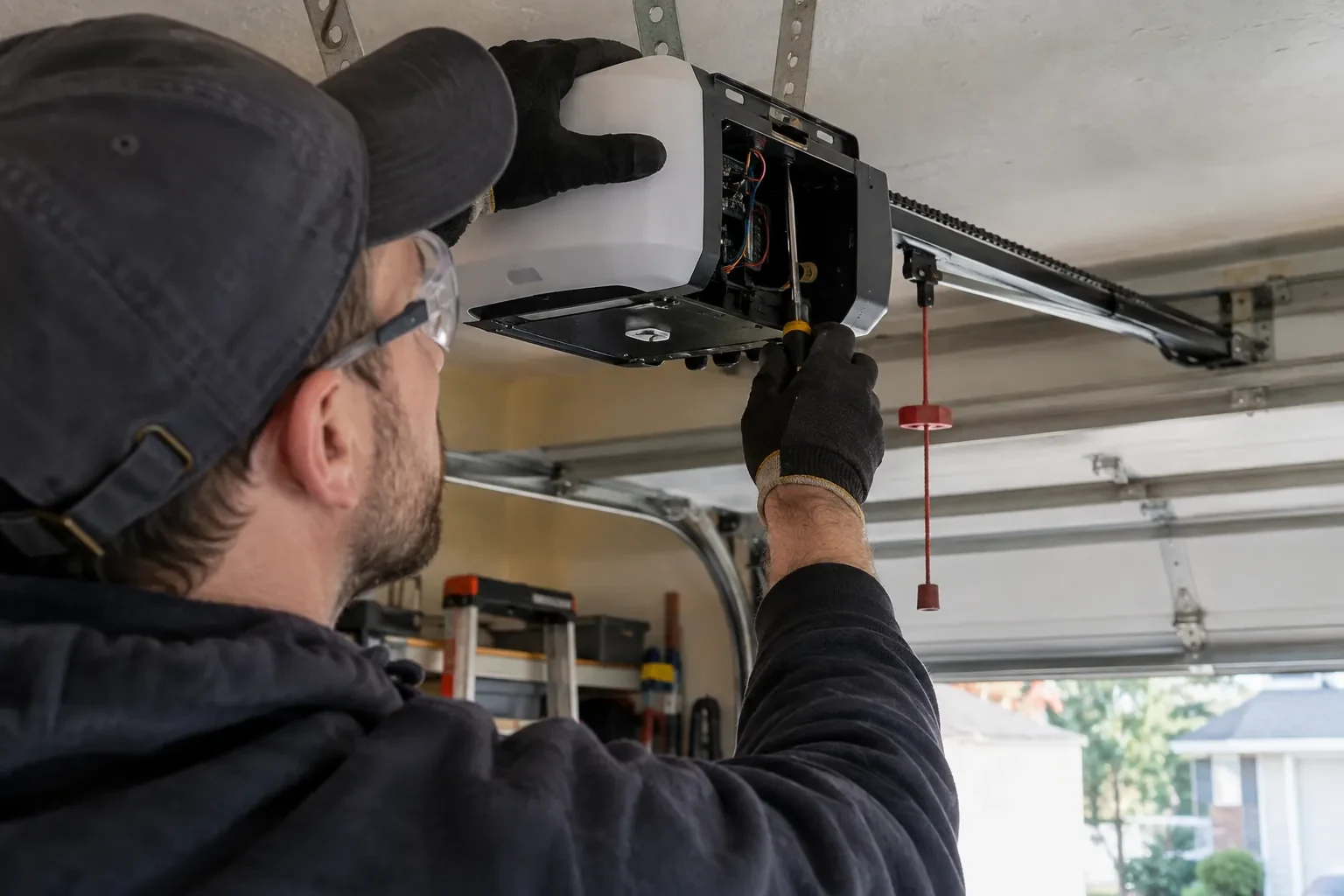
Operator settings matched to the door
Once limits and controls are set, the powered system should stop at a useful open height, close onto the floor without excessive pressure and respond consistently to its protective devices. Staff can keep photoelectric lenses clean, avoid moving their brackets and include the sensing edge in routine operational checks. The manual hoist or release instructions remain near the control station for designated personnel. Any later mechanical repair should be followed by another operator review, because door weight, balance and travel position all influence powered operation.
Commercial Sectional Door Repair
In the van
Reinforcement struts
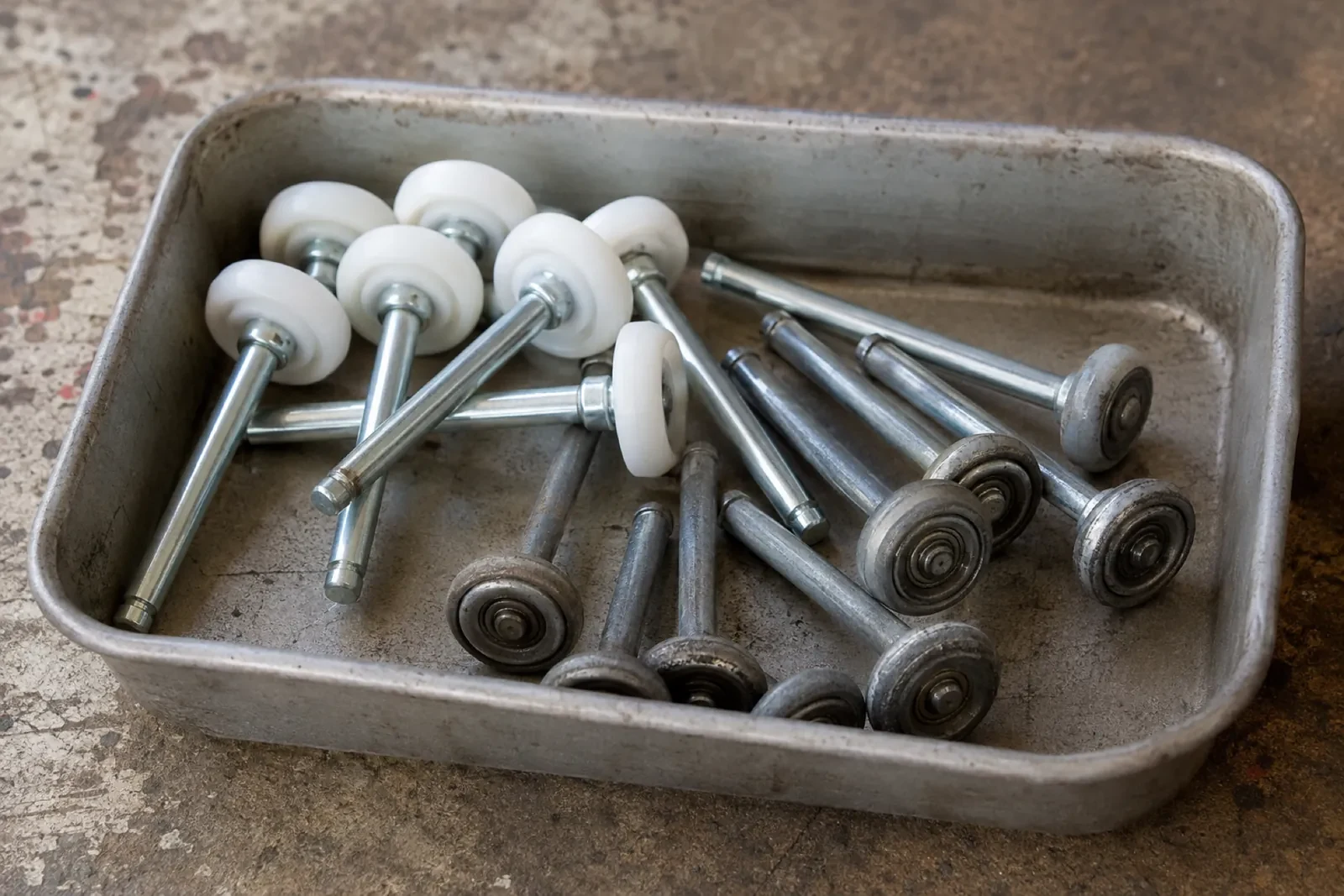
Bottom fixtures
Shafts and bearings
Torsion springs
Vertical and horizontal track
Commercial Sectional Door Repair
What affects the quote
Track support condition
Loose back hangs, shifted brackets, damaged splices or weak anchors add alignment and support work beyond replacing the visibly bent length of track.
Counterbalance components involved
Spring count, shaft arrangement, drum type, cable dimensions, bearings and bottom fixtures determine which tensioned parts must be controlled, replaced and reset together.
Section construction and finish
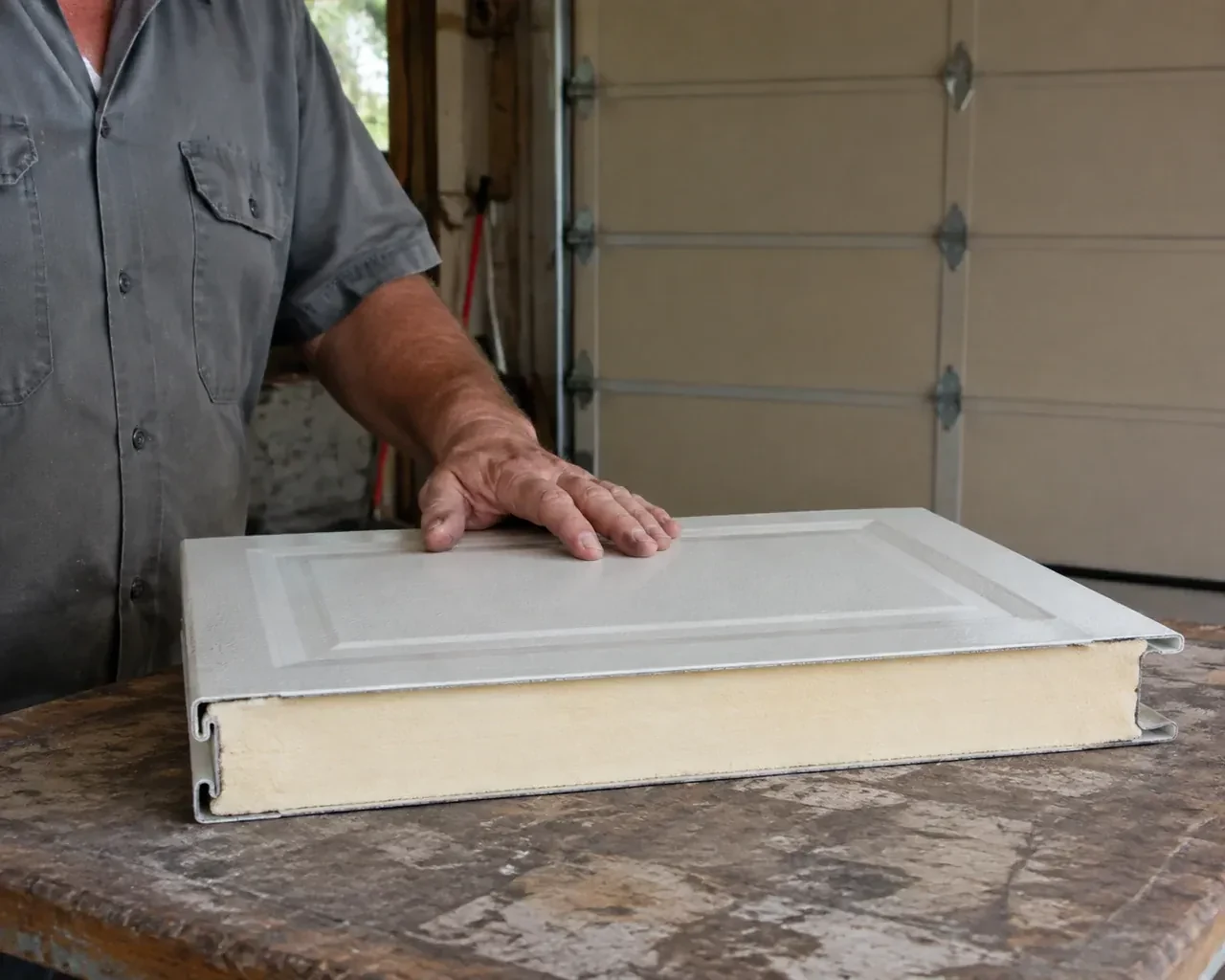
Steel, aluminum, insulated sandwich and full-vision sections have different profiles, reinforcement, glazing and hardware patterns that affect matching and replacement scope.
What to have ready
- Was there a vehicle, forklift or load impact?
- Which controls or sensors show unusual behaviour?
- Is the track standard, high-lift or vertical-lift?
Commercial Sectional Door Repair: questions
QuestionsCan several doors be assessed during one facility visit?
Yes. Numbering each opening and providing a short symptom list keeps the assessment organized. The technician can define the requested repair for the affected door and record visible conditions on comparable doors separately. Shared model data and installation history may help with parts planning, while each opening still receives its own mechanical and control checks before any work is scoped.
How should a repaired door be lubricated?
Use the product and interval specified by the door manufacturer. Hinges, roller bearings, shaft bearings and springs may have defined lubrication points, while track generally benefits from being clean rather than coated with material that holds grit. High-use openings may need a different schedule. The service record can note what was applied and where for consistent future care.
What should be recorded after the work is finished?
Keep the door asset number, date, reported symptom, diagnosed cause, parts installed, adjustments made and functions tested. Spring, cable, panel and operator identifiers are especially useful for later service. Notes about impact location, corrosion or unusual cycle demand add context. A precise record helps facility staff compare future changes and prepare relevant information for the next visit.
Related services
- Insulated Steel Garage Door InstallationA refreshed exterior has made the faded garage door stand out.
- Wind-Rated Garage Door ReplacementNew windows would improve the door's appearance, but they also change the section layout and reinforcement pattern.
- Carriage-House Garage Door InstallationYour garage door works, yet its broad plain panels feel disconnected from the brick, gables and entry details around them.