Openers · Wellington North
Belt-Drive Opener Repair in Wellington North
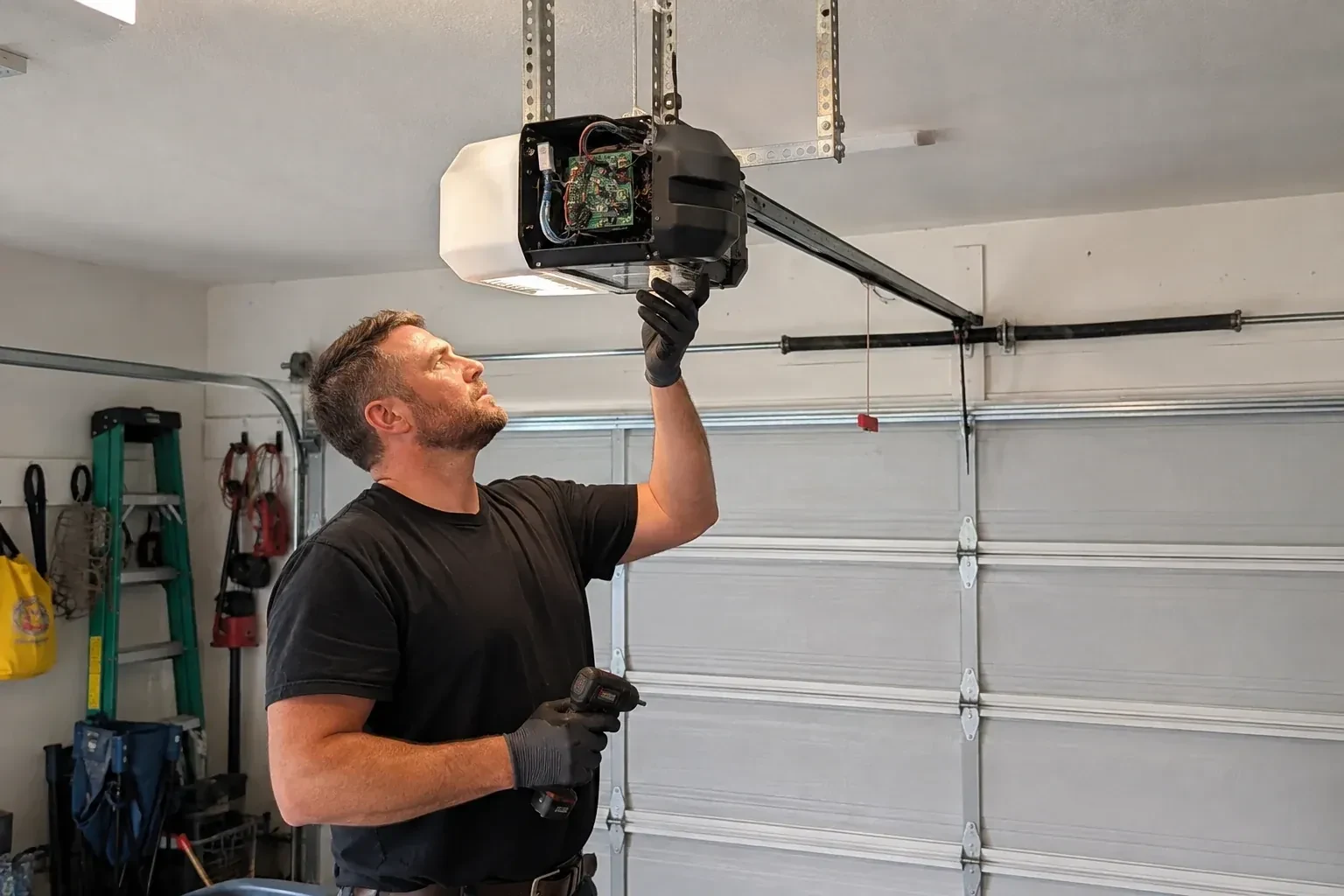
The belt looks fine from a distance, but up close the rubber has cracked across the back in dozens of places and, in one spot, you can see the steel cords showing through.
In plain words
After a belt has been off the sprocket, the operator can end up out of phase: the motor thinks the door is somewhere the trolley is not. The symptom is a door that stops short at the top or the bottom no matter how the limits are adjusted, or a trolley that bangs into its stop bolt. The correction is part of every belt repair. With the belt lifted off the sprocket, the operator is run until the sprocket settles at its closed position; the belt is refitted with the trolley at the closed end; then travel and force are relearned so motor and trolley agree again.
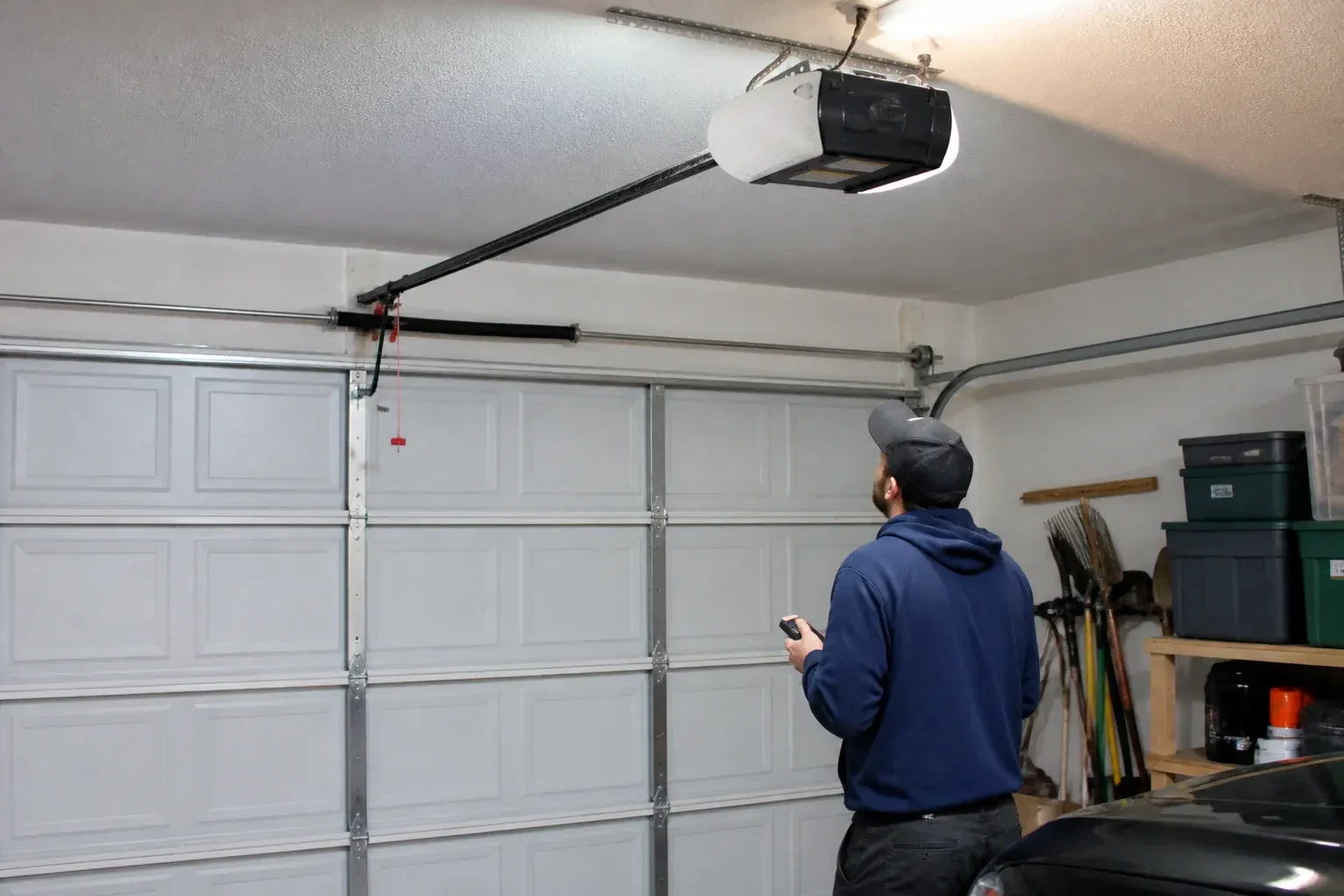
How the visit goesThe door used to glide up with a soft hum. Now there is a sharp clack every second or so, and if you stand underneath you can see the belt sagging below the rail and slapping it on the way up.
Belt-Drive Opener Repair
How the visit goes
Rail, joints and whatever is rubbing
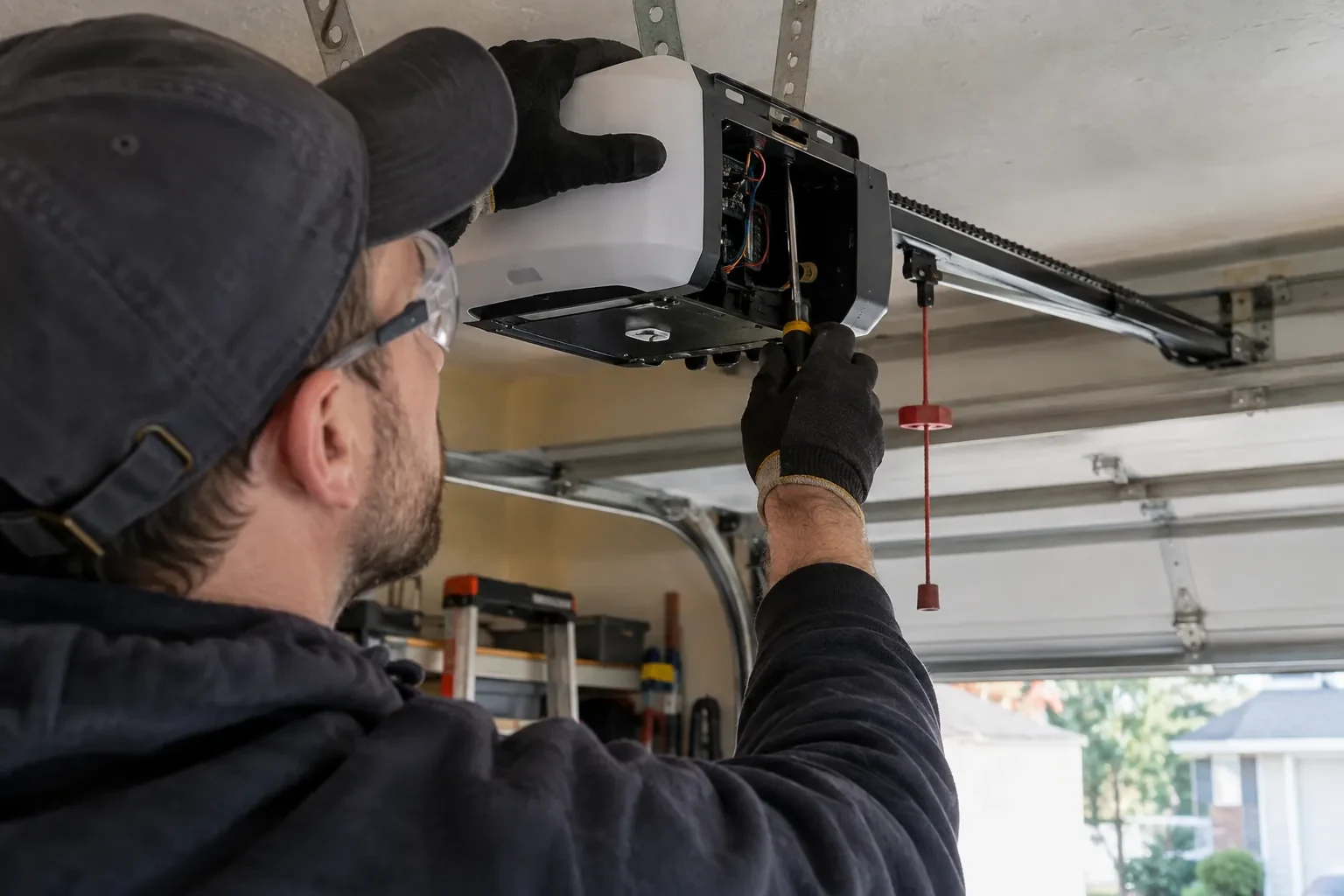
A belt frays for a reason, and the reason is usually somewhere along the rail. The technician sights the rail from the header to the motor head for a bend, a sag where a hanger has loosened, or a joint between rail sections that has stepped out of line and is catching the belt teeth each pass. Marks inside the rail show where the belt has been touching. Storage racks, a bicycle hook or a truck's roof rack lifting the rail are frequent finds. A straight, true rail lets a belt run for years without touching anything, so any of these is corrected as part of the repair rather than left to wear the new belt.
Finishing the door around the belt
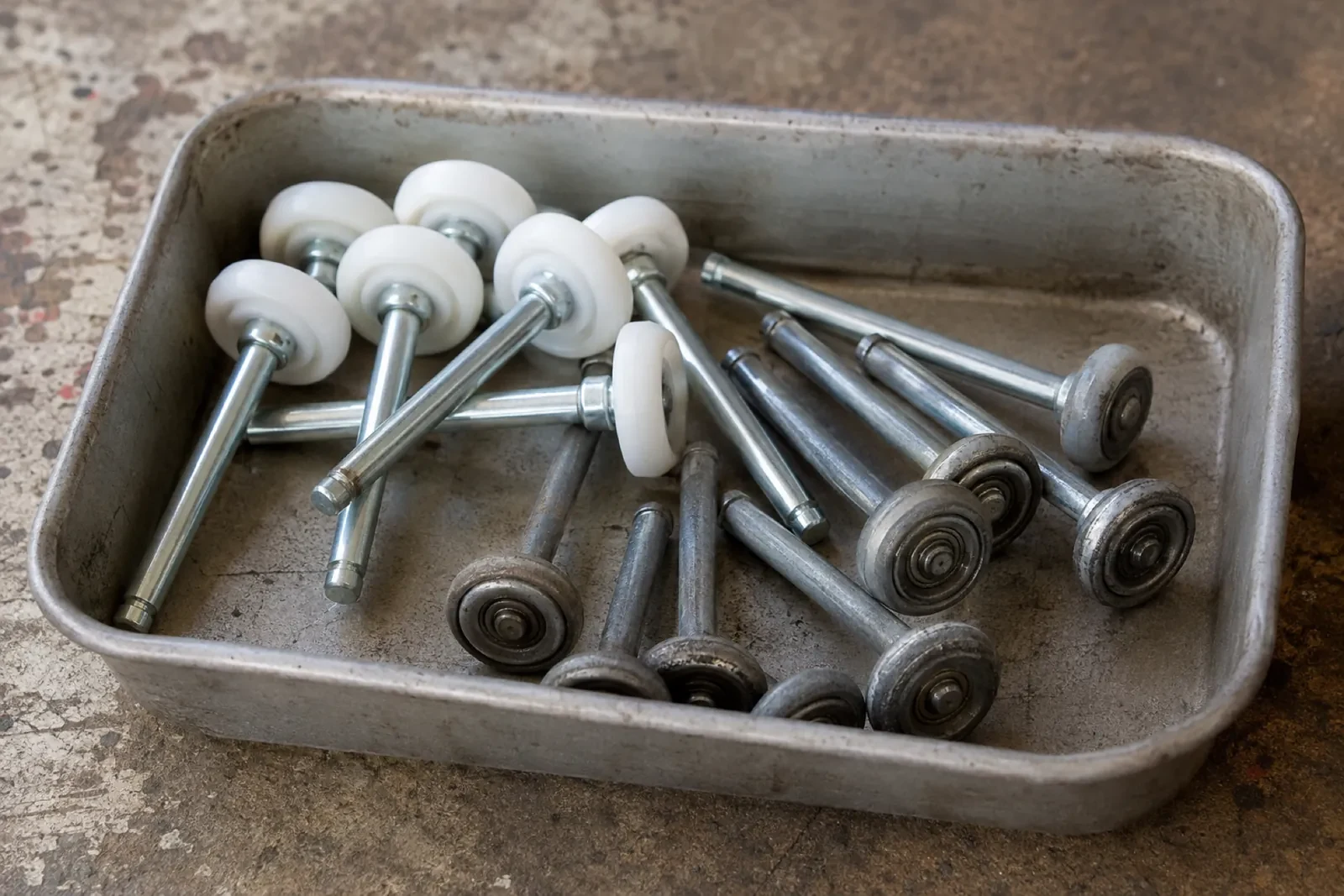
A belt drive is only as quiet as the door it moves, so the visit closes with the door hardware. Hinges, rollers and springs get a garage-door lubricant, cold-rated for a detached garage; the belt itself is wiped clean and left dry, because grease softens the rubber and packs the teeth with grit. Rail hangers are snugged, the manual slide lock is disabled so it can never be thrown against the motor, and the red release handle is confirmed to hang no more than about 1.8 m. The wall control is checked for height and the photo eyes for alignment, and the operator's cover goes back on.
Ready for the cold
If the garage is detached or unheated, the belt has still been tensioned to the opener maker's specified measurement, and the door hardware carries a cold-rated lubricant for the season. Expect the operator to sound a little different at minus twenty; rubber stiffens and the hum deepens, which is normal. If the door reverses on a bitter morning before it has moved, the bottom seal is frozen to the slab and the force setting is protecting the belt and the door. Free the seal by breaking the ice along the threshold, then press the button again. Wiping the seal with silicone before winter stops it bonding to the concrete in the first place.
Belt-Drive Opener Repair
In the van
Door arm and clevis pins
Reinforced drive belt with clip
Belt tension spring and square nut
Photo-eye sensor pair
Rail joint brackets and stop bolts
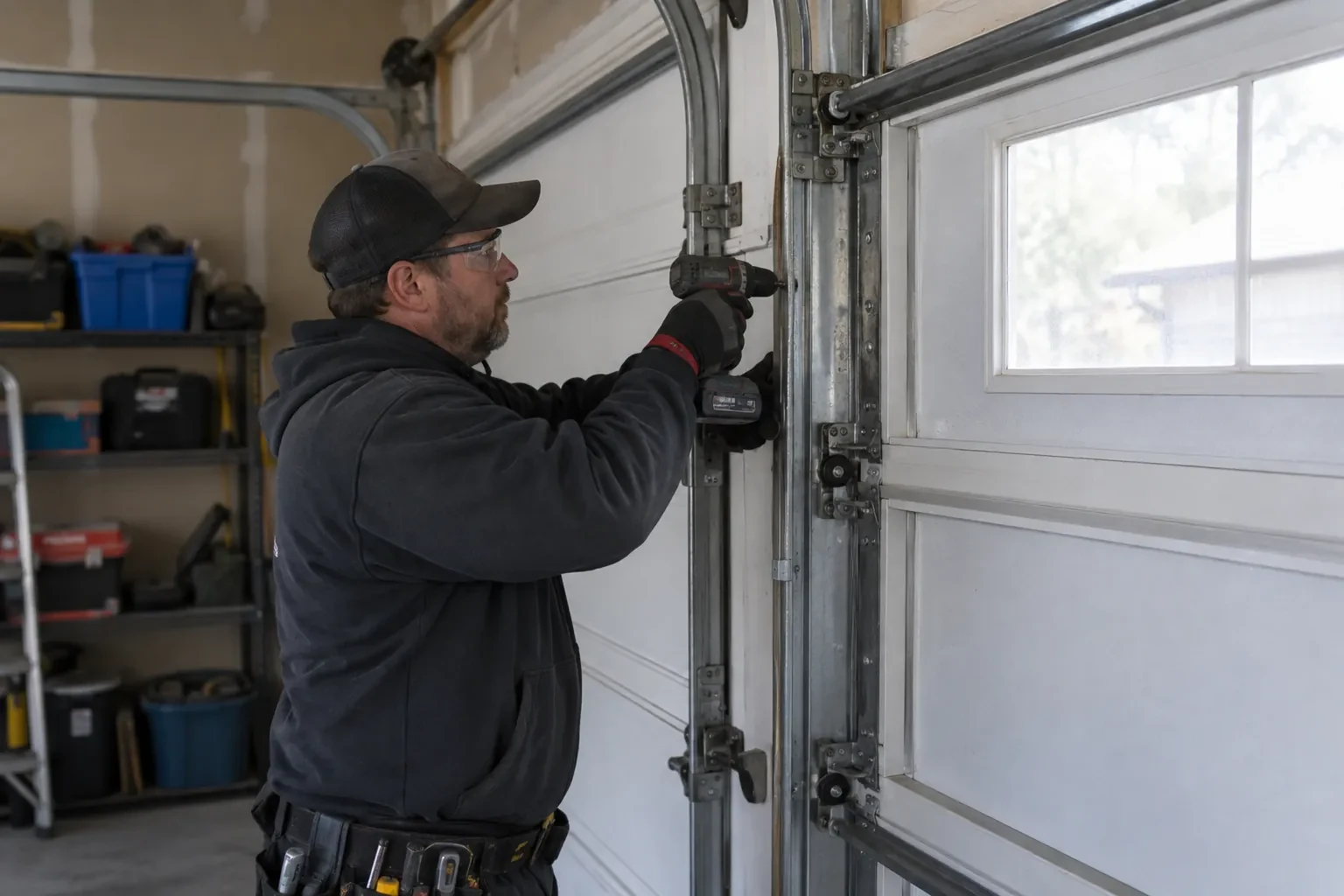
Belt-Drive Opener Repair
What affects the quote
Access to the rail
Shelving, a car lift or a loft beside the rail, or a garage that is full on the day, mean more careful handling along the belt's length, and the technician allows for it once the space is seen.
Gear and sprocket kit
Shavings on the motor head mean the drive gear is stripping. Replacing the gear-and-sprocket set means opening the head unit, which is more time and a more substantial part than belt work alone.
Belt length and type
A belt for an 8 ft door rail is longer than one for a 7 ft rail, and belts differ by maker and tooth pitch, so the part named on the quote follows the operator's model.
What to have ready
- What make and model is printed on the motor head, and roughly how old is it?
- Are there plastic shavings or grease on top of the motor housing?
- When did the trouble start, and did it follow a power cut or a pulled red cord?
Belt-Drive Opener Repair: questions
QuestionsHow long should a belt last once repaired?
A belt's life is counted in cycles and years, and on a balanced door with the rail straight and the tension right it runs for many years. What shortens it is a heavy door, an over-tight adjustment, a bent rail rubbing one edge, or grease on the rubber. Keep the door balanced and lubricated, the belt dry, and glance along the rail a few times a year.
What are the plastic shavings under the motor head?
They are from the drive gear inside the head unit, which is stripping its teeth. On a belt drive the gear turns the sprocket that moves the belt, so a stripped gear leaves the motor humming and the belt still. The gear-and-sprocket kit is replaced as a set, the shaft's end play is checked, and the belt is refitted and phased.
Should the belt be lubricated?
No. The belt is meant to run clean and dry; oils and sprays soften the rubber and gather grit in the teeth, which wears the sprocket. Lubricant belongs on the door instead: hinges, rollers and springs get a garage-door lubricant once a year. The gear inside the motor head takes a light grease when it is serviced, and that is the technician's job.
Related services
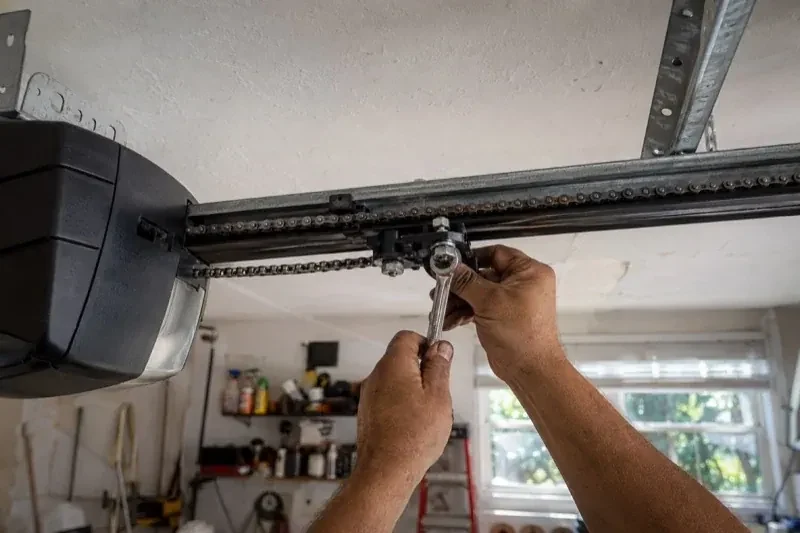
- Chain-Drive Opener RepairThe door opens about a third of the way and stops.
- Garage Door Opener ReplacementSince the storm the door behaves oddly: it reverses halfway down for no reason, the light flickers, and the travel limits drift so it either slams or stops short.
- Photo-Eye Sensor Alignment or ReplacementSomeone backed the car in a little too far, a bin or a bicycle brushed the track, and since then the door starts to close and comes back up.