Repairs · Kenilworth
Garage Door Manual Lock Repair in Kenilworth
Someone slid the inside lock across before bed, and in the morning someone else pressed the remote.
In plain words
A keyed garage handle hides more than it shows. On the common bar-style handle, a spindle passes through a centre lock body, where a spring and cam convert the quarter turn into a push on two long bars, each riding in a guide and ending in a track slot; other models pull a cable to release spring latches instead. Any of these can wear: springs weaken, cams round off, spindles twist, guides rust, bars bend. The repair replaces whichever pieces have given up, matching spindle length to the door's thickness and bar length to the door's width, so the rebuilt lock throws and releases with a crisp action.
How the visit goesIt is a February morning and the key goes only halfway into the garage handle. Yesterday's melt ran down the door face and into the keyway, and overnight it set like glass. The key flexes; the cylinder stays put.
Garage Door Manual Lock Repair
How the visit goes
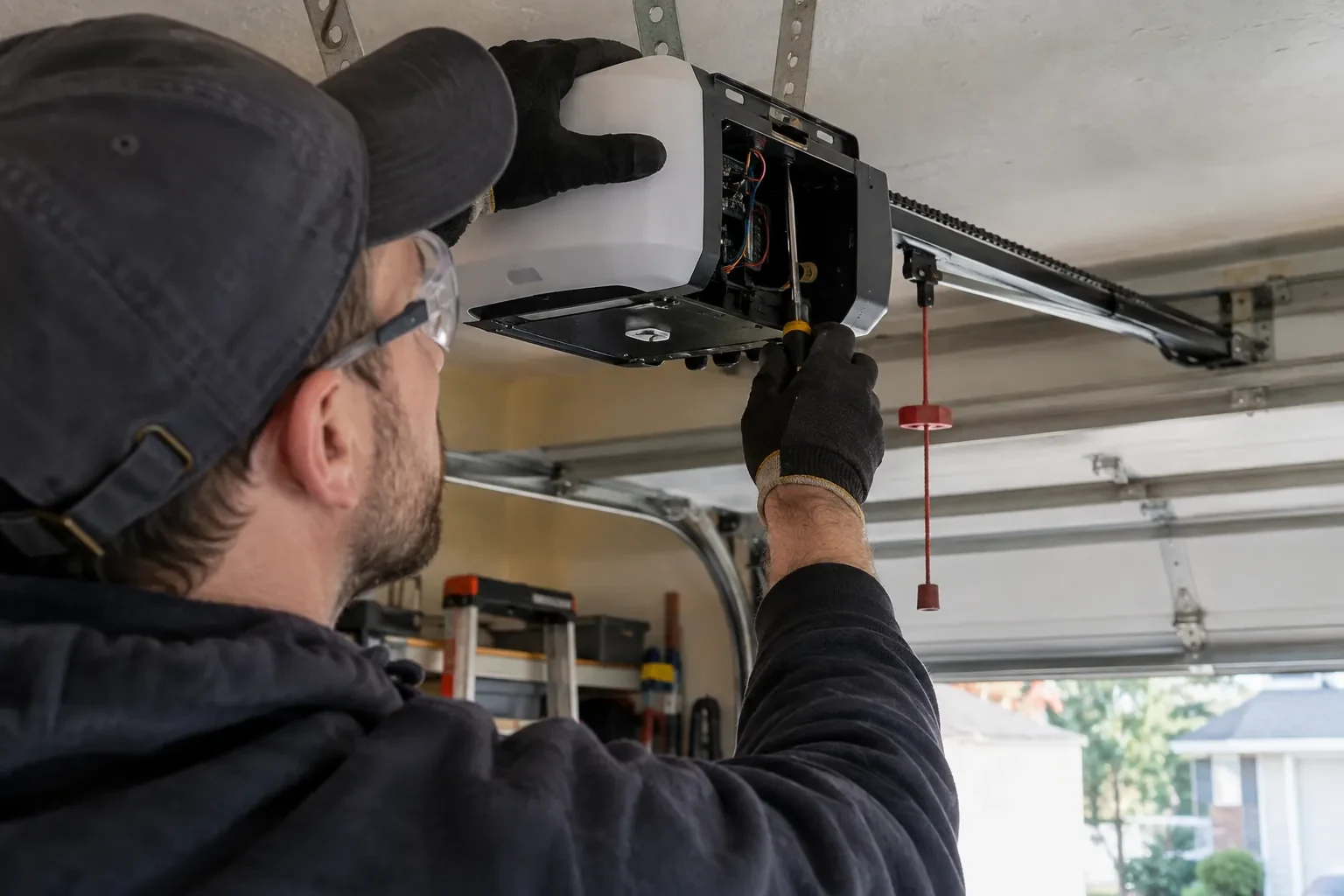
Closing the door by hand first
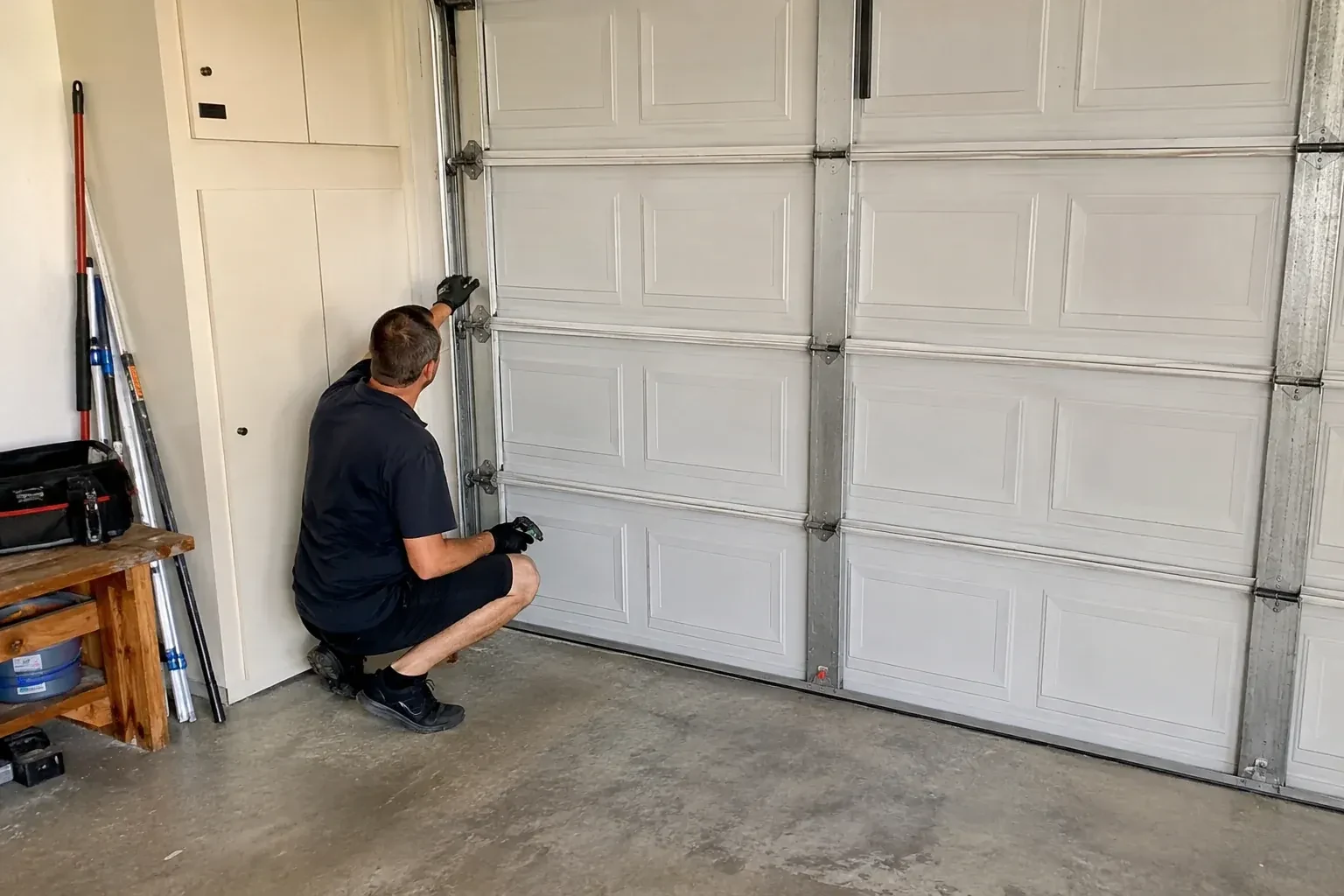
Before the lock is touched, the opener is disconnected and the door is lowered by hand until it rests on the floor. The technician checks that both bottom corners meet the concrete, that the top section sits flat against the header, and that the door is level across its width. Then the bar is sighted against its slot. If the two are out of step, the reason is looked for in the door: a settled slab, a loosened track bracket, a compressed bottom seal, snow or ice at the threshold, or an opener limit set to stop the door short. Sorting the door out first keeps a good lock from being replaced for a fault that lives elsewhere.
Rebuilding or replacing the centre mechanism
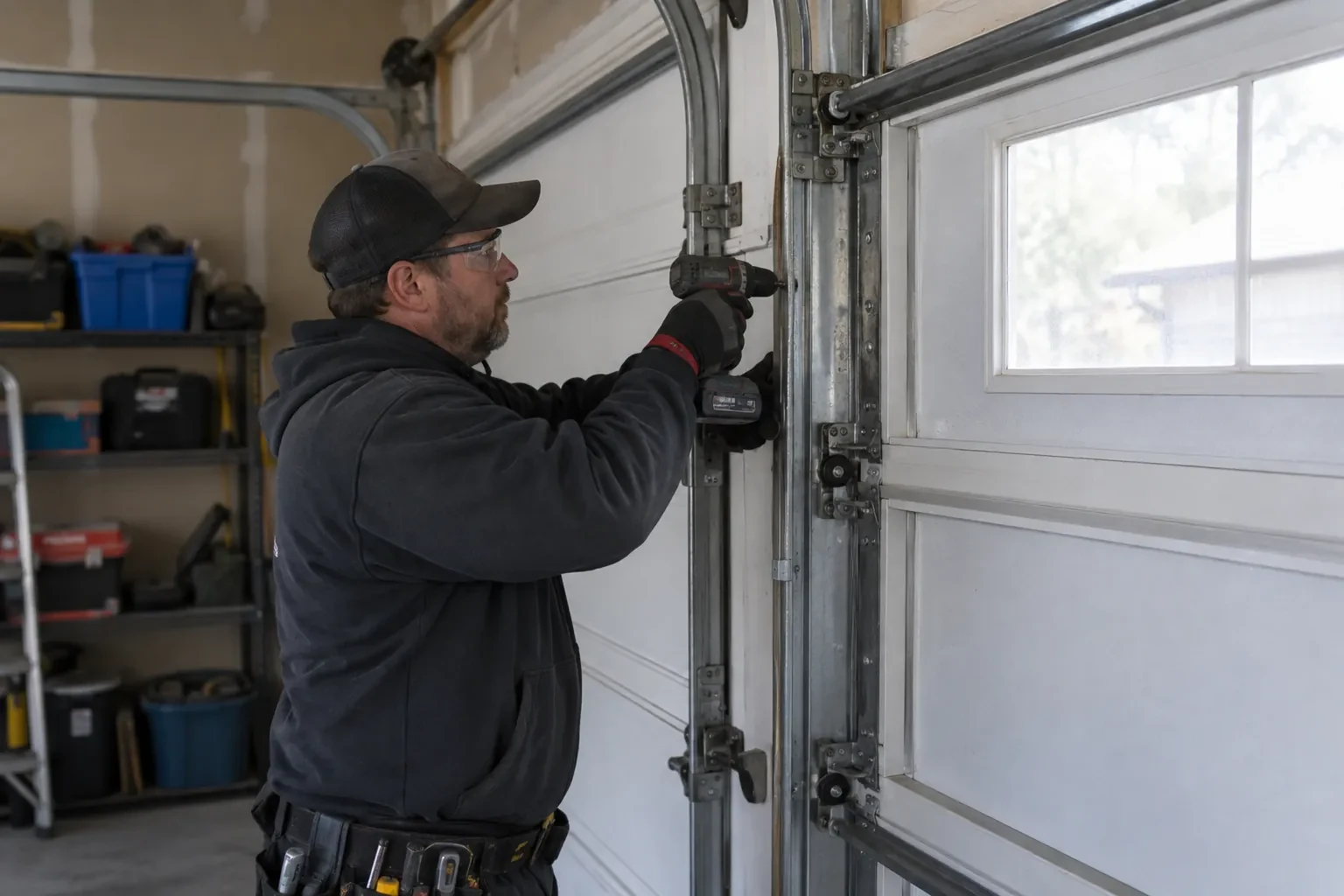
Inside the door, the cover comes off the centre lock body. A broken return spring is replaced and the cam checked for wear; where the cam has rounded off or the body has cracked, a complete mechanism of matching pattern is fitted so the existing handle and bars line up with it. The spindle is checked for twist and replaced with one of the correct length for the door's thickness, and the inside knob or turn handle is secured with a fresh set screw onto a flat. Everything is then operated from both sides with the door shut, adjusting the bar connections until a quarter turn throws both bars fully and releases them cleanly.
A record of what was fitted
Before the technician leaves you get a plain account of the work: which lock type is on the door, what was adjusted, which parts were renewed, the cylinder and keyway details, how many keys were cut, and how the lock and the opener have been set up to work together. If the bars were disabled at your request, that is written down too, so a future technician or a new owner knows why they are fixed back. Keep the note with the door manual or on a card by the opener. It turns any later service into a short conversation and saves someone measuring the door's thickness and bar length from scratch.
Garage Door Manual Lock Repair
In the van
Lock cylinder with tailpiece
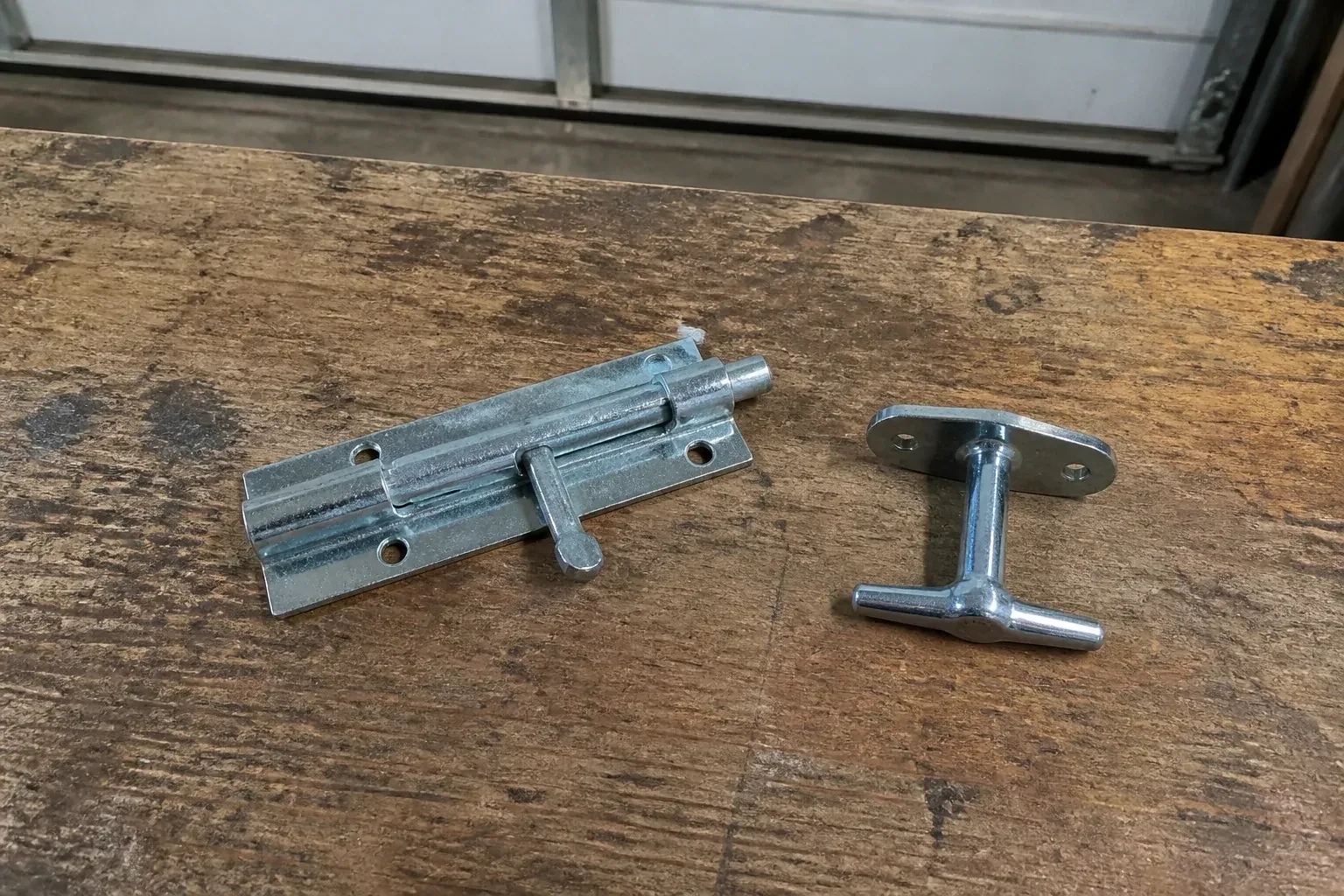
Keyed T-handle lock set
Inside turn handle and spindle
Dry graphite or PTFE lubricant
Carriage bolts and backing plates
Garage Door Manual Lock Repair
What affects the quote
Age and pattern of the lock
Older handles and mechanisms may need a matching-pattern replacement so the existing cutout and bars line up. Sourcing or adapting parts for an uncommon lock shows in the quote.
Door alignment behind the fault
When the bar misses its slot because the door sits high or crooked, the fix reaches into track brackets, opener limits or the door's closed position, and that adjustment is quoted alongside the lock work.
Related hardware noticed on the way
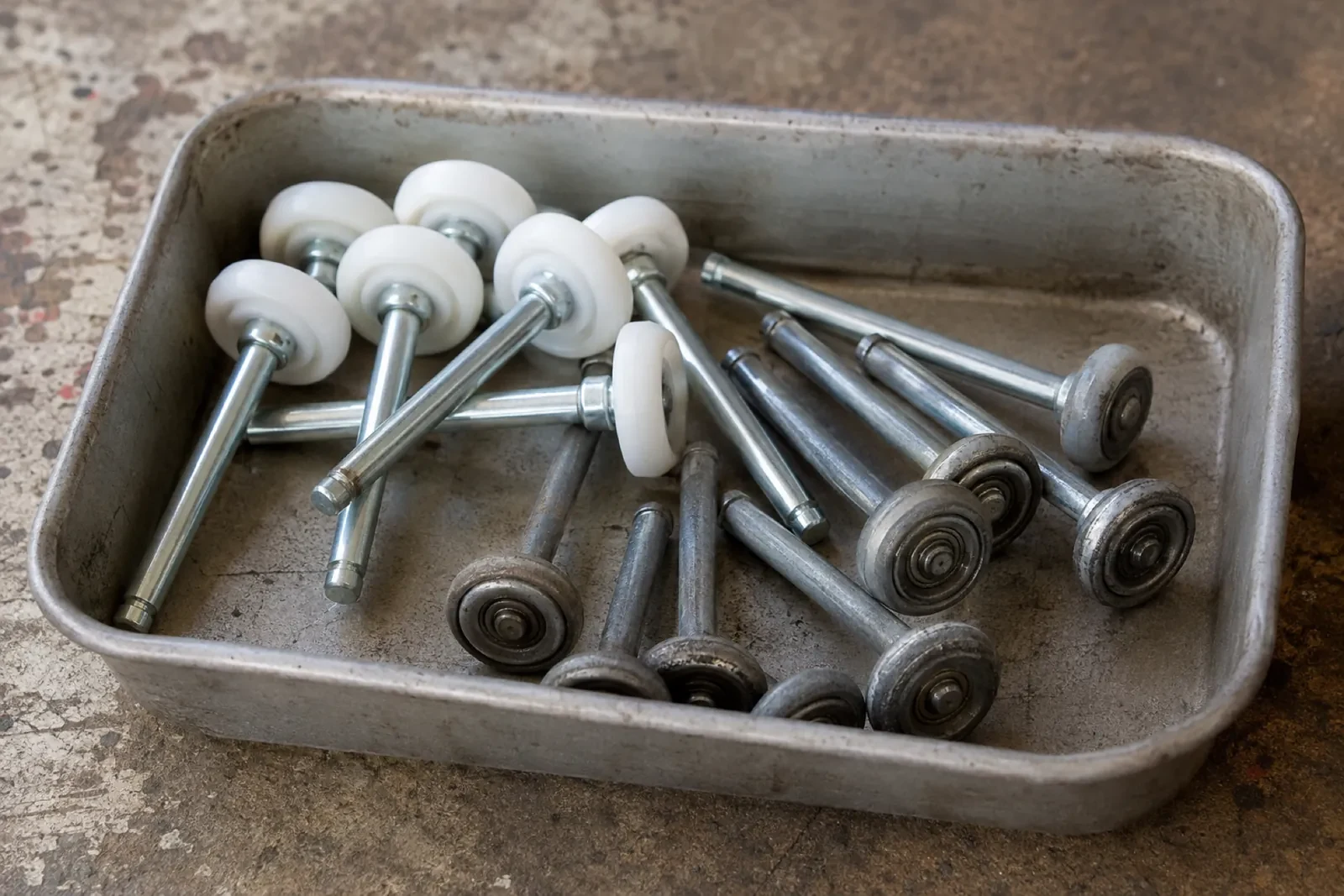
Worn rollers, a loose track bracket or a tired bottom seal seen while the door is being aligned are pointed out and offered as optional items, since they are easy to do in the same visit.
What to have ready
- Does the key go in and turn, or is it stiff or spinning freely?
- Does the handle turn, and does anything move inside the door when it does?
- Do you want to be able to lock the door by hand during a power outage?
Garage Door Manual Lock Repair: questions
QuestionsDoes lock work involve the springs or cables?
The lock, its bars and its guides all live on the door sections and the tracks, well away from the counterbalance, so the visit involves no winding or unloading of springs. Where a lock misses its slot because the door hangs crooked or sits high, the door's balance or a cable may be part of the story, and the technician points that out so it can be dealt with properly.
My key will not turn in the cold. What is happening?
Meltwater has run down the door face into the keyway during a thaw and frozen overnight, or cold has stiffened old lubricant inside the cylinder. Lock de-icer or gentle warmth frees it; hot water is avoided because it refreezes and can crack cold metal. Afterwards the cylinder is dried and given a dry graphite or PTFE lubricant that sheds moisture instead of trapping it.
The wood around my lock is soft. Can it still be repaired?
Yes. The decayed wood is cut back to sound material and a hardwood block or a steel backing plate is let in behind the handle and along the stile where the bar guides sit. The handle, mechanism and guides are then fixed to that new material with through-bolts rather than screws into soft grain, so the lock turns without rocking and the bars hold their line.