Springs · Wellington North
Garage Door Balance Adjustment in Wellington North
Since the new insulated panels went in, the door feels like a different animal.
In plain words
What you get back is a door that lifts with light, even effort and a written note of how it was set. It holds still at knee height, at waist height and fully open, closes onto the floor gently along its whole length, and rises without twisting. The opener sounds relaxed because it is steering rather than lifting, and it reverses cleanly when the safety tests are run. The technician tells you how many turns the springs carry, whether any parts are nearing the end of their life, and how to repeat the hand test yourself each season so you notice any drift early.
How the visit goesSomeone replaced the springs a while back and the door has bounced at the top ever since. It slams open against the stops, then creeps down a few inches, and the opener trolley rattles because the door is pushing where it should be resting.
Garage Door Balance Adjustment
How the visit goes

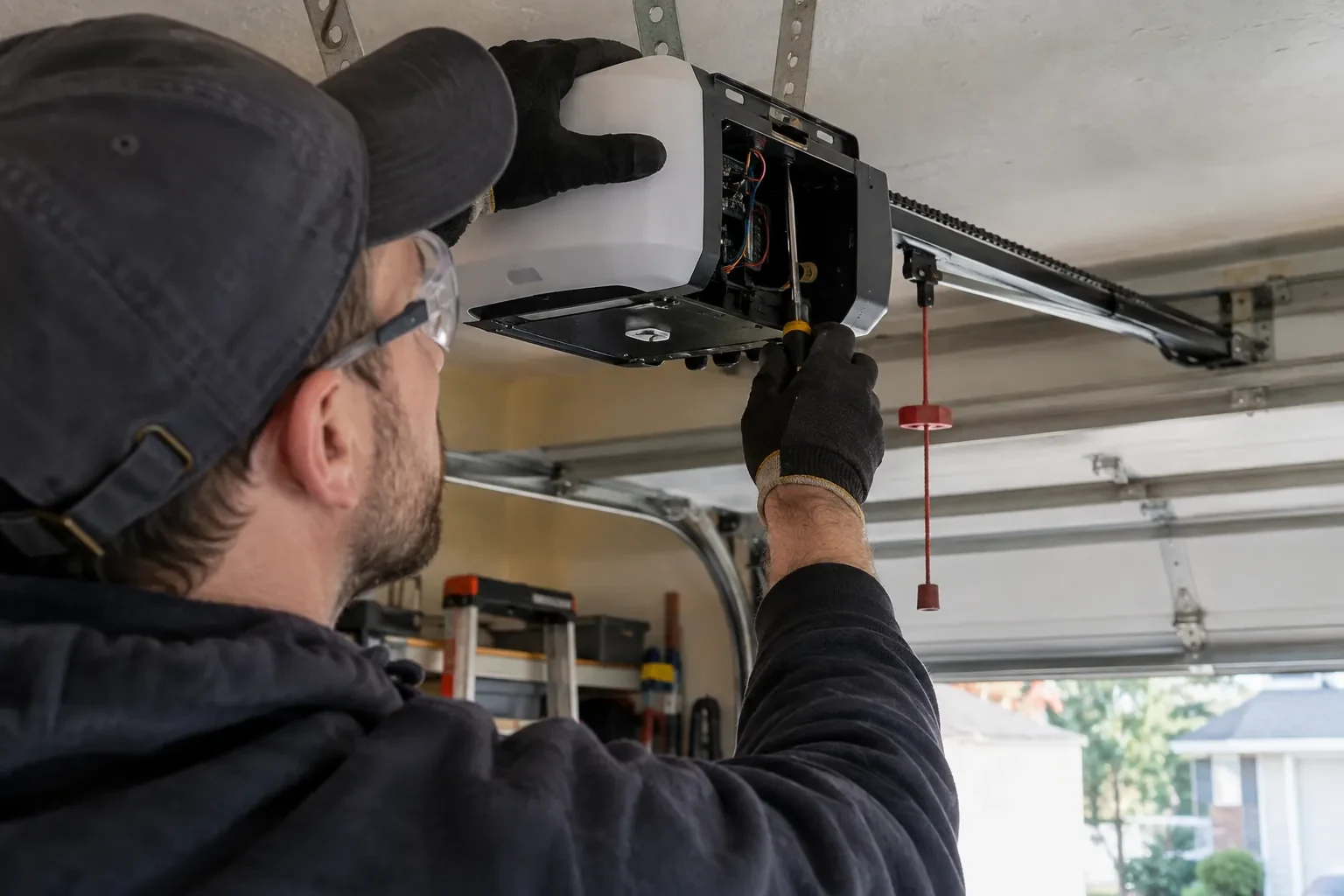
Looking at the opener's settings without touching them yet
The opener is inspected as a witness rather than a cure. The technician checks its force and travel settings, listens for strain during a powered cycle, and notes whether it reverses near the floor or stalls part way up. A force setting that has been turned up over the years is a strong hint that someone has been compensating for a door that grew heavy. Those settings are left alone for now, because the right order is to balance the door first and then fit the opener to it. Any change made to the opener before the door is corrected would only mask what the door is asking for.
Adjusting extension springs at the hook
On an extension system the door is opened fully and clamped so each spring hangs slack, and the tension is changed by moving the S-hook or the cable clip to a different hole in the track hanger, or by shortening the cable at the clip. A hole further back stretches the spring more when the door closes and adds lift; a hole further forward reduces it. Both sides are moved the same amount so the door stays level, and the pulleys and containment cables are checked as the hooks are reset. The clamps come off and the door is tested by hand at several heights, then adjusted again if needed.
The seasonal hand test you can do yourself
You can repeat the balance test any time without touching a spring. With the door closed, pull the manual release cord so the trolley disconnects, lift the door by a handle or a safe gripping point to about a metre, and let go gently. A balanced door stays roughly where you leave it; one that creeps up or sinks has drifted and is worth a call before it becomes heavy work for the opener. Reconnect the opener as its manual describes, usually by running it once. Doing this at the start of each season, when the temperature changes, is the simplest way to catch a change early.
Garage Door Balance Adjustment
In the van
Containment cables
Replacement hinges
Cable drums
Track clamps or locking pliers
Torsion springs, matched pair
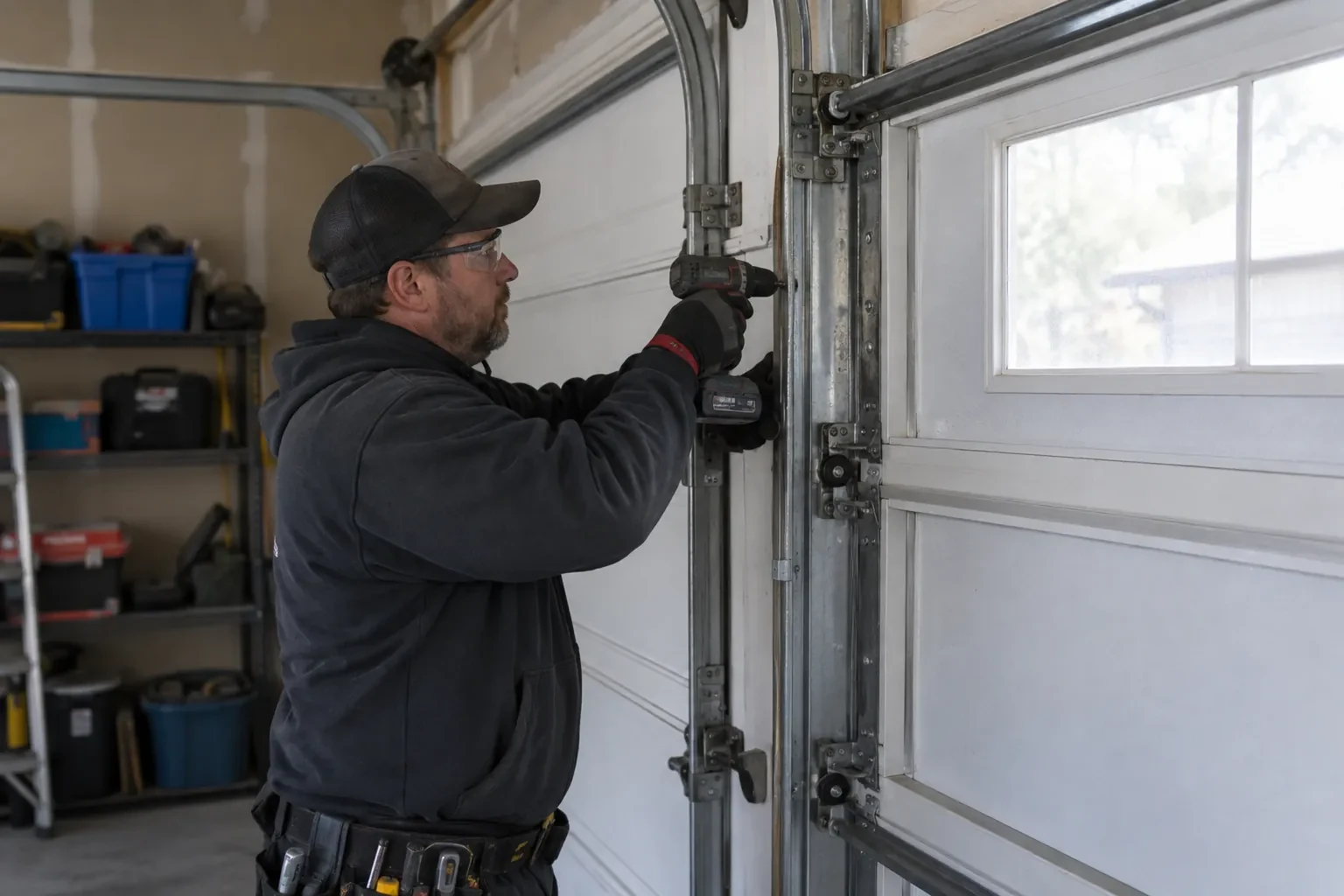
Garage Door Balance Adjustment
What affects the quote
Access to the spring shaft
Shelving, bikes or storage close to the header, a very high ceiling or a tight low-headroom installation slow the work. Clearing the area beforehand helps the time quoted.
Cold-weather visits
In a cold snap, a frozen bottom seal or stiff hardware has to be freed and warmed before balance can be judged honestly, and a winter call is quoted with that in mind.
Torsion or extension springs
Winding a torsion spring with bars and moving an extension spring's hook are different procedures with different setup, and the type of counterbalance on your door is the first thing that shapes the quote.
What to have ready
- Has anything been added to the door, such as insulation, windows or a new section?
- Does the door sit level when closed, or is one corner higher?
- Has anyone turned up the force setting on the opener?
Garage Door Balance Adjustment: questions
QuestionsWhat information helps when I book the visit?
Whether the door drifts up, sinks, or hangs crooked when released; whether there is one spring on a shaft above the door or springs along the tracks; whether it is a single or double door and roughly how tall; when the springs were last changed if you know; what has been added to the door; and whether the opener strains, reverses or stalls. A photo of the spring area is useful.
How long does a balance adjustment take?
A straightforward tension adjustment on a sound door is generally about an hour, including the inspection, the hand tests and the opener checks at the end. Resetting cables to level the door, replacing rollers to remove friction, or moving to a spring replacement adds time. The technician will tell you what the inspection found and how the visit is shaping up before the work continues.
What is the red cord hanging from the opener for?
It is the manual release. Pulling it disconnects the door from the opener's trolley so the door can be moved by hand, which is how the balance test is done and how you get the car out during a power cut. The industry standard calls for it to be red and reachable, no more than about six feet above the floor. Reconnecting is usually as simple as running the opener once.