Repairs · Wellington North
Garage Door Safety Inspection in Wellington North
You moved in three months ago.
In plain words
Winter is hard on the bottom of a garage door, and an inspection here pays particular attention to it. Slush and salt collect where the cables loop onto the bottom brackets and where the lowest hinges sit, the bottom seal freezes to the slab and the opener is asked to break it free, and photo eyes near the floor pick up a film of road grime. The technician checks each of these, along with the strain a winter of hard starts has put on the springs and the opener drive, and leaves you with the small habits that carry the door comfortably to spring.
How the visit goesBacking out in a hurry, the bumper tapped the bottom section. The dent is small and the door still runs, but it seems to shudder now at the point where the panel meets the track.
Garage Door Safety Inspection
How the visit goes
What you have noticed, and when it started
You are part of the assessment. The technician asks when the door last felt normal, what the first change was, whether a sound comes on the way up or the way down, and whether anything happened just before: a bump from the car, a heavy snowfall, a power cut, a new remote. A door that got noisy over a year and a door that changed overnight are different stories, and the second usually has a single cause. Previous repair paperwork, the door's manual and any photos from when the house was bought are all useful. This short conversation tends to shorten the search and adds context to the report that a checklist alone would miss.
Sorting the findings at the door
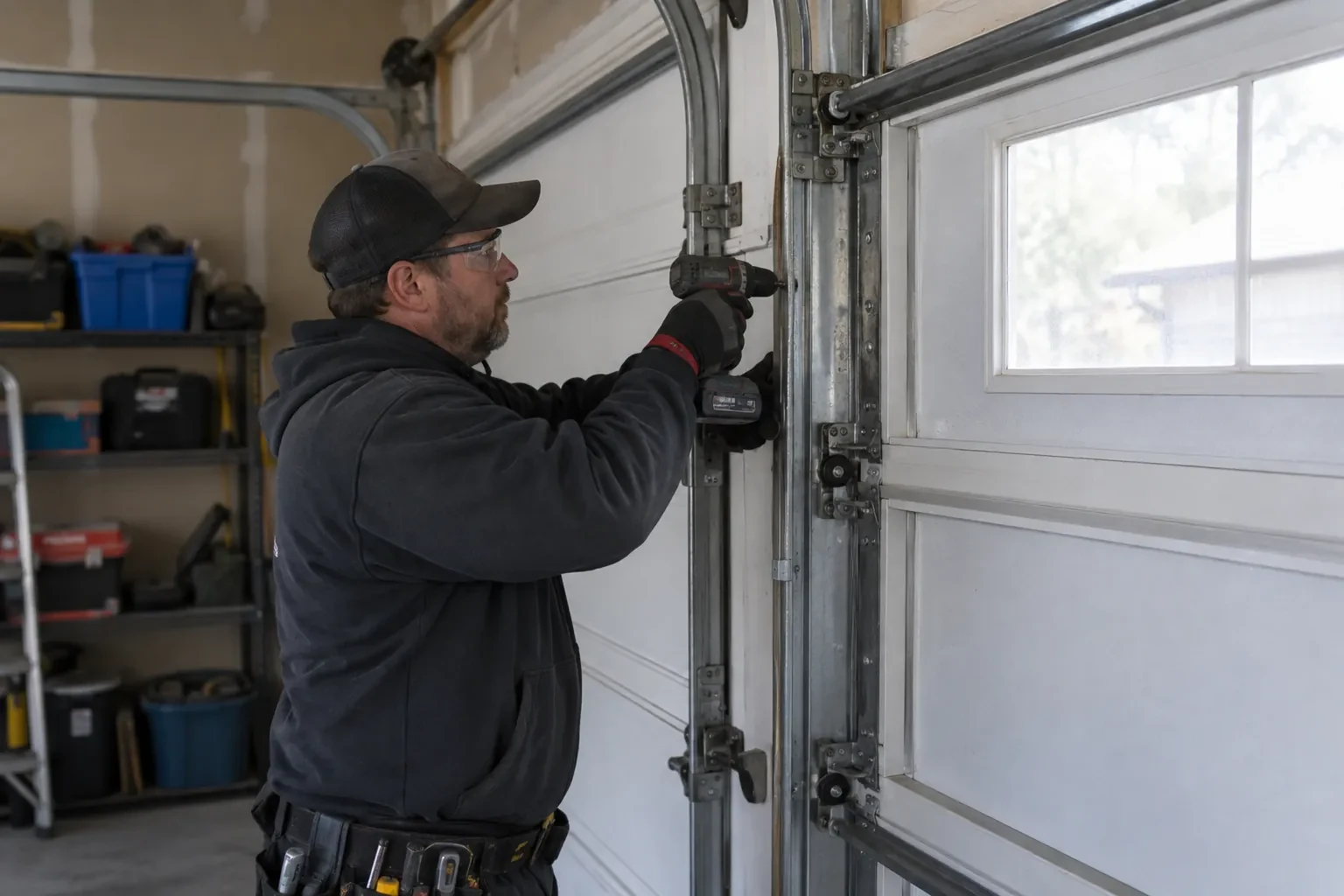
Before packing up, the technician walks you through what was found, in front of the door so each item can be pointed at. Findings are sorted into four groups: in good order, maintenance, planned repair, and stop-use. For each repair, you hear what the part does, why it matters and roughly what the work involves, so you can decide in your own time. If anything falls into the stop-use group, you are shown the reason and the door is left in a safe position with the opener disconnected until that item is corrected. The written record follows, with the model numbers, the measurements and the photographs.
A baseline for the next inspection
The most useful thing about a first inspection is the second one. With the model numbers, spring dimensions, cable condition, seal gaps and photo-eye heights on record, the next technician can measure the same points and tell you what has moved rather than starting from nothing. For most households an annual visit fits, with a look in early spring after the salt season a natural choice. A door that carries a lot of traffic, an older door, or one in a rental where nobody watches it closely may suit a check each season. Whatever the interval, the report you are holding is the reference the next one will be read against.
Garage Door Safety Inspection
In the van
Spring and cable gauges
Silicone garage-door lubricant
Replacement hinge and track fasteners
Work light and inspection mirror
Camera for findings
Garage Door Safety Inspection
What affects the quote
Findings that change the scope on the day
If a stop-use item turns up, securing the door and explaining the correction takes extra time on the visit. That, and any work you approve, is quoted separately before it starts.
Distance to the property
Travel is part of every visit. A property across town and one at the end of a rural road involve different driving time, and the quote reflects the trip.
Access to overhead track or a locked mechanical room
Some tracks run behind storage or into a locked mechanical room, and reaching every bracket and fixture takes longer when a ladder or a key has to be found first. Clearing a path to the track ahead of the visit lets the inspection move through the whole door without interruption.
What to have ready
- Do you have the door and opener manuals?
- Does the door sound or move differently going up than coming down?
- Is there a spring on a shaft above the opening, or springs stretched along the tracks?
Garage Door Safety Inspection: questions
QuestionsIs the inspection different for an older detached garage with springs along the tracks?
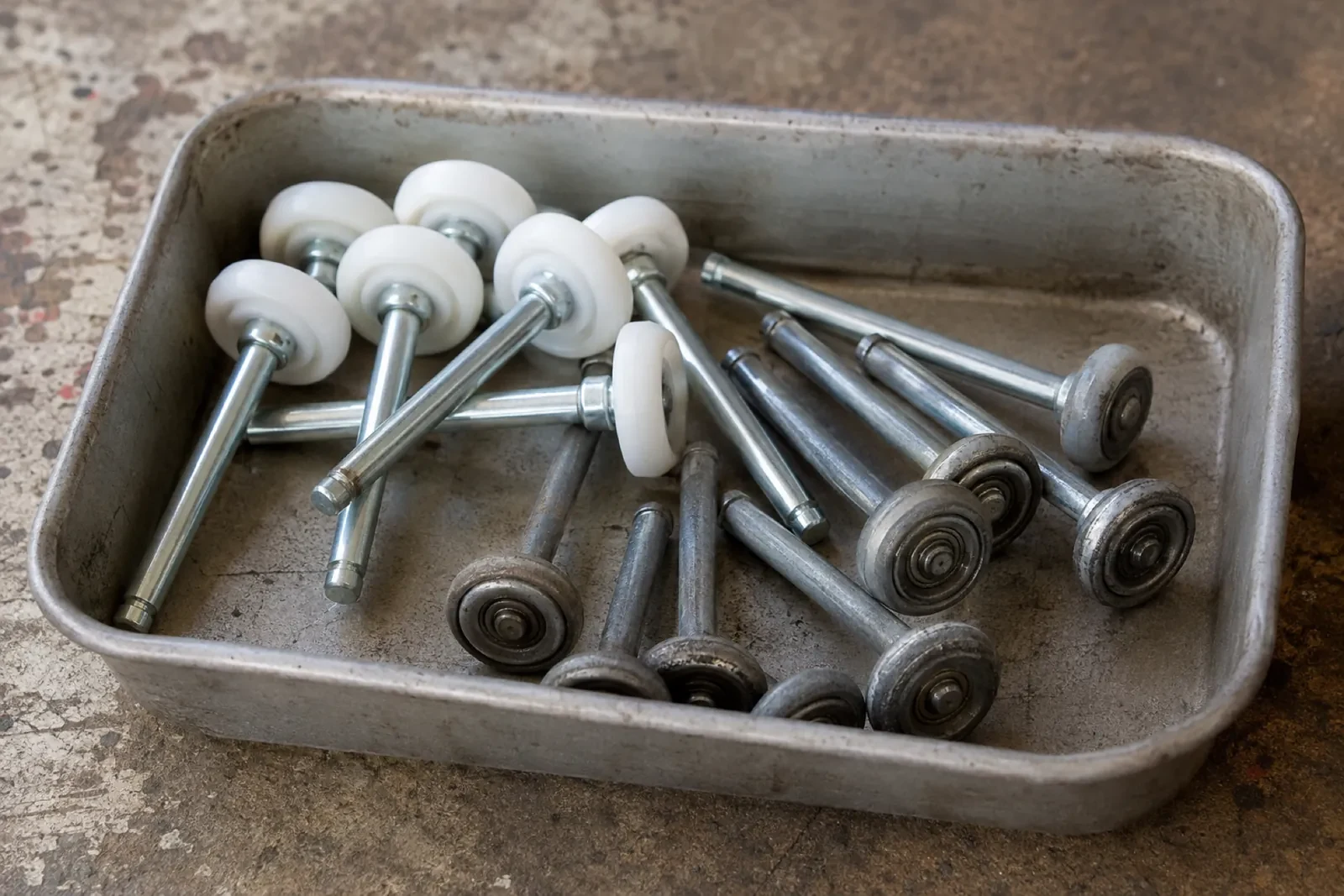
The route is the same and the counterbalance looks different. Extension springs stretch beside the horizontal tracks and pull through pulleys, so the technician examines each spring for stretch and a broken end, each pulley for a grooved wheel or a seized bearing, the cable clips, and whether a containment cable runs through the centre of each spring. Balance, reversal and photo-eye tests are unchanged.
What happens if the report lists a stop-use item?
The door is parked in a safe position, usually closed, with the opener disconnected so nobody runs it by habit, and the reason is shown to you. The correction is explained and quoted as its own piece of work, and once it is done the door is retested through the balance, reversal and photo-eye checks before it goes back into daily service. Another door into the house or garage is used in the meantime.
What exactly gets looked at during the inspection?
The whole system, not just the opener. Sections, hinges, rollers, tracks and their fasteners; springs, cables, drums and bottom brackets; the bottom seal and perimeter weatherstrip; the opener head, rail, arm and mounting; the photo eyes, contact reversal, wall control, remotes, keypad and manual release; and the warning labels. Each is examined, and the door is tested both by hand and under power.
Related services
- Off-Track Garage Door ResetThere was a loud bang from the garage, then silence.
- Garage Door Panel ReplacementFrom outside, the horizontal groove between two sections now steps sideways by a centimetre.
- Garage Door Bottom Seal ReplacementEvery mild afternoon the snow melts off the car, runs to the door, and by morning the rubber strip along the bottom is frozen to the concrete.