Springs · Wellington North
Garage Door Roller Replacement in Wellington North
New springs went in last year and the door balances well, yet it still clicks along the ceiling track like a train over rail joints.
In plain words
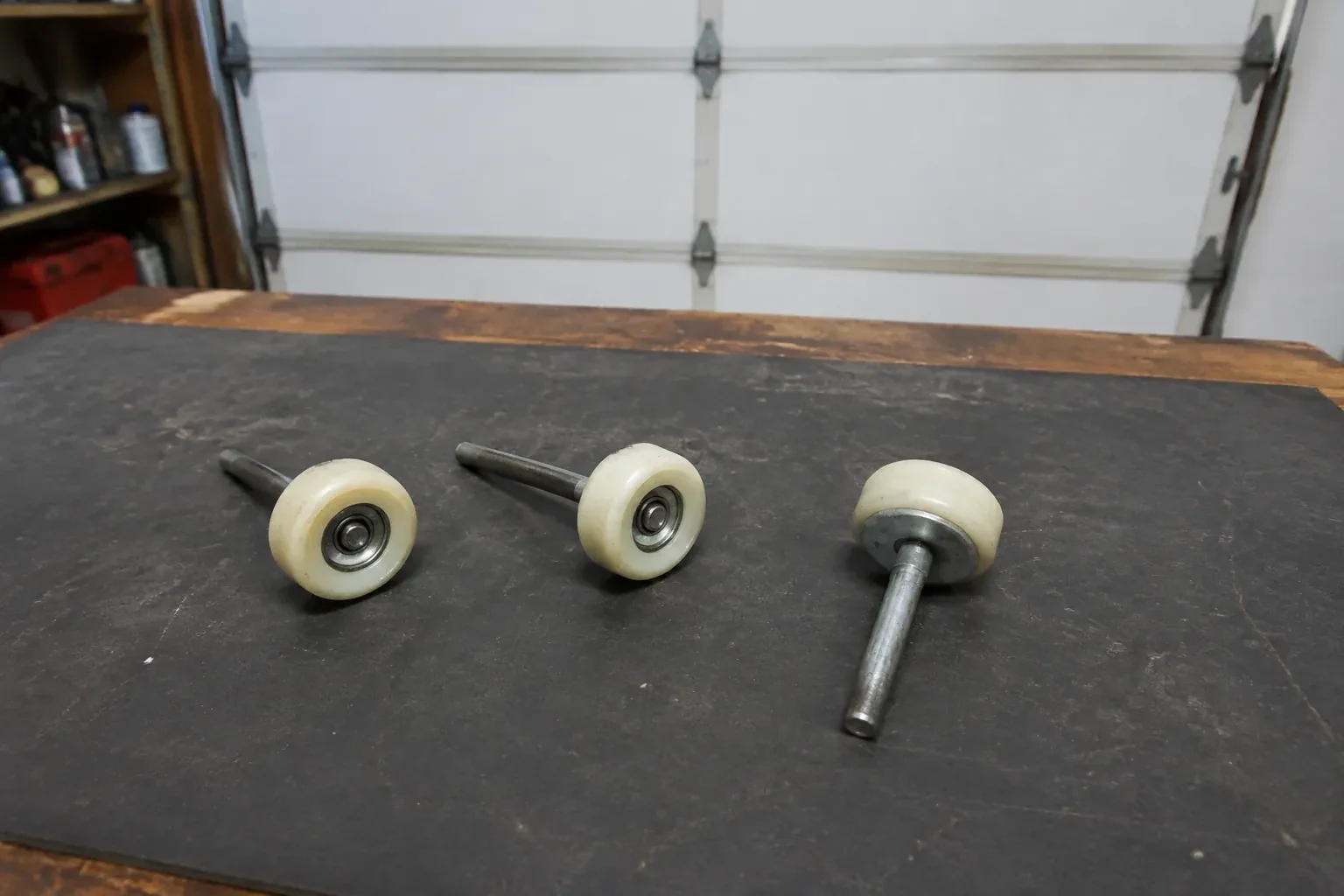
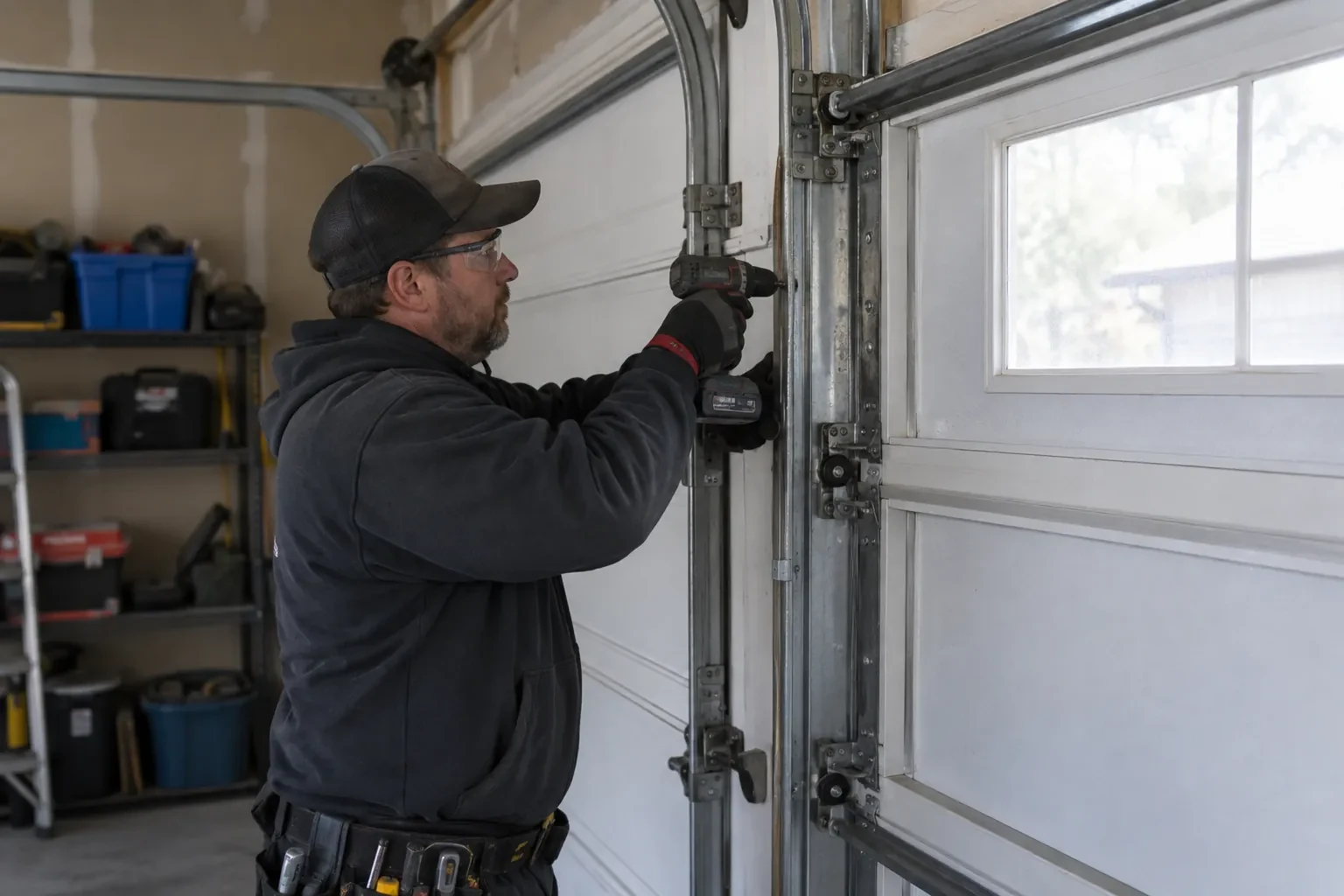
Rollers do more than reduce friction: they are what keeps the door in its track. A wheel worn oval, a bent stem, or a short stem sitting loose in a double hinge lets a section wander until the wheel rides up on the track lip, and from there a door can leave the track altogether. Replacing tired rollers before that point is a small job with a large effect on the door's future. The technician also checks hinge fasteners, jamb brackets and track alignment at the same time, since those are the other pieces that hold the door's path.
How the visit goesSince the cold snap the door has been stiff and noisy first thing, and after the last thaw the bottom corner began to judder. There is slush in the foot of the track and a bloom of rust on the lowest wheel.
Garage Door Roller Replacement
How the visit goes
The hardware the rollers live in
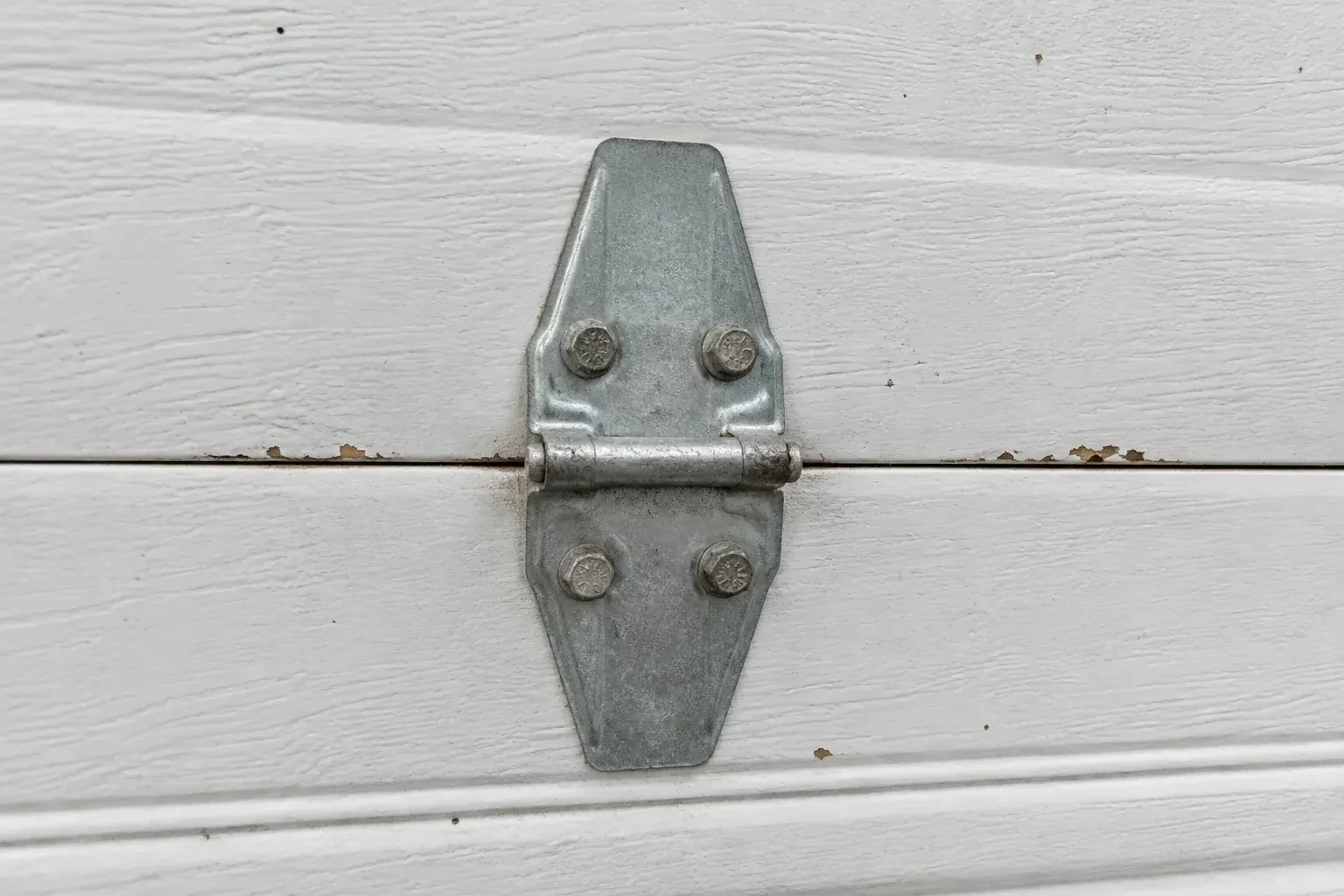
A roller is only as good as the bracket that holds it. The technician inspects every hinge for cracks at the knuckle, elongated holes and loose or missing fasteners, checks that the top fixtures still adjust and hold their setting, and looks over the bottom brackets for rust, deformation and the condition of the cable attachment. Jamb brackets and the flag brackets at the top of the vertical track are checked for movement. A door moves more than a thousand times a year and that vibration loosens bolts, so a hinge that has been working loose is often the reason a wheel wore crooked, and it is refastened or replaced as part of the same visit.
Top rollers and the adjustable fixtures
The top rollers sit in fixtures that slide in and out on the top section rather than in fixed hinges. The technician loosens the fixture, swaps the roller and then sets the fixture position with care, because that adjustment is what pushes the top section snug against the header seal when the door closes and keeps the wheel riding in the track rather than binding against it as the door starts to open. On heavy doors the top rollers do the most work of any on the door, so this is also where a higher load rating or a longer stem earns its place.
Signs to watch for next time
Rollers wear slowly, so it helps to know the early signals. A rhythmic clicking that travels with the door, like a train over rail joints, points to a bearing beginning to fail. A wheel that leans to one side in its hinge, or a door that starts to rock as it rounds the curve, suggests a stem or wheel wearing oval. Grinding that returns a day or two after lubrication means the wear is in the wheel, not the grease. Catching these while the door still runs makes the next roller change a planned visit rather than a door stuck halfway.
Garage Door Roller Replacement
In the van
Long-stem rollers for double hinges
Garage door lubricant
Bottom brackets
Replacement numbered hinges
Jamb bracket fasteners
Garage Door Roller Replacement
What affects the quote
Hinges that need replacing
Cracked, elongated or rusted hinges found during the inspection are replaced with the correct numbered hinge, each priced as its own item alongside the rollers.
When the visit is booked
Evening, weekend and holiday calls cost the same amount as a weekday appointment for roller replacement. The technician confirms the exact figure once the rollers, hinges and track have been looked at on site.
Track alignment and repair
Realigning jamb brackets, straightening a dented lip or replacing a damaged length of track is separate from the roller work and quoted as such when the inspection finds it.
What to have ready
- Where in the travel does the noise, shake or hesitation happen?
- Are there two hinges stacked at the ends of each section, or one?
- Is there rust, slush or salt residue in the bottom of the track?
Garage Door Roller Replacement: questions
QuestionsDo nylon rollers need lubricating?
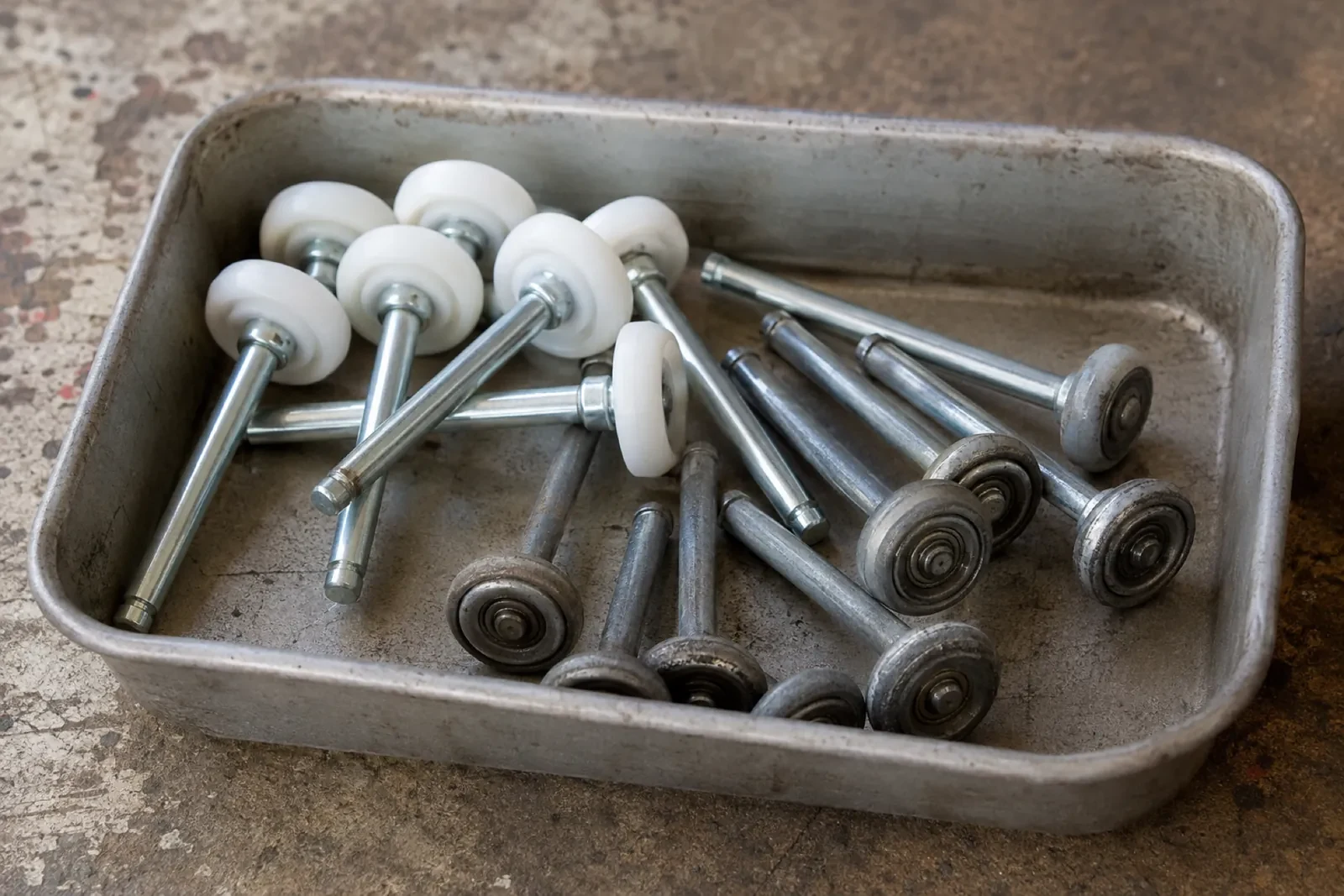
The nylon tire itself needs none; spraying it or the track only collects dust that grinds the wheel. The hinge knuckles and stems where they turn benefit from a light coat of garage door lubricant once or twice a year, worked in by running the door. The ball bearings themselves are lubricated only where the roller's own maker calls for it, since some nylon rollers should not be greased there. Rollers with sealed bearings come greased from the factory and need only a wipe and a look.
How long do garage door rollers last?
It depends on what they are made of and how often the door moves. Builder-grade plastic wheels with no bearings often show wear after only a few years. Steel and nylon rollers with seven to thirteen ball bearings are typically rated for ten to fifteen thousand cycles, roughly the life of a torsion spring, which for many households means seven to ten years. Sealed-bearing nylon rollers are rated far higher. A door used many times a day, or one living with salt and slush, shortens all of those.
How do winter and road salt affect rollers?
Slush carried in on the tires collects in the foot of the track and refreezes overnight, so wheels skid across ice ridges instead of turning and wear flat spots; cold thickens old grease so bearings stiffen and the opener strains; and the salt in that slush corrodes steel stems, bearings and the bottom brackets first. This is why the lowest rollers often look the worst and why sealed-bearing nylon rollers, and a clear, dry lower track, are recommended for garages that see a car every winter day.
Related services
- Garage Door Track Repair or ReplacementThe door climbs crooked, one side clearly ahead of the other.
- Garage Door Cable ReplacementThe car bumper kissed the door on the way in.
- Torsion Spring ReplacementOn a cold morning the remote does nothing useful: the light comes on, the motor turns briefly, the door stays shut.